If your content sounds like everyone else’s, then what do you think is the charm that makes the reader choose you over the others?
Apparently, nothing.
If you are unable to make your writing unique and stand out, then no matter how strong or valuable the ideas are, they will lose their impact.
That’s why originality isn’t optional, it’s essential. It helps you make your content credible and unique. Therefore, if you stick to always producing original content, you can build trust and authority with your audience.
But the problem is, even if we try to produce original content, it still catches unintentional plagiarism.
So, what are the exact steps or strategies that help us keep our content original and credible?
If you want to learn this, then just keep reading the article.
8 Key Strategies to Effectively Avoid Catching Duplication in Writing
Here are some writing strategies that you need to adopt if you want to avoid catching plagiarism in your writing and maintain the integrity of your words.
1. Do Fresh Research Before Writing
If you want to avoid catching plagiarism in your content, then rather than copying others, start with new research every time you write. Don’t rely on recycled content or old notes.
Take time, search for the facts online, gather data from the trusted sources, and then write them in your own words.
Trust me, this simple approach helps you a lot in forming unique thoughts and avoiding copying what’s already out there.
However, the notable point here is, while gathering the information, don’t just stick to one article, as it increases the chances of plagiarism. Search and explore diverse views and examples that you can use in your content to support your claims.
2. Share Your Own Understanding
If you are taking inspiration from other people’s content, then instead of directly copying and repeating how they present their ideas, look into the information and describe what you have extracted from it.
Break complex ideas into simple parts and explain them like you would to a friend. This helps you make your content comprehensive, unique, and natural. Remember, readers always appreciate the content that talks to them and shares information as if in a conversation.
Whereas, copying others makes the content lose its spark and blends it in with the rest of the articles available online. Your voice and insights are what make the content yours. So, don’t just reword, rethink, and then write.
3. Change How You Present Ideas
In case you are covering a common topic, try to break the norms and describe the information in a more unique and fun way. Don’t just repeat what others have said.
Look for different angles to explore, use a new example, or simplify it further. Even if you don’t change ideas much, make sure your presentation feels different.
This keeps your writing original and useful. Readers want something that adds clarity or gives a new point of view.
4. Use Short Summaries for References
If you’re using information from a source, don’t copy the explanation. Instead, read it, understand the main idea, and write a short summary in your own words. Keep it simple and to the point. This helps you avoid duplication and makes your writing clearer.
A good summary shows that you understand the topic, not just that you can reword it. It also forces you to avoid copying sentence structure. Stay focused on the key point and move on.
This technique works well for facts, quotes, or examples from other materials.
5. Check for Similarities Before Publishing
Once you are done with writing the content, don’t hit the publish button immediately. Sometimes, even if we don’t deliberately copy content from others, our content still catches unintentional plagiarism. So, if you publish your writing without verifying its authenticity, it might affect your credibility.
Therefore, it’s best to conduct a plagiarism test to detect if your content contains any instances of duplication. This test can scan your text and match it with already published resources to find any potential matches. Therefore, it helps you catch potential issues in your content that you might otherwise miss.
6. Avoid Using the Same Structure Every Time
Using the same format or template for every piece makes your content feel repetitive. Moreover, it may also lead to unintentional duplication in structure and flow. Therefore, instead of sticking to the same pattern, adjust how you present ideas based on the topic.
Try new ways to open, explain, and close your points. Moreover, use different tones, angles, or examples. Make sure your ideas are clear, refined, engaging, and truly reflect your voice and tone.
For this, if you effectively want to cut out the predictable patterns and make your content actually stand out, you can paraphrase text to avoid plagiarism. Paraphrasing gives your content a new, fresher, and refined look while keeping the core idea. This process can help you effortlessly produce original content every time.
7. Keep a Record of What You’ve Written
If you want to avoid discussing the same content, try keeping a record of all your previous research and writings. You might have felt that when we repeatedly cover almost similar topics, we easily mix and match the information or even forget what we have already said.
Therefore, it’s best to save your content in an organized folder and use clear file names and notes to keep track of the key ideas and examples that you have already used in your content.
Trust me, this simple habit can save you a lot of time and effectively protect you from self-duplication. This simple approach helps you avoid repeating.
8. Use an Online Plagiarism Remover Tool
Even after practicing all these tips, there is a very good chance that your content could have accidental similarities with another post written on the same topic or niche.To ensure 100% originality, it is important that you leverage an AI plagiarism remover tool by SEOmagnifier.
Plagiarism remover tools rely on natural language processing and advanced machine learning models, which enable them to understand an existing piece of text and reword it differently without changing its intent.
In case you have found excessive plagiarism in your drafts through an advanced plagiarism detector, you must spin it through a plagiarism remover tool. This would help you enhance originality and save a lot of your valuable time, which you might end up wasting in manual rewriting or editing.
Final Words
Original writing doesn’t happen by accident, but it is a choice that you deliberately make every time you sit down to create something.
Therefore, if you really want to stand out in this crowded market, then focus more on what you think than on what others have already said. Take time to build ideas that actually add value, and trust me, this simple shift in the mindset plays a major role in setting you apart from the crowd.
Many aspiring digital marketers question whether the SEO analyst role offers financial stability and growth. Despite the increasing demand for online visibility, some remain uncertain about the career’s long-term viability. SEO analysts in the U.S. earn an average annual salary of $76,346, with potential earnings up to $111,712 for experienced professionals. This role not only provides competitive compensation but also offers diverse opportunities across various industries.
In this comprehensive guide, we’ll delve into the salary expectations, job outlook, and career pathways for SEO analysts, equipping you with the insights needed to make informed career decisions.
What is an SEO Analyst?
An SEO Analyst is a digital marketing professional who focuses on improving website performance in search engines. They analyze website traffic, conduct keyword research, and implement SEO strategies to increase visibility in search engine results pages (SERPs). An SEO analyst may use tools like Google Analytics, SEMrush, Ahrefs, and Google Search Console to assess metrics such as click-through rates and ranking positions.
The role of an SEO analyst involves optimizing websites for search engines like Google while collaborating with content writers to ensure content is optimized for search. SEO analysts must possess analytical skills and a clear grasp of technical SEO and SEO data.
What Does an SEO Analyst Do?
An SEO Analyst evaluates and improves a website’s search engine performance through strategic keyword placement and optimization. They conduct keyword research using SEO tools like SEMrush, Ahrefs, and Google Search Console to enhance content visibility.
SEO analysts must be able to analyze website data with analytics tools such as Google Analytics and identify SEO elements needing improvement. They work closely with developers and content writers to ensure every page is optimized for search engines.
Additionally, SEO analysts are primarily responsible for implementing technical SEO and maintaining structured data for better indexing. They monitor metrics such as organic traffic, conversion rates, and rankings on search engine results pages (SERPs).
The SEO analyst role also includes conducting SEO audits, staying updated with search engine algorithms, and applying best practices accordingly. Moreover, they optimize web pages to rank higher in organic search and improve online presence. Their strategies to increase ranking support broader digital marketing goals.
How to Become an SEO Analyst
Education and Certification Requirements:
To become an SEO analyst, candidates typically start with a degree in digital marketing, communications, or data analytics. However, many professionals succeed with certifications in SEO practices and relevant tools instead. SEO certifications from platforms like HubSpot, Moz, or Google are highly valued. Additionally, tools such as SEMrush, Ahrefs, and Google Analytics often require hands-on learning and proficiency.
Certification courses help applicants learn the technical aspects of SEO, structured data, and keyword research. Furthermore, completing Google Search Console training improves one’s ability to analyze website data. Consequently, a combination of formal education and practical SEO tools training enhances job readiness.
Essential Skills for Success in Search Engine Optimization:
SEO analysts must possess analytical skills and communication skills to effectively interpret SEO data and collaborate with teams. They need to be skilled in conducting keyword research and using analytics tools like Google Analytics and Ahrefs. Additionally, they must understand search engine algorithms, technical SEO, and content for SEO optimization. Effective SEO analysts often work with structured data, optimize web pages, and track organic traffic.
Moreover, SEO analysts must be able to apply strategies to increase visibility and ranking. Proficiency with SEO tools and familiarity with local SEO practices are also crucial. Therefore, mastering these essential skills supports long-term career success.
Entry Points and Career Paths for Aspiring SEO Analysts:
Aspiring SEO analysts may start in entry-level SEO positions or digital marketing internships, typically requiring up to two years of experience. Employers often seek candidates who can analyze website performance and optimize content for search engines. LinkedIn and Glassdoor list openings for SEO specialist roles, often leading to analyst roles afterward. Later, professionals can progress to senior SEO strategist or SEO manager positions, depending on SEO experience.
The career path usually expands to digital marketing leadership or data analysts with SEO specialization. Therefore, starting small and consistently building SEO expertise through hands-on work and continued learning ensures upward career growth.
Types of SEO Analysts
SEO analysts specialize in various domains depending on website needs and SEO strategies. These include technical SEO analysts, content SEO analysts, link building analysts, local SEO experts, eCommerce SEO analysts, and SEO data analysts. Each SEO analyst role focuses on specific aspects of search engine optimization to improve online presence.
Technical SEO Analyst:
A technical SEO analyst ensures that websites are fully optimized for search engines like Google. This role involves fixing crawl errors, improving site speed, and implementing structured data. Technical SEO analysts must be able to identify issues affecting search engine algorithms and resolve them using advanced SEO tools. They also conduct regular SEO audits and monitor search engine results pages to maintain strong visibility. Furthermore, they work closely with developers to enhance website performance and ensure all web pages are accessible to search bots. Their role is critical in maintaining the foundation of a website’s search engine optimization success.
Content SEO Analyst:
A content SEO analyst focuses on optimizing website content for better search results and user engagement. They collaborate with content writers to ensure every article or page is optimized for search engines. This involves conducting keyword research, analyzing search intent, and applying SEO best practices to drive organic traffic. They frequently use tools like Google Analytics, Ahrefs, and SEMrush to track content performance and identify ranking opportunities. Besides creating SEO-friendly content, they ensure it aligns with the brand’s voice and digital marketing goals. Consequently, a content SEO analyst plays a vital role in increasing a site’s organic search visibility.
Link Building SEO Analyst:
A link-building SEO analyst primarily focuses on acquiring high-quality backlinks to improve domain authority and rankings. This role demands analytical skills to identify valuable link prospects and strategic outreach methods. SEO analysts usually research competitor backlinks using tools like Ahrefs or SEMrush and replicate successful strategies. Furthermore, they monitor anchor texts, domain relevance, and link diversity to follow effective SEO practices. Link-building SEO analysts also develop content assets that attract backlinks naturally. Their efforts directly impact the authority of a website and its positioning on search engine results pages. Therefore, their work is crucial to increasing organic traffic.
Local SEO Analyst:
A local SEO analyst helps businesses improve visibility in geographically targeted search results. They optimize Google Business Profiles, monitor local rankings, and manage location-specific keywords. Additionally, they focus on structured data and local citations to increase relevance in map packs and local search engine results pages. Local SEO analysts must understand regional SEO practices and analyze performance using tools like Google Search Console and Google Analytics. Moreover, they collaborate with content teams to create locally optimized landing pages. Hence, a local SEO analyst is essential for businesses looking to increase foot traffic and online engagement in targeted geographic areas.
eCommerce SEO Analyst:
An eCommerce SEO analyst specializes in optimizing product pages, category structures, and shopping experiences to increase conversion rates. They must analyze website traffic, apply keyword research, and implement e-commerce link-building strategies to increase organic search visibility. Additionally, they focus on technical aspects like crawl budget, faceted navigation, and schema markup for better ranking. Tools such as SEMrush, Google Analytics, and Google Search Console help them measure product performance. They work closely with developers and marketers to ensure content is optimized for search and aligned with customer search behavior. This role supports sales goals by improving ranking and enhancing user experience simultaneously.
SEO Data Analyst:
An SEO data analyst uses data analytics to extract insights that guide strategic SEO decisions. This role involves interpreting SEO data from tools like Google Analytics, Ahrefs, and SEMrush. SEO analysts often track metrics such as click-through rates, bounce rates, and keyword trends. They must analyze website structure, content performance, and backlink profiles to inform SEO strategies. Moreover, they provide reports that identify opportunities to optimize web pages and improve overall website performance. Their analytical skills are crucial in aligning SEO efforts with business objectives. Thus, an SEO data analyst plays a significant role in measuring and maximizing SEO effectiveness.
Salary Expectations for SEO Analysts
The average salary of an SEO analyst is $76,346, with potential earnings up to $111,712 per year, which may vary due to location, employer, experience, and other factors. Entry-level candidates with basic SEO experience often earn less than professionals with SEO certifications and advanced technical SEO knowledge. Additionally, professionals using SEO tools like Ahrefs, SEMrush, and Google Analytics command higher salaries. Employers often offer competitive pay to SEO analysts who consistently optimize websites and improve search engine ranking performance.
Key factors influencing the salary range for an SEO analyst:
SEO experience and years in related SEO positions or digital marketing roles
Proficiency with SEO tools like Google Search Console, Ahrefs, and analytics tools
Ability to conduct SEO audits and apply comprehensive SEO strategies effectively
Certification in SEO practices or completion of relevant technical SEO training
Skills required to analyze website performance and increase organic traffic and conversion rates
Local SEO expertise and ability to rank higher in search engine results pages (SERPs)
Job Prospects and Outlook for SEO Analysts
SEO Analyst Job Outlook in the Current Market:
The SEO analyst job outlook remains strong due to increasing competition for visibility on search engines like Google. Companies across sectors consistently invest in search engine optimization to drive organic traffic and increase website ranking. Furthermore, the demand for skilled SEO analysts continues to grow as digital marketing strategies depend on data-driven results. Businesses actively seek professionals who understand technical SEO, keyword research, and SEO strategies.
SEO analysts must be able to optimize websites and analyze website performance using analytics tools. Consequently, SEO positions are frequently listed on platforms like LinkedIn and Glassdoor with diverse industry opportunities.
Future Demand and Career Growth Opportunities:
The career path for an SEO analyst offers considerable upward mobility in both agency and in-house roles. As long as companies aim to rank higher in search engine results pages, skilled analysts will remain essential. SEO analysts often advance to become SEO specialists, SEO managers, or digital marketing strategists. Moreover, professionals with two years of experience and SEO certifications gain access to higher-paying roles.
The need for local SEO and structured data expertise further enhances job prospects. Therefore, mastering comprehensive SEO practices and keeping up to date with search engine algorithms ensures long-term career growth and relevance.
Conclusion
Pursuing a career as an SEO analyst in 2025 presents a promising path with competitive salaries and diverse opportunities. The role’s significance in enhancing online visibility ensures its continued relevance across industries. By acquiring essential skills and staying updated with industry trends, professionals can secure and excel in this dynamic field. Are you prepared to leverage your analytical skills and contribute to the digital landscape as an SEO analyst?
FAQs
What is SEO? SEO stands for search engine optimization, which improves website visibility online.
Why is SEO important? SEO helps websites rank higher on search engines, attracting more visitors.
How long does SEO take to show results? SEO results typically appear within a few months, depending on the competition.
Can anyone learn SEO? Yes, SEO can be learned by anyone willing to study and practice.
Is SEO free or paid? SEO itself is free, but may require paid tools or services for better results.
What skills are needed for SEO? Important skills include keyword research, data analysis, and communication.
Does SEO only involve content? No, SEO includes technical setup, content, and link-building strategies.
Imagine crafting exceptional content, yet your website remains buried in search engine results. This scenario often stems from low link popularity, a critical factor in SEO rankings. Research indicates that pages with numerous high-quality backlinks tend to rank higher in search results. Link popularity refers to the number and quality of external links pointing to your website, signaling its authority to search engines. Enhancing your site’s link popularity can significantly improve its visibility and ranking. This article provides a comprehensive guide on link popularity, its impact on SEO, and strategies to boost it effectively.
What is Link Popularity?
Link popularity refers to the number and quality of backlinks pointing to a web page or site. It serves as a vote of confidence from external sources, signaling content value to a search engine. A strong link profile includes high-quality backlinks, varied link sources, and contextual relevance. Search engine rankings rely significantly on the volume and quality of links a page receives. Both link quantity and authority matter, but quality outweighs numbers. A well-maintained profile demonstrates trust and credibility. Backlinks from reputable domains increase the chances of ranking higher in search results, improving overall SEO efforts.
Why is Link Popularity Important in Search Engine Optimization (SEO)?
Link popularity directly impacts SEO rankings by influencing how search engines evaluate content credibility. Inbound links from trusted websites enhance domain authority and pass link juice to target pages. High-quality and relevant backlinks signal that a web page offers useful information. Search engine algorithms analyze the number of backlinks and their link quality to determine rank positions.
Consequently, earning backlinks from authoritative sources boosts visibility. A consistent link building effort strengthens SEO strategy and helps secure long-term traffic. Strong link popularity is crucial for staying competitive in organic search. It emphasizes trust, relevance, and authority in digital visibility.
The Importance of Link Quality and Domain Popularity:
Link quality and domain popularity significantly influence a site’s SEO ranking and overall performance. High-quality backlinks from reputable domains weigh more than numerous low-value links. Search engines evaluate the relevance and authority of domains linking to your site. A trusted backlink profile contributes to long-term SEO stability and improved rankings. While link quantity still matters, quality and contextual fit play a larger role.
Building link relationships with respected websites elevates your domain’s reputation. Links pointing from related, authoritative sources add genuine value. Hence, prioritizing link quality enhances both trustworthiness and visibility across search engine results consistently and sustainably.
5 Ways to Increase Link Popularity
1. Create Relevant Content That Earns Natural Backlinks:
Content that provides real value encourages other websites to link to your content naturally and consistently. When others link to your site, it strengthens your site’s credibility and improves domain trust. Content relevance and authority greatly influence your position in search engine optimization and overall visibility. Focus on clarity, usefulness, and topic alignment to attract meaningful links. Additionally, web pages with strong authority pass on more link equity. Consequently, producing high-quality content remains one of the most sustainable ways to improve your link popularity long-term.
2. Use Guest Posting to Build Authoritative Links:
Guest blogging remains an effective strategy to gain link popularity through contextual and editorial backlinks. It involves writing content for sites that link back to your site in exchange for visibility and trust signals. Choose high-authority domains to boost link popularity scores and avoid links from low-quality or irrelevant sources. Furthermore, guest posts should focus on audience relevance and topic alignment. Besides backlinks, this method also increases referral traffic and helps search engines understand your content’s authority. Link placement within the article body holds more weight than footer or sidebar placements.
3. Leverage Broken Link Building Techniques:
Broken link building involves finding outdated or dead links on other sites and suggesting your content as a replacement. This method not only replaces links pointing to a website that no longer exists but also builds strong link popularity. Use SEO tools like Ahrefs or SEMrush to identify broken links in your niche. Contact webmasters with a polite suggestion to replace the broken link with one that points to your website. Hence, this ethical approach adds value for site owners and boosts your site’s link popularity simultaneously without manipulative tactics.
4. Avoid Link Farms and Focus on High-Quality Sources:
Link farms and shady directories may offer quick backlinks but damage your website’s SEO and trustworthiness. Search engines penalize sites using excessive or irrelevant links, which can harm your site’s credibility. Links from the same website repeatedly also provide limited value. Instead, seek reputable domains within your niche that offer editorial, organic backlinks. Therefore, ethical outreach creates sustainable results and long-term benefits. Sites with a link from trusted sources receive more link juice, helping them rank higher in search engines compared to spammy sources.
5. Promote Your Content Through Outreach and Digital PR Campaigns:
Outreach to bloggers, influencers, or journalists encourages websites that link to your content to reference your work. This tactic helps build popularity by generating mentions and links pointing to a website from credible domains. Use tailored pitches, provide original insights, and include data to make your content link-worthy. Building link popularity through PR not only enhances brand awareness but also grows your backlink profile. Moreover, timely promotion during trending topics often results in links that pass on more link juice and elevate your SEO performance.
Common Misconceptions About Link Popularity
Many believe that it is only about collecting a large number of backlinks quickly. That’s false. Common misconceptions about link popularity include:
More links equal better rankings: However, link quality is more important than quantity in SEO.
Links from any site work: Links from a random site offer less value than those from authoritative, relevant domains.
All backlinks are equal: Link attribute (e.g., nofollow vs dofollow) affects how link equity is passed.
Link popularity isn’t necessary anymore: Conversely, it is still a crucial metric for ranking algorithms.
Repeated links from the same source help more: Links from the same website offer diminishing SEO returns over time.
How to Monitor Link Popularity
To effectively monitor your website’s link popularity, you should track backlinks, referring domains, and link equity. SEO tools like Ahrefs, Moz, and SEMrush allow users to analyze links pointing to a website and evaluate link quality. These platforms generate a link popularity score based on the number of links, anchor text, and domain popularity. You can also detect broken links that may hurt rankings and identify top-performing web pages with high link popularity. Monitoring your link profile regularly helps you maintain strong SEO performance and refine your link building strategies effectively.
Conclusion
Link popularity is a method that helps improve SEO rankings by signaling credibility and trustworthiness. Search engines evaluate links to a website based on quality, relevance, and source authority. This popularity is still a powerful factor in boosting rankings for those terms you target. Quality matters more in terms of SEO than popularity from low-quality or irrelevant sources. SEO tools like Ahrefs or Moz can track link popularity using accurate metrics and historical data. Page strength is often determined by the page rank and the diversity of backlinks. What strategies do you currently use to improve your site’s link popularity?
For effective techniques to boost your site’s authority, check out this guide on ecommerce link building strategy.
FAQs
1. What is domain authority, and how is it related to backlinks?
Domain authority is a metric indicating a website’s credibility. It’s influenced by the quality and quantity of backlinks.
2. How can I check my website’s backlinks?
Use SEO tools like Ahrefs, SEMrush, or Moz to analyze your backlink profile. These tools provide insights into link sources and quality.
3. Can too many backlinks from the same domain hurt my SEO?
Yes, multiple backlinks from a single domain have diminishing returns. Diversify your backlink sources for optimal SEO benefits.
4. How do I remove harmful backlinks?
Identify toxic backlinks using SEO tools and request their removal from webmasters. If unsuccessful, use Google’s Disavow Tool.
5. What’s the role of anchor text in backlinks?
Anchor text provides context about the linked content. Relevant and varied anchor texts enhance SEO, while over-optimization can be penalized.
Many business owners notice their Google Business Profile receives minimal attention, despite its potential to attract local customers. Nearly half of all Google searches have local intent, yet many businesses fail to capitalize on this opportunity. An incomplete or outdated profile can result in missed connections with potential customers searching for services like yours. To increase Google Business Profile traffic, it’s essential to optimize your profile strategically.
This involves ensuring accurate information, utilizing Google Posts, and engaging with customer reviews to enhance visibility on Google Search and Maps. In this guide, we’ll provide a comprehensive approach to optimizing your Google Business Profile effectively.
Understanding the Importance of a Google Business Profile
A Google Business Profile acts as your digital storefront, offering essential information to potential customers. When optimized correctly, it helps attract more customers who search for local services or products. Unlike traditional listings, it allows you to manage your presence across Google Search and Maps in real time. This feature becomes particularly useful when customers rely on mobile searches to make quick decisions.
Strategies to increase Google Business Profile traffic undoubtedly start with presenting accurate business hours, contact details, and services offered. Moreover, customers tend to trust businesses that maintain an active and updated profile. Consequently, this builds credibility and drives more visitors to your Google Business page.
Besides offering visibility, Google Business Profile optimization enhances local SEO rankings significantly. Whenever users search for relevant queries, an optimized profile is more likely to appear at the top. Overall, treating your Google listing as a marketing tool rather than a formality brings measurable results.
Setting Up Your Google Business Profile
To increase Google Business Profile traffic, make your profile stand out by completing all fields, optimizing for local search, and updating details regularly.
Step 1: Claim Your Business
Firstly, add your business on Google by logging into your Google account and locating your business name. If it appears in search results, claim the profile straightaway. Otherwise, create a new listing using accurate information about your business. This ensures Google understands your business is active and trustworthy to potential customers.
Step 2: Verify Your Business
To improve your local search visibility, verify your business through postcard, phone, email, or instant methods. Verification proves that your business has a physical location and is eligible to appear in local search results. Until verified, your Google business profile will not be publicly visible on Google Search and Maps.
Step 3: Fill Out Your Profile
Complete your Google business profile with accurate information, including your business hours, category, and location details. Additionally, include your phone number, website link, business offers, and online booking options if applicable. A fully optimized Google business profile improves local search rankings and attracts more visitors to your Google Business listing.
Optimizing Your Google Business Profile
To increase Google Business Profile traffic, make sure your profile looks active and fully optimized. Regularly updating your profile helps Google understand that your business is trustworthy and ready to attract more visitors to Google.
1. Accurate and Consistent Information:
Google prioritizes business listings that provide accurate information across every section of the profile. Include correct business hours, contact numbers, and your business location to help Google understand your relevance in local search results. Additionally, inconsistent details can negatively impact visibility on Google Maps and reduce trust among potential customers.
Furthermore, ensure your business name matches what appears on signage and official documents. This consistency improves your profile strength and helps customers find your business during local searches. Your Google Business Profile audience will grow organically with time as people trust what they read.
2. Optimize Your Business Description:
Your business description plays a vital role in helping customers understand what your local business offers. Use this space to include relevant search terms and keywords that reflect what your business does best.
Moreover, mention your primary services clearly to improve your local search visibility and increase traffic and engagement. Avoid stuffing the section with unnecessary phrases, but do include accurate information about your business. Additionally, keeping your profile fresh by updating the description seasonally can enhance your profile’s effectiveness over time.
3. Choose the Right Categories:
Choosing the right business category affects how easily people find your business in local search.
Select a primary category that closely reflects your business type (e.g., “Bakery” or “Plumbing Service”).
Use additional categories if you offer multiple services under the same business name.
Avoid overloading your profile with irrelevant categories that may confuse Google search results.
Categories help Google match your business to the right search terms and user intent.
A relevant business category significantly improves local SEO and drives more local traffic.
4. High-Quality Photos:
Uploading high-quality photos increases visibility and helps potential customers interact with your profile more confidently. Profiles with updated visuals generally rank higher in search engine results and perform better in conversion metrics.
Moreover, photos of your storefront, interior, team, or services build trust and show that your business is active. Whenever you update your profile, add new photos to reflect current offerings or seasonal changes. Hence, maintaining a visually appealing Google Business Profile boosts engagement and builds credibility.
5. Collect and Respond to Reviews:
Google Business Profiles with positive reviews typically attract more customers than those with no feedback at all.
Ask happy customers to leave honest reviews directly from your profile or through a follow-up email.
Respond to every review—positive or negative—to show that your business values customer interaction.
Avoid deleting negative reviews; instead, reply respectfully and aim to resolve issues.
Engaging with reviews helps Google recognize that your business is trustworthy and active.
Customer reviews directly influence your search visibility and overall business reputation.
6. Utilize Google Posts:
Posting regular updates through Google Posts helps keep your profile fresh and increases profile strength. Use these posts to highlight business offers, events, product launches, or timely announcements to drive local traffic.
Additionally, Google Posts appear directly in Google search and Maps, giving you more ways to attract more visitors. Whenever you share a post, include a call-to-action such as “Learn More,” “Call Now,” or “Book Online.” Consequently, a consistent posting schedule tells Google that your business is active and customer-focused.
7. Add Products and Services:
Showcasing products and services in your Google profile allows potential customers to preview your offerings instantly. List your main products with pricing, photos, and short descriptions to increase search visibility.
Moreover, use this feature to explain how your services solve specific customer problems. Adding details helps Google connect your profile with relevant search queries and improve your local rankings. Particularly for service-based businesses, including this section may significantly increase local search rankings and engagement.
Top Strategies to Attract More Visitors To Google Business Profile
Create Engaging Content:
Creating relevant content increases visibility on Google and keeps your profile fresh for potential customers. Update your Google Business Profile dashboard with local search-friendly posts that highlight services, business offers, or events. Additionally, videos on your profile can boost traffic and engagement, especially for service-based or visual businesses.
Whenever possible, include positive reviews and showcase them as part of your regular post updates. Google posts appear directly in Google search and Maps, so use Google tools to maximize their reach effectively. Moreover, compelling content helps your profile stand out and signals to Google that your business is active.
Implement Local SEO Strategies:
Local SEO drives local traffic by connecting your profile to relevant search terms in your area. Use your Google Business Profile to improve your local search visibility by optimizing with proper business categories. Additionally, include location-based keywords in your business description, service listings, and posts for greater local search impact. Regularly updating your profile with accurate information helps Google understand your services and match them with search results.
A well-optimized Google Business Profile will rank higher in local search rankings and Maps placements. Consistent SEO efforts can significantly increase both online presence and conversions from local search results.
Engage with Your Audience on Social Media:
Sharing your Google Business Profile on social platforms helps attract more customers and boosts visibility on Google. Whenever users like your business on social media, they are more likely to interact with your profile. Include direct links to your Google profile in bio sections or posts to increase your local traffic. Share customer reviews and positive feedback from your Google Business Profile audience to build credibility.
This encourages others to visit your Google Business Profile and trust your services based on real testimonials. Social media engagement complements your local SEO strategy and broadens your business profile’s digital reach.
Run Local Ads on Google:
Running local ads on Google can significantly increase visitors to your Google Business Profile. Use Google Ads to target specific search terms that align with your business location and services. Link your ads to your business listing to boost conversion and visibility on Google search and maps. Advertise limited-time business offers or seasonal promotions to encourage new customer interactions with your profile.
Besides organic reach, paid ads help drive traffic during competitive periods or in highly saturated local markets. Altogether, local advertising enhances your profile and attracts more visitors to Google Business Profiles consistently.
Keep Your Profile Active and Engaging:
Regularly updating your profile strengthens its presence on Google and improves your profile strength score. Add new business information, fresh photos, and updates to reflect any changes or upcoming events. Moreover, frequently posting shows that your business is active and responsive to local market needs. Keeping your profile fresh helps Google prioritize your listing over inactive or outdated business profiles.
Additionally, active profiles perform better in local search and Google Maps due to higher engagement signals. Eventually, consistent profile activity will result in better rankings and more visitors to your Google business.
Set up Online Booking and Appointment Scheduling:
Online booking boosts conversion by allowing customers to schedule directly from your Google Business Profile. Add your business calendar or use third-party tools integrated with Google to simplify appointment management. This feature benefits service-based businesses, especially when customers are searching during peak business hours. It enhances the effectiveness of your profile by offering instant action without leaving Google search.
Profiles with online booking options tend to receive more interaction and higher visibility on Google. Consequently, adding scheduling tools helps attract more customers and builds convenience into your business listing.
Monitor and Adjust:
Use Google Business Profile data to evaluate what attracts the most local traffic and engagement. Analyze which search terms or posts bring the most visibility and adjust your strategy accordingly. Moreover, respond to changes in traffic trends by updating business hours, offers, or photos as needed. Google offers insights in the dashboard to help businesses optimize performance based on user interactions.
Besides, tracking negative reviews or feedback lets you improve your local SEO and address customer concerns early. Eventually, monitoring ensures your profile remains relevant, appealing, and consistently attracts visitors to your Google profile.
Conclusion
By implementing smart optimization strategies, you can significantly increase traffic to your Google Business Profile. Regularly updating your profile with accurate information, engaging with customer reviews, and utilizing features like Google Posts can enhance your visibility in local search results. Remember, a well-optimized profile not only attracts more visitors but also builds trust with potential customers. Have you reviewed your Google Business Profile recently to ensure it’s fully optimized?
FAQs
1. What is a Google Business Profile? It’s a free tool from Google that lets businesses manage their online presence across Search and Maps.
2. Why should I optimize my Google Business Profile? Optimizing helps your business appear in local searches and increases traffic from nearby potential customers.
3. How do I get more views on my Google Business Profile? Use complete and accurate business information, add photos, post updates, and reply to customer reviews.
4. Does posting regularly on Google help my business? Yes, posting updates and offers keeps your profile fresh and encourages more engagement from visitors.
5. Can reviews improve my Google Business ranking? Absolutely. Positive reviews signal trust to Google and customers, helping your profile rank higher in search.
6. How can I appear on Google Maps search results? Verify your profile, add your business location, and maintain consistent and accurate business information.
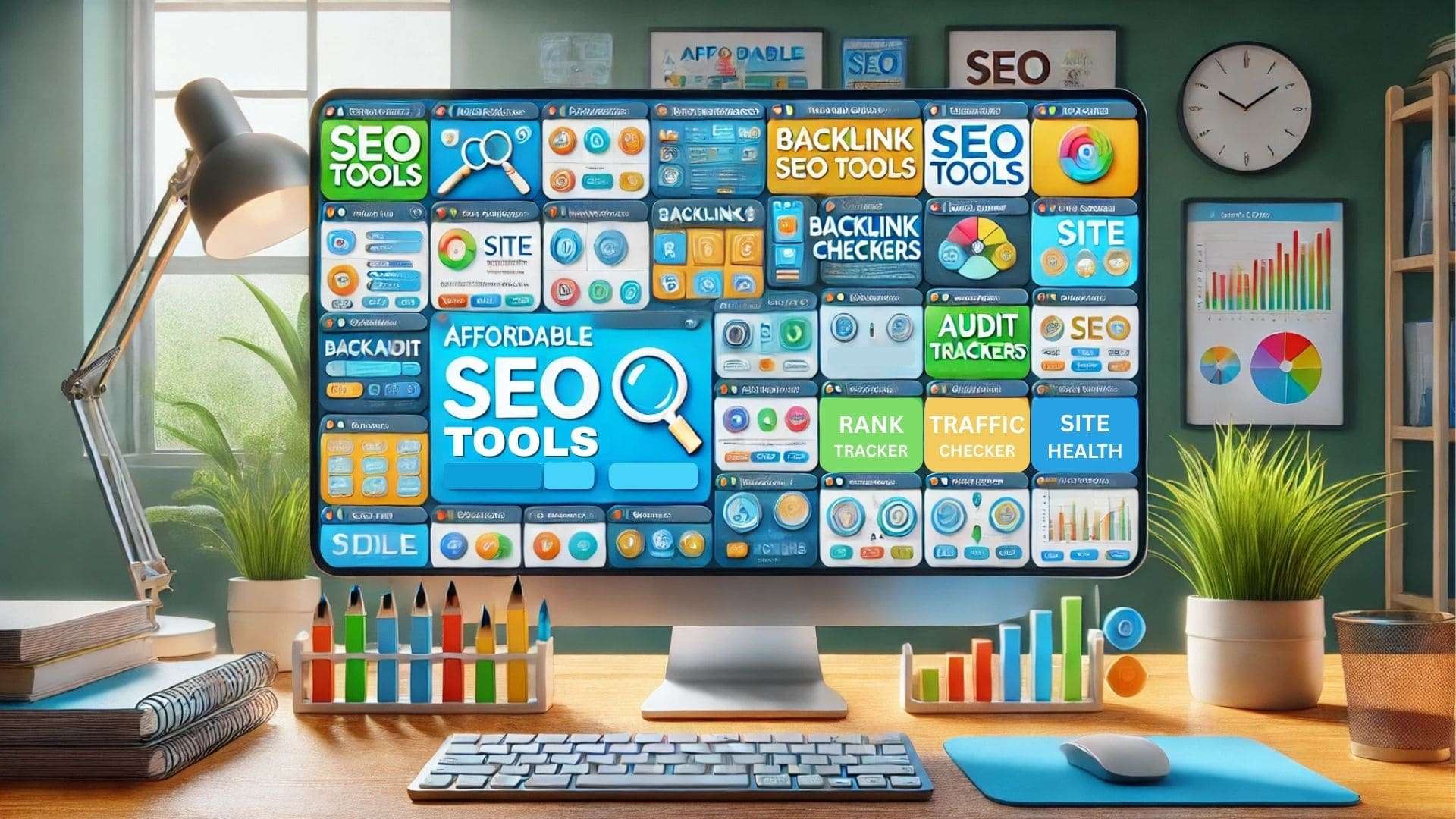
Finding the right SEO tool can feel overwhelming when expensive tools dominate the market. Most beginners and small businesses face challenges due to budget limits, lack of technical knowledge, or too many tools to choose from. In 2024, 61% of small business owners dropped SEO tools due to high monthly costs. That means affordability is not just a wish, it’s a real SEO requirement. The good news is that several affordable SEO tools that provide great features now exist. This guide shares tools to create, analyze, and optimize your SEO efforts, whether you’re new to SEO or experienced.
What Makes an SEO Tool Affordable and Effective in 2025?
An SEO tool becomes effective in 2025 when it offers comprehensive SEO features at an affordable price. Small businesses expect rank tracking, on-page SEO analysis, and a reliable keyword research tool without bloated costs. Free versions and free trials are now standard, especially for technical SEO and SEO audit capabilities.
Comparatively, an affordable SEO tool should still support optimization for search engine results and SEO content clarity. Moreover, tools that combine all-in-one SEO solutions with scalable support stand out more. Accordingly, usability, depth of analysis, and consistent updates define the best SEO tools on the market today.
How Small Businesses Define Value in SEO Software
Small businesses often value SEO software that simplifies complex SEO efforts without overwhelming their limited resources. Keyword research, rank tracking, and SEO audit tools must work efficiently within budget constraints. Free SEO tools or those offering a generous free version make a significant impact initially. Furthermore, affordable SEO tools with built-in on-page SEO features help target relevant search results accurately.
Additionally, usability and real-time SEO performance reporting also add measurable value. Hence, when small companies find an affordable SEO solution that delivers results consistently, they prioritize retention. Eventually, the balance between cost, support, and features dictates the tool’s real value.
5 Best Affordable SEO Tools For Small Businesses
1. Semrush:
Semrush remains one of the best affordable SEO tools with full-suite features and competitive data insights. It supports local SEO, technical SEO audits, and provides essential SEO metrics in a single dashboard. Many SEO professionals use this tool to analyze competitors’ SEO campaigns and streamline daily SEO tasks. (Starting at $129.95/month)
Moz is a reliable SEO platform, particularly for beginners and small businesses needing a user-friendly interface. The tool helps optimize your SEO strategy by highlighting technical SEO issues and tracking keyword performance. Moreover, Moz’s SEO checker offers consistent insights that improve SEO site structure and page rankings. (Starting at $99/month)
Key features:
Keyword suggestions and rank tracking
On-page SEO grader for individual URLs
SEO analysis with visual graphs
Page optimization recommendations
Easy-to-use interface for new to SEO users
3. SEO PowerSuite:
SEO PowerSuite is an all-in-one SEO software preferred by agencies needing robust offline capabilities. It includes SEO SpyGlass for backlink analysis and supports both free and paid SEO features. Unlike many tools on the market, this platform runs on desktop, making data storage secure and customizable. (Free version available with paid licenses starting at $299/year – approx. $25/month)
Key features:
SEO SpyGlass for backlink audits
Technical SEO checker in Website Auditor
Supports white-label SEO reporting
All-in-one SEO platform for teams
Offers a comprehensive SEO toolkit offline
4. Mangools:
Mangools is known for simplicity and effective SEO insights for small teams. It combines five tools in one suite to meet basic SEO requirements affordably. Beginners often favor it because it balances design, usability, and core features without the cost of expensive tools. (Starting at $29.90/month)
Key features:
KWFinder for keyword research and SEO data
SERPChecker for search engine result analysis
Backlink Miner for link building efforts
SERPWatcher for rank tracking
On-page SEO data simplified for beginners
5. Ubersuggest:
Ubersuggest stands out among cheap SEO tools that provide actionable data for small SEO campaigns. It helps with SEO tasks like content ideas, backlink audits, and keyword suggestions. Comparatively, this tool provides essential SEO features without charging as much as full-scale platforms. (Starting at $29/month)
Key features:
SEO insights based on competitors’ SEO strategies
Keyword tracking with daily updates
Site audit for technical SEO performance
Content ideas from top-performing pages
Built-in reporting tools for regular SEO analysis
Best Cheap SEO Tools That Offer Full-Suite Features
Some of the best SEO tools in 2025 combine multiple features in one affordable platform. Tools like SEO PowerSuite, Mangools, and Ubersuggest offer keyword research, backlink tracking, and SEO reporting tools altogether.
Accordingly, these tools support SEO professionals, agencies, and small businesses with consistent SEO data. Unlike tools that require separate purchases, these affordable SEO tools offer a complete SEO solution without excessive upselling.
Most of them even support technical SEO audits and SEO plugin integrations to strengthen overall SEO efforts. Eventually, the right tools improve visibility while staying within a small business budget.
Free Performance Tracking and Keyword Research Tool
1. Google Search Console:
Google Search Console is a webmaster tool that provides essential SEO data for site performance and indexing. It highlights technical SEO issues, identifies optimization opportunities, and helps SEO professionals track organic search traffic. Moreover, it plays a crucial role in local SEO performance monitoring.
Key features:
Free SEO platform for site owners
Real-time indexing status and crawl reports
Keyword insights from search results
Technical SEO checker with Core Web Vitals
Click-through rate (CTR) and impression tracking
2. Google Keyword Planner:
Google Keyword Planner is a free tool ideal for keyword research and PPC SEO strategies. Small businesses use it to find search volume estimates and identify high-performing keywords at low cost. Furthermore, it supports SEO campaigns when combined with other SEO tools available in the market.
Key features:
Free keyword research tool
Volume trends across multiple locations
Competitor keyword comparisons
Cost-per-click (CPC) data for ads and SEO
Ideal tool for new to SEO users with limited budget
Conclusion
Many tools on the market promise great results, but only a few truly match real-world SEO needs. This list focused on tools to help with technical SEO audits, keyword tracking, and content strategy. Cheap SEO tools that provide complete features allow beginners and small businesses to stay competitive. Experienced SEO professionals also rely on these tools to analyze results and reduce unnecessary spending.
Whether you’re starting your SEO journey or scaling campaigns, using the right platform matters. Have you used these tools before or do you have a favorite that deserves to be on this list?
To better understand the long-term value of search visibility, this guide explains exactly why SEO is important for any online strategy.
FAQs
1. How do SEO tools improve ranking?
SEO tools help identify issues, optimize content, and track keyword performance for better search visibility.
2. Can I use multiple SEO tools at once?
Yes. Many SEO professionals use a combination of tools for content, audits, and backlink tracking.
3. Is there an all-in-one SEO platform for small businesses?
Yes. SEO PowerSuite and Mangools offer affordable all-in-one SEO solutions for small business needs.
4. How often should I run SEO audits?
Run technical SEO audits monthly. This helps you catch issues early and keep your site optimized.
5. Do SEO tools help with local SEO?
Absolutely. Tools like Semrush and Moz include features that support location-based SEO campaigns effectively.
If you’ve noticed the WordPress admin bar not showing when logged in, you are not alone. This common issue can make managing your site frustrating, especially when you rely on the toolbar for quick access to the WordPress dashboard. Many users face this after installing new plugins, switching themes, or updating core files. It may seem like a minor glitch, but it often signals deeper conflicts or setting misconfigurations. Fortunately, the issue is usually easy to fix. This guide walks you through 5 clear steps to get your admin bar working again.
Common Causes Behind the WordPress Admin Bar Not Showing
The WordPress admin bar not showing is a common issue that can happen on either the front or back end. This toolbar plays a vital role by providing shortcuts to the WordPress dashboard, logout options, and quick access to site management tools. However, certain changes to your WordPress site can quietly cause the admin bar to go missing, without any obvious warning. For many users, small technical glitches like this are exactly why the question “Why Is WordPress So Hard To Use?” often comes up, but in reality, WordPress is not that hard to use once you understand how themes, plugins, and core settings interact with each other.
Often, users notice that the toolbar is gone when viewing the site, although everything works fine in the admin area. This issue can stem from your current theme, plugins, or settings in the user profile. Below are some specific reasons this may happen.
Theme Conflicts That Disable the Admin Bar:
Your WordPress theme controls how the site appears, but some themes include code that hides the admin bar. Specifically, developers might add a line of code in the functions.php file that disables the toolbar on the front end.
Although this might improve frontend visuals, it affects the overall WordPress dashboard experience for logged-in users. Consequently, any recent theme change can be the reason behind the admin bar not showing.
Hence, checking the theme settings or reverting to a default layout helps quickly isolate what’s causing the issue.
Plugin Settings That Interfere With Admin Display:
Some WordPress plugins unintentionally clash with how the toolbar functions or is displayed across the site. For instance, security or UI customization plugins may contain features that override or block the admin bar visibility.
Furthermore, a plugin might alter user roles or dashboard access, thereby disabling the toolbar on the WordPress website. If you’ve installed new plugins recently or updated existing ones, they might be causing the issue.
So, try deactivating them one by one and see if the WordPress admin bar reappears on the viewing site.
User Profile Settings That Hide the Admin Bar:
There is an option within each user profile that controls whether to show toolbar when viewing site. Surprisingly, this gets unchecked automatically in some setups, especially after role changes or user imports.
Thus, if your admin bar is not showing, you should first head to your profile settings. Ensure the “Show Toolbar When Viewing Site” box is checked.
Otherwise, the WordPress admin bar won’t show up, regardless of plugins or theme configurations. This setting often gets overlooked, but it’s one of the most common root causes.
Steps to Fix the Missing Admin Bar Issue
Step 1: Check for Plugin Conflicts
Firstly, deactivate all active plugins from your WordPress admin panel to isolate the missing admin bar issue.
Then, reactivate each plugin one by one to identify which one is causing the admin bar conflict.
Some caching or user role plugins disable the admin bar without clearly stating so in settings.
If the admin bar reappears after disabling a plugin, you’ve found the one causing the problem.
Create a full WordPress backup beforehand to restore your site if anything goes wrong during testing.
Step 2: Review User Profile Settings in WordPress
Go to your WordPress admin area, click Users, and edit your specific user profile.
Scroll down to the toolbar option and make sure “Show Toolbar When Viewing Site” is checked.
If the admin bar won’t show, unchecking and rechecking this box can sometimes fix the issue.
This missing admin bar problem often affects certain roles or users due to profile misconfigurations.
Afterwards, save changes and log out then back in to see if the admin bar appears again.
Step 3: Switch to a Default WordPress Theme
Sometimes the current theme is causing the bar to hide by adding a line of code to functions.php.
Switch to a default WordPress theme like Twenty Twenty-Four to test this admin bar issue in WordPress.
If the admin bar is still not showing after the theme switch, the problem lies elsewhere.
Conversely, if the bar returns, you now know your theme was causing the missing admin bar.
You can later re-enable your theme after removing or editing the line that hides the admin toolbar.
Step 4: Check for Errors in functions.php or Custom Code
Open your theme’s functions.php file from a text editor or via the WordPress admin dashboard.
Look for any code like show_admin_bar(false); which directly disables the admin bar for all users.
Delete or comment out this code to fix the admin bar from disappearing unexpectedly.
Code customizations, especially from tutorials or snippets, are often causing the missing admin bar issue.
Always back up your WordPress core files and theme before editing any code that affects the wp admin.
Step 5: Clear Caches and Browser Data
Use a caching plugin or hosting settings in your WordPress hosting account to flush all server-side caches.
Then, clear your browser cache to ensure the admin bar is not hidden due to outdated browser files.
Occasionally, the admin bar goes missing because of old cached scripts or CSS conflicts.
Likewise, if you use a CDN, purge all cached content for the front end of the site.
Finally, refresh the page while logged in to check if the admin top bar is now visible.
Additional Troubleshooting Tips For WordPress Admin Bar Not Showing Up
Inspecting JavaScript Errors in the Console:
Open your browser’s developer tools and check for any visible WordPress errors in the console area. Sometimes a broken script affects sections of the WordPress admin, including showing the admin bar correctly. Moreover, a JavaScript conflict can trigger a white bar at the top of the screen when logged in.
Reinstalling Core WordPress Files Without Losing Data:
Go to your WordPress admin, then visit Dashboard > Updates to reinstall the WordPress core files. This can help fix issues affecting your admin bar, especially if a corrupted update caused the error earlier. Before doing this, create a complete WordPress backup through your WordPress hosting account just in case.
Conclusion
Running aWordPress website often involves fixing issues like plugin errors, theme glitches, or missing features. The WordPress admin bar not showing is one of those common problems that users face across different roles. It may seem minor, but it affects productivity, especially when managing tasks from the admin dashboard. Thankfully, the steps to resolve it, such as checking profile settings, switching themes, and clearing caches, are clear and easy to follow. Regular maintenance and backups can help prevent this from recurring. What’s the most frustrating WordPress issue you’ve had to fix recently?
FAQs
1. How can I fix the admin bar issue without coding?
Use the Health Check plugin to troubleshoot and identify conflicts without altering code.
2. Is it necessary to switch themes to fix the admin bar?
Temporarily switching to a default theme can help determine if your current theme is the issue.
3. Will clearing the cache help restore the admin bar?
Yes, clearing browser and site caches can resolve display issues related to the admin bar.
4. Can I use CSS to hide or show the admin bar?
While possible, it’s better to manage the admin bar through WordPress settings to avoid conflicts.
5. What if none of the fixes work?
Consider reinstalling core WordPress files or seeking assistance from your hosting provider for persistent issues.
Competing in a highly competitive niche can feel like trying to rank against digital giants with vast resources. Many websites in competitive markets struggle to gain visibility due to high keyword difficulty and saturated search engine result pages (SERPs). Research indicates that targeting long-tail keywords with lower competition can significantly boost your search engine rankings.
By focusing on user intent, optimizing on-page SEO, and building a robust backlink profile, you can improve your ability to rank. This guide provides actionable SEO strategies to help you rank higher in competitive niches without overspending.
What Makes a Niche Competitive?
A niche becomes competitive when multiple websites target the same relevant keywords with high search volume. These competitive keywords often have high keyword difficulty, making it harder to achieve top search rankings. Additionally, websites in a competitive market usually possess strong domain authority and high-quality backlinks from authoritative sites. Besides content quality, user experience and on-page SEO are critical for ranking well.
Despite tough competition, targeting long-tail keywords with low keyword difficulty helps improve your ability to rank. Moreover, maintaining content fresh and relevant significantly boosts your search engine rankings. Therefore, success requires better content and strategic keyword research efforts.
Mastering the Basics of SEO in a Competitive Niche
Mastering SEO in a competitive niche requires focusing on several critical factors directly impacting search rankings. Firstly, conduct detailed keyword research using tools like Google Keyword Planner to find the right keywords. Although competitive keywords dominate most search engine result pages, targeting long-tail keywords often proves easier to rank. Secondly, optimize your website content for both users and search engines by including keywords naturally.
Tips to rank higher include:
Strengthen your backlink profile by earning high-quality backlinks from authoritative sites.
Improve user experience by making your website easy to navigate and mobile-friendly.
Focus on on-page SEO through effective on-page optimization and clear content structure.
Moreover, consistently publish valuable content related to your niche that answers the user’s search intent. Lastly, regularly track your keyword rankings using SEO tools like SEO Powersuite’s Rank Tracker to adjust strategies accordingly.
Strategies to Rank in a Competitive Niche Without Overspending
Ranking in a competitive niche requires precise keyword research, high-quality backlinks, and smart on-page SEO strategies. Focus on long-tail keywords with low competition to effectively boost your search engine rankings. Optimize your website content for a better user experience and continuously monitor keyword rankings using reliable SEO tools.
1. Analyze the Competitive Landscape Before Targeting Any Niche:
Initially, assess the competitive landscape by performing a detailed competitive analysis using advanced SEO tools. Evaluate how many websites in a competitive niche already target your selected keywords. Additionally, check their domain authority, backlink profile, and existing search engine rankings. High keyword difficulty combined with strong competitors indicates a highly competitive niche.
However, identifying gaps where competitors lack valuable content may improve your ability to rank. Moreover, examine the keywords your competitors consistently target. Consequently, focus on creating better content to surpass their positions in search engine result pages and improve visibility.
2. Find and Use Low Competition Keywords for Faster Growth:
Start by using tools like Google Keyword Planner to find keywords with low keyword difficulty and decent search volume. These low-competition terms are generally easier to rank and help attract consistent traffic to your website. Additionally, focus on long-tail keywords, which often reflect more precise search intent. Incorporate these keywords naturally into your website content for better search engine rankings.
Furthermore, regularly refresh your content fresh and relevant to maintain positions on results pages. Lastly, avoid wasting resources on highly competitive terms when faster growth is possible through smarter keyword research.
3. Focus on Search Intent to Increase Ranking Success:
Align your content with the exact needs of your target audience to improve your search rankings.
Tips to rank higher include:
Identify the precise search intent behind each query before creating related content.
Address user concerns directly within your blog posts using accurate and relevant information.
Focus on valuable content that satisfies user needs while integrating target keywords seamlessly.
Moreover, structure your content to be easy to navigate, enhancing user experience. Consequently, content matching search intent ranks higher on search engine results pages, improving organic visibility consistently.
4. Build a Strong Backlink Profile Without Expensive Campaigns:
Building a solid backlink profile does not always require expensive outreach or promotional campaigns. Instead, focus on earning high-quality backlinks by producing valuable content that attracts authoritative sites naturally. Additionally, guest posting on reputable websites helps improve both backlinks and domain authority. Moreover, regularly analyze your existing links to replace low-value connections with stronger alternatives.
A well-balanced backlink profile will significantly boost your search engine rankings. Lastly, avoid black-hat tactics since poor-quality links may harm your seo success rather than improve it.
5. Implement Technical SEO to Gain an Edge Over Competitors:
Effective technical SEO ensures search engines crawl and index your website without any performance issues. Optimize website speed, improve mobile responsiveness, and eliminate broken links for a better user experience. Additionally, apply schema markup to help search engines understand your content structure efficiently. Moreover, improve internal linking strategies to strengthen keyword relevance across your pages.
Addressing technical barriers helps you rank higher, even in a highly competitive industry. Finally, regular audits using advanced seo tools like SEO Powersuite’s Rank Tracker ensure technical issues never hinder your progress.
6. Master On-Page Optimization for Competitive Keywords:
Focus heavily on on-page SEO to optimize your content for competitive keywords effectively. Start by placing target keywords in critical areas, including titles, meta descriptions, and headers. Additionally, ensure your website content flows naturally and provides genuine value to readers. Moreover, optimize images, improve loading speeds, and structure content using proper HTML tags.
Consequently, search engines better understand your pages, helping you rank well against competitors. Lastly, update old content regularly to keep it fresh and relevant, signaling content authority to search engines consistently.
7. Leverage Smart SEO Strategies to Improve Ranking Performance:
Smart strategies can significantly boost your search engine rankings even in a competitive market.
Tips to rank successfully include:
Prioritize producing better content that addresses real user concerns comprehensively.
Build relationships with influencers for natural, high-quality backlinks from authoritative sites.
Use advanced rank tracker tools to expand insights and measure performance consistently.
Additionally, invest time in understanding the competitive landscape before targeting new topics. Consequently, balanced strategies combining technical SEO, content improvements, and focused link-building often outperform aggressive campaigns in highly competitive industries.
8. Monitor Progress and Adjust Strategies Based on Ranking Results:
Track performance regularly using advanced SEO tools to understand which strategies produce measurable results. Analyze keyword rankings frequently, ensuring your pages continue performing well in search engine results. Additionally, monitor traffic fluctuations to identify content requiring immediate improvements. Moreover, use tools like SEO Powersuite’s Rank Tracker for detailed insights into ranking changes.
Consequently, adjust your keyword targeting and content strategies based on updated performance data. Lastly, continually refine your backlink approach and refresh older content to maintain strong positions across relevant SERPs and remain competitive.
What Not to Do to Rank in a Competitive Niche
Now that you fully understand how to rank in a Competitive niche. Here’s what not to do:
Keyword Stuffing:
Keyword stuffing disrupts the natural flow of website content and harms your ability to rank well. Search engines penalize pages that forcefully insert competitive keywords without providing valuable content. Instead, integrate keywords naturally and maintain relevance to the target keyword. Additionally, focus on long-tail keywords with low competition to attract highly targeted traffic. Remember, quality content with strategic keyword placement improves your search engine rankings significantly.
Also, tools like Google Keyword Planner help you identify the right keywords without overloading your content. Consequently, avoid excessive keyword repetition and prioritize making your blog posts easy to navigate and highly informative.
Buying Links:
Buying links may seem like a shortcut, but it severely damages your backlink profile and domain authority. Search engines detect unnatural link-building patterns and penalize websites involved in such practices. Instead, focus on acquiring high-quality backlinks from authoritative sites through valuable content creation. Moreover, targeting the right keywords naturally attracts organic backlinks. Tools like SEO PowerSuite’s Rank Tracker help you monitor backlink quality effectively.
Paid links rarely boost your search engine rankings and often lead to long-term SEO failure. Therefore, prioritize ethical link-building strategies that strengthen your website content and improve your position on search engine result pages.
Forgetting About User Experience:
Ignoring user experience directly lowers your ability to rank in a highly competitive niche. Visitors prefer websites that are easy to navigate and load quickly. Additionally, optimizing on-page SEO elements like headings, images, and internal links improves website content engagement. Google’s algorithm increasingly values positive user experience when determining keyword rankings. Therefore, focus on delivering valuable content that addresses search intent effectively.
Furthermore, ensure mobile responsiveness and reduce unnecessary design clutter. When users find your site helpful and accessible, they stay longer, boosting your search engine rankings. Finally, consistently updating content keeps it fresh and relevant for returning visitors.
Conclusion
Achieving higher search rankings in a competitive niche requires a strategic approach focusing on keyword research, quality backlinks, and user experience. By targeting long-tail keywords and optimizing your website content, you can attract highly targeted traffic. Remember to regularly update your content to keep it fresh and relevant. What strategies have you found most effective in improving your search engine rankings?
FAQs
1. What does it mean to rank in a competitive niche? It means achieving higher search engine rankings in industries with many established competitors.
2. Why is keyword research important for SEO success? Proper keyword research helps identify search terms with better ranking potential and targeted traffic.
3. How can I improve my website’s domain authority? Acquire high-quality backlinks from authoritative sites and consistently publish valuable, optimized content.
4. What is the difference between high and low competition keywords? High competition keywords are harder to rank for, while low competition keywords offer easier ranking opportunities.
5. How often should I perform SEO audits? Conduct SEO audits quarterly to ensure your website remains optimized and free of technical issues.
6. Do backlinks still matter for SEO in 2025? Yes, backlinks remain a strong ranking factor, especially from trusted and authoritative sources.
Many businesses invest heavily in Google Ads and PPC campaigns but struggle to assess their true impact. Without clear insights, it’s challenging to determine if paid search ads are effectively driving conversions or merely consuming budget. Analyzing metrics such as click-through rates and conversion rates is essential for optimizing paid search performance. That is where paid search analytics delivers real value. By leveraging tools like Google Analytics, marketers can gain valuable insights into their paid search campaigns, enabling data-driven decisions that enhance PPC effectiveness. This article provides a comprehensive guide on utilizing paid search analytics to boost your PPC strategies.
How Paid Search Analytics Connects to PPC Growth
Paid search analytics helps marketers measure PPC success by monitoring how paid search campaigns are performing. When users search specific terms on platforms like Google and Bing, paid search ads appear at the top of the search results. These paid results generate traffic from your paid search strategy and can be tracked directly through your Google Ads account.
Analyzing your paid search data within tools like Google Analytics reveals how effective your ads are performing. This helps improve the relevance of your ads and the overall performance of your PPC campaigns across all marketing channels.
Using Google Analytics to Monitor Paid Search Campaigns
Google Analytics plays a major role in analyzing the performance of your paid search campaigns. Once integrated with your Google Ads account, you can evaluate traffic from your paid search and compare it with organic search. The platform helps monitor how your ads on search engines like Google behave when users search targeted keywords.
Paid traffic in GA4 offers insights into how each search engine marketing effort is converting. Reports in Google Analytics highlight how specific paid search ads are performing. With these insights, you can assess the effectiveness of your paid ads and refine your digital marketing strategy.
Making the Most of Google Analytics 4 for PPC
Tracking paid search in GA4:
Google Analytics 4 enables advertisers to track paid search traffic in GA4 using improved attribution models. Linking your Google Ads campaign to GA4 helps measure the success of your paid search engine marketing efforts. Each time a user searches and clicks your ad, GA4 logs the action across platforms like Google Ads. The system categorizes this under paid traffic and maps it to campaign goals.
You can analyze the paid search based on which ad appears and how users interact with it. This enhances your PPC advertising strategy through more accurate data insights from within your Google Analytics account.
Viewing paid search traffic in GA4 reports:
Reports in Google Analytics 4 give detailed visibility into paid search campaigns and search volume performance. You can see how paid traffic behaves differently from organic, based on user searches. The GA4 interface allows filtering paid and organic search traffic side by side. Campaign-level breakdowns show paid search traffic in GA4 segmented by keywords, devices, and channels.
These insights reveal how relevant your ads are and guide adjustments within Google Ads. It’s also possible to track whether your ad appears for competitive terms, enhancing your ability to manage a successful PPC campaign with accurate paid traffic metrics.
Comparing GA4 vs Universal Analytics for PPC insights:
GA4 offers more advanced features than Universal Analytics when analyzing your paid search performance. While Universal Analytics focused on session-based data, GA4 tracks users across devices and platforms like Google Ads. GA4 includes new metrics that help measure the performance of your PPC campaigns more effectively. You can better analyze paid search traffic by using event-based tracking and audience segmentation.
GA4 simplifies attribution reporting for paid search engine marketing, allowing faster analysis of how ads are performing. This means advertisers now get clearer insights into paid search traffic and better tools for campaign adjustments across marketing channels.
Tools That Help Analyze Paid Search Performance
Google Ads Report – Gives direct performance metrics from your Google Ads campaign and search terms results.
Google Analytics 4 – Tracks paid and organic search behaviors, providing deeper visibility into paid traffic in GA4.
Ahrefs – Analyzes paid and organic keywords, great for knowing about paid traffic competitiveness.
SpyFu – Reveals competitor PPC strategies and how their ads are performing on search engines like Google.
Optmyzr – Automates PPC campaigns and helps monitor performance of your paid search ads across platforms.
Supermetrics – Connects multiple platforms like Google Ads and visualizes your PPC performance through dashboards.
Adalysis – Offers actionable insights by analyzing your paid search campaigns and alerting you to issues.
How Paid Traffic Impacts Search Engine Marketing
Differences between paid traffic and organic:
Feature
Paid Traffic
Organic Search
Source
Comes from paid search ads
Comes from unpaid, natural search results
Placement
Appears at top of the search engine results page
Appears below the paid results
Cost
Requires budget within Google Ads or similar platforms
Free, but requires SEO and content effort
Speed
Generates traffic quickly after campaign launch
Takes time to build search engine visibility
Measurement
Tracked via tools like Google Analytics and GA4
Measured with SEO tools and organic metrics
Control over Positioning
Advertisers choose where the ad appears
Rankings depend on search engine algorithms
Strategic uses of paid search marketing:
Paid search marketing allows brands to target specific search terms with ads on search engines like Google. Businesses can control when and where their paid ads appear, ensuring visibility on high-volume keywords. It helps drive traffic from users actively searching for their product or service.
Platforms like Google Ads allow fine-tuned bidding and keyword adjustments. The strategy is essential when launching a new product, promoting sales, or running time-sensitive campaigns.
Paid search campaigns are also useful in testing audience responses and increasing reach beyond what organic search can deliver. Every online advertising decision becomes more data-backed and results-driven.
Steps to Optimize PPC Using Paid Search Analytics
You can optimize PPC campaigns by analyzing how paid search traffic behaves using tools like Google Analytics 4.
Review reports in Google Analytics to measure the success of your search campaigns and the relevance of your ads.
Use paid search performance metrics to refine your bidding strategy and targeting.
Make sure each ad appears for the right keywords with enough search volume.
Segment traffic from your paid search to see what drives conversions.
Adjust your Google Ads campaign budget based on which ads are performing.
Evaluate paid and organic search results together to balance reach and efficiency across platforms.
Future Trends in Paid Search Engine Marketing
Paid search engine marketing is shifting toward smarter automation, real-time optimization, and cross-platform campaign integration. Google and Bing are improving how advertisers manage paid search traffic using AI-based recommendations.
Reports in Google Analytics 4 will continue evolving to offer even clearer insights. Marketers will prioritize quality score and ad relevance to ensure ads appear where they matter most.
Search engines like Google are expected to emphasize user intent in their ad ranking systems. As paid and organic search merge visually, advertisers must adapt their strategies to remain visible on every search engine results page. Effective paid search depends on staying updated.
Conclusion
Comprehending paid search analytics is vital for maximizing the effectiveness of your PPC campaigns. By analyzing key metrics through platforms like Google Analytics, you can make informed decisions that enhance paid search performance. Integrating these insights into your digital marketing strategy ensures that your paid search ads contribute meaningfully to your business objectives. Are you ready to elevate your PPC campaigns using paid search analytics?
For easy instructions on checking your feedback, read this helpful guide on Google reviews.
FAQs
1. What metrics are crucial in Paid Search Analytics?
Key metrics include click-through rate (CTR), cost per click (CPC), and conversion rate.
2. How does Google Analytics 4 differ from Universal Analytics for PPC?
GA4 offers event-based tracking and enhanced cross-platform insights compared to session-based Universal Analytics.
3. Can Paid Search Analytics help reduce advertising costs?
Yes, by identifying underperforming ads and reallocating budget to more effective campaigns.
4. Is Paid Search Analytics applicable to platforms other than Google Ads?
Absolutely, it can be applied to any platform offering paid search advertising, like Bing Ads.
5. How often should I review my Paid Search Analytics data?
Regularly, ideally weekly, to make timely adjustments and improvements to your campaigns.
As we enter 2025, small businesses face a fast-changing world. To keep up, embracing new technology is now a must.
The quick changes in technology are changing how small businesses work. They can now make their operations better, improve customer service, and grow. By using new tools and technologies, small businesses can make their processes smoother, stand out from the competition, and grow steadily.
Key Takeaways
Small businesses must adopt new technology to remain competitive.
Technology adoption is key to better operations and customer service.
Using new tech helps small businesses grow and stay ahead.
The competitive landscape in 2025 calls for innovation and flexibility.
Embracing technology is essential for lasting growth.
The State of Small Business Technology in 2025
The tech world for small businesses is changing fast. New tools are coming out, and businesses are trying to keep up. They face both chances and hurdles in integrating new technology into their work.
Current Technology Landscape
From 2023 on, tech has gotten more advanced. Small businesses are using tools like predictive analytics and customer service automation. These help them work better and make customers happier.
Key Technology Shifts
More businesses are using AI and automation. This makes their work smoother and helps them make better choices. One company taking the lead is Injectco, which implemented an AI-based lead scoring and nurturing platform to eliminate manual lead vetting.
“It flagged every incoming lead in real time, scored them 0 to 100 based on behavior, and auto-routed high-scorers directly to our booking calendar.” – Kiara DeWitt, CEO at Injectco
This shift helped save her team nearly 9 hours per week — the equivalent of gaining a full-time employee without the payroll costs.
Industry-Specific Trends
Each industry is using tech in its own way. Retail is all about online shopping and making experiences personal. Manufacturing is getting more into IoT.
Competitive Pressures
Small businesses feel the need to keep up with new tech for many reasons. They want to work better, make customers happier, and beat the competition. They do this by implementing tech solutions that bring new ideas.
Why Adopting New Tech Is No Longer Optional
Small businesses must adopt new technology now more than ever. This is due to changing consumer needs and the need for better operations. To meet these demands and stay ahead, using new tech is key.
Market Expectations and Consumer Behavior
Today, people want a unified and tailored experience from businesses. Technology is essential for this. It helps businesses use data and AI to better serve their customers.
Operational Efficiency Requirements
Technology is also vital for making operations smoother. It automates tasks and makes processes more efficient. This helps small businesses save money, work better, and use resources wisely.
Competitive Advantage Through Innovation
Using new technology can make a small business stand out. By adopting new tech, businesses can offer unique products and services. This sets them apart from others.
Technology
Market Impact
Operational Benefit
AI and Machine Learning
Personalized customer experiences
Predictive analytics for inventory management
Cloud-Based Solutions
Scalability and flexibility
Enhanced collaboration and remote work capabilities
IoT and Connected Devices
Smart product offerings
Real-time monitoring and predictive maintenance
Top Technology Trends Reshaping Small Business Operations
Small businesses are on the verge of a tech revolution. Several key trends are leading the way in 2025. These trends boost efficiency and open new growth paths and ways to engage with customers.
AI and Machine Learning Applications
Artificial Intelligence (AI) and Machine Learning (ML) are at the forefront. They offer small businesses powerful tools to enhance operations. These technologies are used in many ways, including:
Predictive Analytics for Small Business
Predictive analytics, powered by ML, helps small businesses make better decisions. It forecasts trends and behaviors. This is key for managing inventory, planning finances, and finding new opportunities.
Mitchell Cookson, Co-founder of AI Tools Inc., shared how his company uses internal AI agents to analyze user behavior and support tickets.
“These agents summarize trends weekly and recommend actionable insights — what used to take two people 25 hours now runs in the background and lands on our desks Monday morning.”
Customer Service Automation
AI-driven chatbots and virtual assistants are changing customer service. They offer 24/7 support, answer questions, and solve problems quickly. This boosts customer satisfaction and frees up human resources for more complex tasks.
Cloud-Based Solutions
Cloud technology is essential for small businesses. It offers scalability, flexibility, and cost savings. Cloud-based solutions let businesses access important apps and data from anywhere, making remote work and collaboration easier.
IoT and Connected Devices
The Internet of Things (IoT) connects devices and systems for real-time monitoring and control. For small businesses, IoT helps with smart inventory management and personalized customer services.
Blockchain for Small Business Applications
Blockchain technology is becoming popular among small businesses. It improves security, transparency, and efficiency. It’s used for secure transactions, supply chain management, and identity verification.
By embracing innovation and adopting these technologies, small businesses gain big benefits. They see improved efficiency, better customer experiences, and smarter decision-making.
Digital Transformation Strategies for Limited Budgets
Small businesses face a fast-changing tech world. They need to find ways to adopt digital transformation without spending too much. This means investing wisely and getting the most value for their money.
Prioritizing High-Impact Technologies
Small businesses should pick technologies that make a big difference. This could be AI and machine learning for better customer service or cloud-based solutions for easier data sharing. By focusing on these, they can use their resources well.
Subscription vs. Ownership Models
Choosing subscription models can help save money. It means no big upfront costs and always having the latest tech. For example, cloud-based software subscriptions offer flexibility and scalability.
Leveraging Free and Open-Source Solutions
Free and open-source tools are great for small businesses. They save money and often have community support. Tools like open-source CRM systems and free project management tools are examples.
Grant Programs and Tax Incentives
Many governments help businesses with grants and tax breaks for new tech. Small businesses should look into these to lower the cost of digital transformation. Tax credits for tech investments can be a big help.
By using these strategies, small businesses can overcome digital transformation challenges even with tight budgets. It’s about being smart, choosing the right tech, and finding affordable solutions to grow and stay competitive.
Customer-Facing Technologies Driving Growth
Customer-facing technologies are key for small businesses to stay ahead and grow in 2025. They help businesses offer smooth customer experiences, boost engagement, and raise conversions.
Enhanced E-commerce Platforms
Enhanced e-commerce platforms are changing how small businesses sell online. They offer mobile optimization, streamlined checkout processes, and integrated payment gateways. These features improve customer happiness and online sales.
Personalization Technologies
Personalization technologies are vital for small businesses to stand out. They use AI-driven customer insights and dynamic content generation to craft unique customer experiences.
AI-Driven Customer Insights
AI-driven customer insights help businesses understand customer data and behavior. This info is key for tailoring marketing and boosting engagement.
Dynamic Content Generation
Dynamic content generation lets businesses create content that matches individual customers’ tastes. This boosts the chance of a sale.
Omnichannel Communication Tools
Omnichannel communication tools are critical for a smooth customer experience across different channels. They integrate social media, email, and messaging apps. This ensures customers get consistent, timely updates.
Augmented Reality for Retail
Augmented reality (AR) is changing retail by letting customers interact with products in new ways. AR technology boosts engagement and sales for small businesses.
Seamless customer experience across multiple channels
Social media integration, email marketing automation
Augmented Reality for Retail
Increased customer engagement, driven sales
Virtual try-on, product demonstrations
Back-Office Innovations Streamlining Operations
Back-office innovations are changing how small businesses work. They make these businesses more flexible and competitive. By using new technologies, small businesses can work better, save money, and make smart choices.
Accounting and Financial Management Systems
Modern accounting and financial systems are key for small businesses. They help manage money well. These systems give real-time financial insights, do tasks automatically, and follow financial rules. By using these systems, businesses can make their financial work smoother and better manage their money.
Inventory and Supply Chain Management
Good inventory and supply chain management are important for small businesses. Technologies like predictive inventory solutions and supplier management platforms help. They help businesses manage their stock, cut waste, and work better with suppliers.
Predictive Inventory Solutions
Predictive inventory solutions use data and learning to guess demand. This helps businesses keep the right amount of stock. It saves money by avoiding too much stock and ensures they meet customer needs.
Supplier Management Platforms
Supplier management platforms help businesses talk and work better with suppliers. They make sure businesses get what they need on time and reliably. These platforms also help avoid problems in the supply chain.
HR and Employee Management Solutions
HR and employee management solutions change how small businesses handle their team. They make HR tasks easier, from finding new employees to helping them grow. This boosts employee engagement and work quality.
Business Intelligence Dashboards
Business intelligence dashboards give small businesses a clear view of their work. They help make decisions based on data. These dashboards combine data to give actionable insights that help businesses grow.
By using these back-office innovations, small businesses can do better, stay ahead, and grow in a lasting way.
Cybersecurity Essentials for the Modern Small Business
Small businesses have seen many benefits from going digital. But, they also face more cyber threats. It’s key for them to keep up with new security risks as tech changes.
Threat Landscape in 2025
In 2025, small businesses will face a tough and changing threat world. Cyberattacks will get smarter, using AI and tricks to fool people. Small businesses need to stay alert and act fast to keep safe.
Cost-Effective Security Solutions
Good cybersecurity doesn’t have to cost a lot. Small businesses can find affordable ways to protect themselves. Here are some:
Multi-factor authentication
Regular software updates
Employee training programs
Cloud-based security services
Employee Training and Awareness
Employees are the first defense against cyber threats. Regular training and awareness programs can really help. They should learn about passwords, spotting phishing, and safe internet use.
Compliance and Regulation Considerations
Small businesses must also deal with many cybersecurity rules and standards. Knowing and following laws like GDPR and CCPA is important. It helps avoid legal trouble and keeps customers’ trust.
Cybersecurity Measure
Cost Effectiveness
Impact on Security
Multi-factor Authentication
High
Significant
Regular Software Updates
High
Moderate
Employee Training
Moderate
High
Cloud-based Security
Moderate
Significant
By knowing the threats, using smart security, training staff, and following rules, small businesses can boost their cybersecurity. This is part of their digital transformation and technology implementation strategy.
Strategies for Successfully Adopting New Tech
For small businesses, embracing new technology is now a must. They need to find ways to adopt and use new tech effectively.
Technology Assessment and Planning
Starting with a detailed tech assessment is key. It means checking current systems, finding what’s missing, and picking the right tech for goals. Careful planning makes sure new tech fits with business plans and grows with the company.
Implementation Best Practices
Getting new tech right is all about good implementation. This includes:
Phased Rollout Approaches: Slowly adding new tech to avoid problems and make adjustments.
Employee Onboarding Techniques: Giving full training to make sure staff knows and uses new systems well.
Phased Rollout Approaches
Phased rollout helps manage risks. It lets businesses test and tweak their plans before going all in.
Employee Onboarding Techniques
Good training is essential for tech success. Companies should invest in detailed onboarding. This should include practical training and support to help staff use new tech well.
Measuring ROI on Technology Investments
To show the value of new tech, businesses need to track ROI. They should look at how new tech improves productivity, saves costs, and boosts sales.
Overcoming Common Adoption Challenges
But, adopting new tech can be tough. Issues like resistance, lack of skills, and integration problems can arise. To beat these, businesses should encourage innovation, keep training up, and choose tech that works with what they already have.
Case Studies: Success Stories of Tech-Forward Small Businesses
Small businesses are making big strides by using new tech. They’re using advanced systems to grow, work better, and serve customers better.
Retail Transformation
In retail, small shops are using AI chatbots and augmented reality. For example, a New York boutique used AI to manage stock. This led to a 25% sales boost thanks to better stock and personalized advice.
“The integration of AI in our inventory management has been a game-changer. It’s allowed us to predict demand more accurately and reduce waste.” – Emily Chen, Owner, Trendy Boutique
Service Industry Innovation
Service businesses are also seeing benefits from new tech. A California dental clinic used a cloud system for patient management. This cut admin costs by 30% and made patients happier.
Manufacturing Modernization
Small makers are using IoT and predictive maintenance. A car parts maker in the US used IoT to cut downtime by 40% and boost efficiency.
Predictive Inventory Solutions
Predictive inventory helps small businesses in retail and manufacturing. It uses data to guide stock decisions, reducing waste.
Supplier Management Platforms
Supplier platforms help small businesses manage suppliers and track shipments. A small food company in the US cut supply chain costs by 20% with such a platform.
Industry
Technology Adopted
Benefits Realized
Retail
AI-powered inventory management
25% increase in sales
Service
Cloud-based patient management
30% reduction in administrative costs
Manufacturing
IoT-based monitoring system
40% reduction in equipment downtime
Professional Services Digitization
Professional services firms are also going digital. A Texas law firm used a digital system for documents. This made clients happier and cut document search time by 50%.
These stories show how new tech can help small businesses grow and improve. By choosing the right tech, they can stay ahead and succeed in the long run.
Conclusion: Preparing Your Business for Continued Technological Evolution
Technology keeps changing, and small businesses must keep up to stay ahead. They need to adopt new technologies to compete. By being innovative and choosing the right tech, they can succeed for a long time.
For small businesses, using new technology is essential. They must understand the tech world and change quickly. This helps them meet market needs and customer wants.
Small businesses can grow and work better by focusing on key technologies. They should use affordable solutions and improve both customer service and back-office work. As tech changes, businesses ready to adopt new tech will lead the way to success.
FAQ
What are the key technology trends that small businesses should be aware of in 2025?
Small businesses should watch out for AI, cloud solutions, IoT, and blockchain. These trends change how they work and grow.
How can small businesses with limited budgets adopt new technology?
They can pick important tech, use affordable services, and get help from government programs. This helps them stay up-to-date without spending too much.
What are the benefits of adopting customer-facing technologies like enhanced e-commerce platforms and personalization technologies?
These technologies make customers happier and help businesses grow. They offer a better experience and can increase sales.
How can small businesses ensure the security of their technology systems?
They can use affordable security tools, train employees, and follow rules. This keeps their systems safe from cyber threats.
What are the key considerations for small businesses when adopting new technology?
They should plan, follow best practices, and check if it’s worth it. Overcoming challenges is key to using new tech well.
How can small businesses measure the ROI of their technology investments?
They can track how much money they make, how efficient they are, and how happy customers are. Then, they compare these to what they spent.
What are some common challenges that small businesses face when adopting new technology, and how can they be overcome?
Challenges include not knowing enough, being hesitant to change, and not having enough money. Training, getting help, and finding cheap solutions can help.
How can small businesses stay ahead of the curve in terms of technology adoption and remain competitive?
They should keep up with new tech, figure out what they need, and invest wisely. This helps them grow and stay ahead.
According to a recent survey, almost two-thirds of companies offer their employees the opportunity to work remotely at least some of the time.
There are numerous advantages to remote work for both businesses and employees, including lower overhead costs, better work-life balance, and the elimination of office politics.
For SEO companies, one of the most significant benefits often overlooked is the ability to tap into a global talent pool. Instead of limiting recruitment to the global market, agencies can now recruit skilled professionals from anywhere in the world. This is especially beneficial for SEO companies aiming for global expansion or looking to bring in specialized expertise from different regions.
This is more feasible than ever thanks to global employment platforms, which simplify the complexities of international hiring. These platforms offer features such as Employer of Record (EOR) services, global payroll systems, and contractor management tools — all of which make it easier for SEO companies to scale and manage remote teams across borders.
If your SEO company is considering broadening its recruitment globally, let’s explore the top 10 global employment platforms that can help you hire talented professionals from around the world.
1. Remote
Remote is a leading global employment platform and EOR provider, designed to make it simple for companies to hire, pay, and manage talent in more than 190 countries. With a strong emphasis on compliance, Remote also offers international contractor management, global payroll, and time-tracking capabilities. It even has an integrated remote job board (called Remote Talent) to help you attract and source overseas employees.
What really sets Remote apart is its transparent pricing and commitment to local expertise, which helps businesses confidently navigate the complexities of international hiring. It’s ideal for SEO companies looking to scale globally without the legal headaches.
2. Deel
Deel is another popular choice for businesses hiring international talent, offering a broad suite of features including EOR services, automated contracts, and real-time payroll tracking. While Remote is typically considered the best Deel alternative, this is a strong option for companies needing fast, scalable solutions.
That said, its wide array of features can sometimes feel overwhelming for smaller businesses or startups, and pricing may climb quickly as your hiring needs grow.
3. Papaya Global
Papaya Global stands out for its powerful payroll automation and strong compliance infrastructure. It supports hiring in over 160 countries and integrates easily with many HR and ERP systems. Their platform is particularly helpful for companies managing a mix of employees and contractors. One limitation is the less intuitive UI compared to competitors, but it’s still a strong choice for businesses with global hiring ambitions.
4. Oyster
Oyster positions itself as a “global employment platform for distributed teams” and lives up to that statement with an easy-to-use system and robust compliance support. Its unique strength lies in offering localized benefits packages, helping to create a better overall employee experience — although, some users have noted slower customer support response times during critical periods, which might be a consideration for fast-paced HR teams.
5. Velocity Global
Velocity Global offers comprehensive global hiring solutions, including EOR services, contractor management, and immigration support — ideal if your new hire is physically relocating. It’s particularly strong when it comes to navigating complex regulatory environments, but considering its pricing is on the higher end, it might be better suited to larger enterprises, or at least scale-ups with healthy budgets.
6. Multiplier
Multiplier prides itself on empowering businesses to onboard international employees quickly while staying fully compliant with local laws. Its standout feature is simplicity — users often praise its clean UI and ease of use. It also supports benefits administration and tax compliance, but its coverage is slightly narrower than some of the bigger players, so it’s definitely worth checking if your target country is supported first.
7. Globalization Partners (G-P)
G-P has been in the global employment game for a long time and is known for its extensive legal infrastructure and enterprise-level support. With a presence in 180+ countries, it’s a reliable choice for companies looking to hire overseas with minimal risk. On the downside, G-P’s platform can feel a bit dated compared to newer, more agile competitors, and the pricing isn’t always as transparent.
8. RemotePass
RemotePass caters especially well to remote-first companies by simplifying contractor management and international payroll. The platform is particularly appreciated for its fast onboarding and contractor-focused features. However, it has fewer advanced HR integrations and may lack the broader EOR functionality needed for hiring full-time employees in some countries.
9. WorkMotion
WorkMotion is a Berlin-based platform that enables companies to hire talent globally through its EOR and compliance services. It’s a great option for companies wanting a Europe-centric provider with local know-how. It’s not necessarily as mature or feature-rich as global leaders like Remote or Deel, especially when it comes to payroll reporting tools, there’s the advantage of working with a fellow company.
10. Boundless
Boundless helps businesses employ remote talent legally and compliantly, with more of a focus on transparency and employee well-being than many other providers. The platform stands out for its in-depth country guides and focus on fair employment practices, but it currently supports a smaller number of countries than some of its competitors, so it’s better suited for companies with more specific geographic targets.
Wrapping Up
Whether you’re a growing SEO agency or an established enterprise, global hiring is more accessible than ever, and global employment platforms are key to streamlining the process. While Remote sets the standard with its comprehensive features and transparency, each platform on this list brings a unique combination of tools and services designed to enhance your international hiring strategy. These platforms are perfect for SEO companies looking to expand their teams with top global talent, offering solutions that simplify compliance, payroll, and recruitment across borders.