Category: SEO Guides

  • Best Frontend Frameworks 2026: SEO, Speed & More

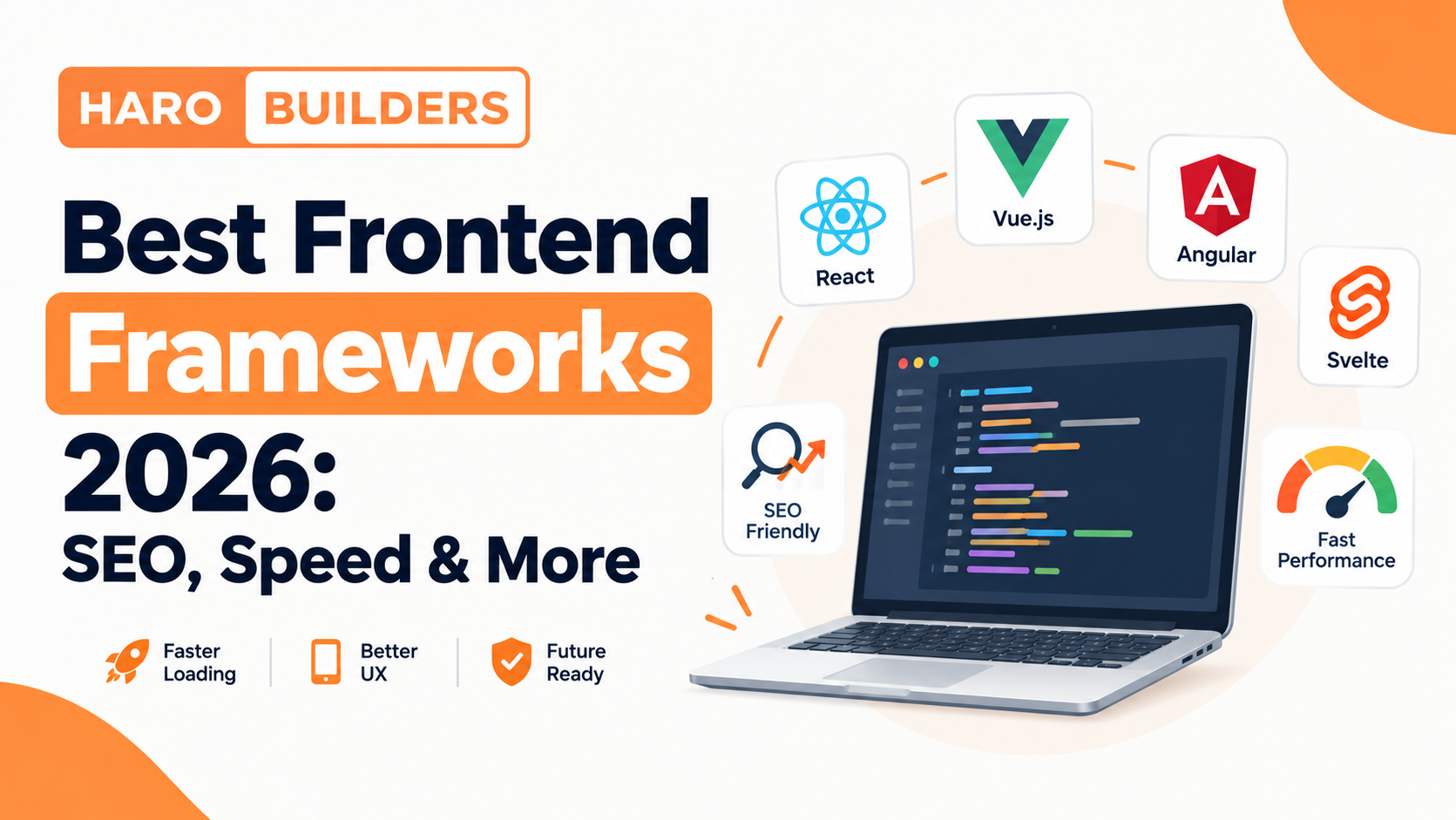
    Best Frontend Frameworks 2026: SEO, Speed & More

    Choosing the right frontend framework affects how you build, maintain, and scale a website or web application. The right choice can simplify development, improve page delivery, and make it easier to create search-friendly pages. The wrong choice can introduce unnecessary JavaScript, complicated deployment requirements, or maintenance work that a smaller project does not need.

    The best frontend framework in 2026 depends on your project. Astro is a strong option for content-heavy websites, Next.js is suitable for many React-based applications, Nuxt is a natural fit for Vue teams, and SvelteKit is worth considering for Svelte-based projects. Angular remains a strong candidate for applications that benefit from its integrated development approach. These are starting points, not universal rankings.

    This guide compares the leading options by use case, SEO, rendering, performance, development experience, and long-term maintenance so you can make an informed decision.

    Quick Answer: Which Frontend Framework Is Best in 2026?

    FrameworkBest suited forMain consideration
    Next.jsReact-based websites, SaaS products, and web applicationsFlexible architecture, but requires thoughtful configuration
    AstroBlogs, documentation, publishing, and content-focused websitesExcellent static-first approach; interactive features need deliberate integration
    NuxtVue-based websites and applicationsParticularly appealing to teams familiar with Vue
    SvelteKitInteractive websites and applications using SvelteConcise component model and a smaller ecosystem than React
    AngularStructured, larger applicationsIntegrated tooling and conventions, with additional architectural complexity
    ReactInteractive user interfaces and component-based productsA UI library; routing and full application architecture may require additional tools
    SolidStart / SolidJSReactive interfaces and specialized applicationsWorth evaluating when its reactive model fits the team and project
    QwikApplications prioritizing resumability and reduced startup JavaScriptDistinct architecture that requires learning and ecosystem evaluation

    Quick recommendations:

    • For a content-focused website, evaluate Astro first.
    • For a React-based application with flexible rendering requirements, consider Next.js.
    • For a Vue team, consider Nuxt.
    • For a Svelte-based application, evaluate SvelteKit.
    • For a large application requiring an integrated framework, consider Angular.
    • For a small, mostly static site, consider whether a full JavaScript framework is needed at all.

    These recommendations are based on architecture and common use cases, not a controlled performance benchmark.

    What Is a Frontend Framework?

    A frontend framework is a collection of conventions, APIs, and development tools that helps developers build a website’s user interface and manage how it behaves in the browser.

    Frontend code typically uses HTML for structure, CSS for presentation, and JavaScript for interactivity. Frameworks and related libraries help organize these elements into reusable components and manage concerns such as routing, state, data loading, and rendering.

    For example, an online store might use reusable product cards, search filters, shopping-cart controls, and account pages. A framework can help developers build these features consistently instead of implementing every interaction from scratch.

    Framework vs. library: What is the difference?

    React is commonly described as a JavaScript library for building user interfaces. Next.js is a framework built around React that provides additional application features. Vue is a progressive UI framework, while Nuxt supplies a broader application framework for Vue.

    The distinction matters because choosing React alone is not the same as choosing Next.js. A React project may need separate decisions about routing, server rendering, data fetching, deployment, and other application-level concerns.

    Why frontend frameworks matter

    A framework can influence:

    • How pages are rendered and delivered.
    • How much JavaScript runs in the browser.
    • How components are organized and reused.
    • How developers manage routing and data.
    • How easily the project can scale or be maintained.
    • How search engines access important page content.

    However, the framework is only one part of the system. Content quality, implementation, hosting, caching, images, accessibility, and technical configuration also influence the final result.

    Best Frontend Frameworks in 2026: Detailed Comparison

    1. Next.js — Best for Many React-Based Websites and Applications

    Next.js extends React with application-level capabilities, including routing, server and client components, static generation, and server rendering. Its App Router uses React Server Components and supports features such as streaming and navigation optimizations.

    Best for: SaaS applications, content-rich websites, e-commerce projects, and products that need a flexible React-based architecture.

    Why choose Next.js?

    Next.js can support websites that combine mostly static pages with dynamic or personalized experiences. A marketing page might be generated ahead of time, while an account dashboard retrieves user-specific information.

    Its rendering options give teams flexibility, but that flexibility comes with decisions about caching, data fetching, server components, client components, and deployment.

    Advantages

    • Broad React ecosystem.
    • Flexible static and server rendering options.
    • Integrated routing and application conventions.
    • Suitable for many content and interactive use cases.
    • Supports a range of deployment architectures.

    Limitations

    • Developers must understand the distinction between server and client components.
    • Dynamic rendering and server operations can increase infrastructure complexity.
    • Poorly managed client-side code can still affect performance.
    • Teams may need time to understand caching and rendering behavior.

    When should you avoid Next.js?

    If your website is primarily static content and requires very little interactivity, a simpler static-first approach may reduce unnecessary complexity. If your team is unfamiliar with React and does not need its ecosystem, adopting Next.js may introduce a learning cost without a corresponding benefit.

    Official reference: Next.js documentation.

    2. Astro — Best for Content-Heavy Websites

    Astro is designed around delivering HTML efficiently and adding client-side JavaScript where it is needed. Its architecture supports static generation by default and can also support server-rendered routes when configured for that purpose.

    Best for: Blogs, editorial websites, documentation, landing pages, resource libraries, and many content-driven business websites.

    Why choose Astro?

    Imagine a publishing website with hundreds of articles, author pages, category pages, and a few interactive tools. Most visitors primarily need to read content rather than interact with a complex application.

    Astro’s static-first approach can deliver the main content as HTML while limiting client-side JavaScript to components that actually require it. Developers can also integrate UI components from supported frameworks where appropriate.

    Advantages

    • Well suited to content-focused websites.
    • Static generation is a natural default.
    • Interactive components can be added selectively.
    • Supports integration with several UI frameworks.
    • Can reduce unnecessary client-side JavaScript when implemented carefully.

    Limitations

    • Complex application behavior may require additional architectural decisions.
    • Dynamic or personalized features may need server rendering or client-side logic.
    • Teams must understand when components need hydration and when they do not.
    • Project requirements should be checked against the integrations and hosting model.

    When should you choose Astro?

    Choose Astro when most of the page is content and interactivity is limited to elements such as search filters, menus, forms, or embedded tools.

    It is a particularly sensible candidate for a blog or documentation site where the content should be available in the initial HTML and where reducing browser-side work is a priority.

    Official reference: Astro documentation.

    3. Nuxt — Best for Vue-Based Websites and Applications

    Nuxt is an application framework built around Vue. It adds features and conventions for routing, rendering, data fetching, and building complete web applications.

    Best for: Vue-based business websites, content-driven applications, and teams that prefer the Vue ecosystem.

    Why choose Nuxt?

    Vue provides a component-oriented approach to building interfaces. Nuxt extends that approach with application structure and rendering options, making it suitable for projects that need more than a collection of standalone UI components.

    Teams already using Vue may find Nuxt a natural next step when they need structured routing, server rendering, or a more complete development environment.

    Advantages

    • Built around the Vue ecosystem.
    • Provides conventions for routing and application organization.
    • Supports different rendering approaches.
    • Suitable for content sites and interactive applications.
    • Offers a structured path from smaller projects to more complex applications.

    Limitations

    • Less natural for teams committed to React or Angular.
    • Developers still need to understand server/client boundaries and caching.
    • Ecosystem preferences can influence hiring and long-term maintenance.
    • Rendering choices must match the application’s data and hosting requirements.

    When should you choose Nuxt?

    Nuxt is worth considering when the team prefers Vue and wants an integrated application framework rather than assembling every feature independently.

    Official reference: Nuxt documentation.

    4. SvelteKit — Best for Svelte-Based Applications

    SvelteKit is the application framework associated with Svelte. Svelte’s component model shifts substantial work to the build process, while SvelteKit adds routing, rendering, and application-level functionality.

    Best for: Interactive websites, smaller teams, and applications whose developers prefer Svelte’s programming model.

    Why choose SvelteKit?

    Developers who like writing concise components may appreciate Svelte’s approach. SvelteKit provides the broader application structure needed to build and deploy websites rather than relying on Svelte components alone.

    Advantages

    • Concise component syntax.
    • Application-level routing and rendering.
    • Suitable for interactive interfaces.
    • Supports server-rendered and statically generated experiences.
    • A useful alternative for teams that do not want to adopt React.

    Limitations

    • The ecosystem and hiring pool differ from those of React.
    • Third-party integrations should be checked before committing.
    • Performance still depends on application design and implementation.
    • Teams must account for long-term support and maintenance requirements.

    When should you choose SvelteKit?

    Choose it when the team prefers Svelte, the ecosystem supports the required features, and the framework’s conventions fit the product.

    Official reference: SvelteKit documentation.

    5. Angular — Best for Structured, Larger Applications

    Angular is a comprehensive web application framework with an integrated approach to components, dependency injection, routing, forms, and development tooling. It also provides server-side rendering and prerendering capabilities.

    Best for: Large applications, enterprise products, and teams that value established conventions and a more integrated development environment.

    Why choose Angular?

    A complex business application may have many screens, forms, data models, permissions, and developers working on different features. An integrated framework can help establish consistent patterns across the project.

    Angular’s structure can be beneficial when a team wants a standardized approach rather than choosing every major architectural component independently.

    Advantages

    • Integrated tooling and application conventions.
    • Suitable for complex, component-driven applications.
    • Structured patterns for large development teams.
    • Supports server-side rendering and prerendering.
    • Comprehensive development ecosystem.

    Limitations

    • More concepts and conventions to learn.
    • May be unnecessarily complex for a small content website.
    • Teams need to follow its architectural patterns effectively.
    • Performance depends on implementation, rendering, and shipped JavaScript.

    When should you choose Angular?

    Consider Angular when the application is complex enough to benefit from its integrated structure and the development team is comfortable with its ecosystem.

    Official reference: Angular documentation.

    6. React — Best for Flexible, Component-Based User Interfaces

    React is a UI library rather than a complete application framework. It provides components and tools for building interactive interfaces, while routing, rendering, data loading, and deployment depend on the surrounding architecture.

    Best for: Interactive interfaces, dashboards, reusable UI systems, and applications built around the React ecosystem.

    Why choose React?

    React is useful when a product needs reusable components and an ecosystem that supports a wide range of UI patterns. Developers can use it within a larger framework or combine it with other tools according to the project’s needs.

    Advantages

    • Broad component and tooling ecosystem.
    • Reusable UI architecture.
    • Suitable for complex interactive interfaces.
    • Can be used with application frameworks such as Next.js.
    • Flexible choices for project architecture.

    Limitations

    • React alone does not prescribe every part of an application.
    • Tool selection can create additional maintenance work.
    • Client-heavy implementations can ship unnecessary JavaScript.
    • Server rendering and SEO behavior depend on the chosen architecture.

    When should you choose React alone?

    A client-side React application may be appropriate when the product is primarily an authenticated application and public search visibility is not central to every route. For public, content-heavy pages, assess whether a framework or rendering solution is needed.

    Official reference: React documentation.

    7. SolidJS and SolidStart — Worth Evaluating for Reactive Applications

    SolidJS is a JavaScript UI library focused on fine-grained reactivity. SolidStart provides an application framework around Solid.

    Best for: Teams interested in fine-grained reactive interfaces and willing to evaluate a smaller ecosystem.

    Advantages

    • A reactive programming model designed to update relevant parts of the interface.
    • Component-based development.
    • An alternative to React-centric architecture.
    • Useful for teams whose project requirements align with its model.

    Limitations

    • Smaller ecosystem and talent pool than React in many markets.
    • Third-party integration availability needs checking.
    • Benchmarks do not guarantee better results for every real application.
    • Long-term maintenance should be evaluated before adoption.

    Choose SolidJS or SolidStart because the architecture fits the project, not simply because a benchmark labels it fast.

    8. Qwik — Worth Evaluating for Startup and Loading Architecture

    Qwik takes a different approach to delivering interactive applications. Its resumability model aims to reduce the need to re-execute application code during initial loading by resuming serialized application state.

    Best for: Projects where startup work is a key architectural concern and the team is prepared to adopt Qwik’s approach.

    Advantages

    • Distinct resumability architecture.
    • Designed to reduce startup JavaScript execution.
    • Useful for evaluating alternative approaches to hydration.
    • Offers a different set of trade-offs from traditional React-based applications.

    Limitations

    • Developers need to understand its architecture and conventions.
    • Ecosystem maturity and hiring availability should be assessed.
    • Results depend on the actual application and deployment environment.
    • It may not be the simplest choice for a team already invested in another framework.

    When should you choose Qwik?

    Consider it when startup performance is a meaningful requirement, the team can evaluate the framework properly, and its integrations meet the project’s needs. Do not choose it solely on the basis of a single benchmark.

    Official reference: Qwik documentation.

    Frontend Frameworks for SEO: What Actually Matters?

    A framework can make SEO implementation easier, but no frontend framework automatically guarantees higher Google rankings.

    Search engines need to discover the page, access its content, understand its purpose, and process its links and metadata. Google can render JavaScript, but JavaScript-related crawling and rendering problems can still affect discoverability. Server rendering or prerendering can make important content available earlier and reduce dependence on client-side execution.

    1. Make important content available in the rendered page

    For a blog article, the title, main text, canonical URL, and relevant links should be accessible to search engines without relying on a fragile client-side sequence.

    Test representative pages using Google Search Console’s URL Inspection tool. Check the rendered HTML, indexability, response status, and any errors that prevent important content from appearing.

    2. Choose an appropriate rendering strategy

    A content website may benefit from static generation, while a personalized application may require server rendering or client-side data fetching for some features.

    Choose the approach that fits the content’s update frequency, personalization requirements, and infrastructure.

    3. Optimize Core Web Vitals

    Google’s Core Web Vitals measure loading performance, responsiveness, and visual stability. The commonly used good thresholds at the 75th percentile are:

    MetricWhat it measuresGood threshold
    LCPLoading performance2.5 seconds or less
    INPResponsiveness200 milliseconds or less
    CLSVisual stability0.1 or less

    These thresholds are described in Google’s Core Web Vitals documentation.

    A framework with a lightweight initial page can still perform poorly if the page loads oversized images, blocks rendering, shifts its layout, or performs expensive JavaScript operations.

    4. Handle technical SEO correctly

    Regardless of framework, check:

    • Unique, relevant page titles and meta descriptions.
    • Correct canonical URLs.
    • Descriptive internal links.
    • Appropriate HTTP status codes.
    • Accessible page content and meaningful headings.
    • XML sitemap and robots directives.
    • Mobile usability and image optimization.
    • Structured data that matches visible page content.

    A technically sound framework cannot compensate for thin content, confusing information architecture, or missing search intent.

    SSR vs. SSG vs. CSR vs. ISR

    Rendering determines when and where a page’s HTML is generated. The best approach depends on how frequently the content changes, whether it is personalized, and how much work the server and browser need to perform.

    Rendering strategyHow it worksSuitable use casesMain trade-off
    SSR — Server-Side RenderingGenerates HTML when a request is processedPersonalized or frequently updated pagesRequest-time processing and caching complexity
    SSG — Static Site GenerationGenerates HTML ahead of timeBlogs, documentation, landing pagesContent changes may require rebuilding or revalidation
    CSR — Client-Side RenderingThe browser builds or updates much of the interface using JavaScriptHighly interactive application experiencesInitial content and interaction can depend heavily on JavaScript
    ISR — Incremental Static RegenerationRefreshes generated pages through a framework-specific revalidation processContent sites that need a balance between static delivery and updatesRevalidation and caching behavior require configuration

    These labels describe general patterns. Framework implementations differ, and some applications combine multiple strategies across different routes or components.

    Does SSR guarantee better rankings?

    No. SSR can make important content available in the initial HTML and reduce reliance on client-side rendering. However, rankings also depend on relevance, content quality, links, indexing, technical implementation, and many other factors.

    Static generation can be equally suitable for pages whose content does not need to be generated on every request. Google recommends making content accessible and following JavaScript SEO best practices rather than assuming that one rendering strategy guarantees rankings.

    Which Frontend Framework Is Fastest in 2026?

    There is no universally fastest framework for every website and workload. Performance depends on the amount of JavaScript delivered, rendering strategy, page complexity, network conditions, hosting, caching, third-party scripts, and the devices used by visitors.

    For example, Astro’s static-first approach can suit a content website that needs little client-side JavaScript. A Next.js application may perform well when static rendering, caching, and server/client boundaries are implemented appropriately. A highly interactive dashboard has different performance requirements from a blog.

    How to compare framework performance fairly

    1. Build the same representative page or feature in each candidate framework.
    2. Use equivalent content, images, functionality, and third-party scripts.
    3. Deploy each version to a comparable hosting environment.
    4. Measure real-world Core Web Vitals where field data is available.
    5. Use lab tests to diagnose loading and interaction problems.
    6. Record bundle size, server response time, and important implementation details.
    7. Repeat tests and report the conditions rather than selecting the best single result.

    A framework comparison without a consistent methodology should not present speed rankings as established fact.

    Best Framework by Website Type

    Website or projectFrameworks to evaluate firstWhy
    Blog or content publicationAstro, Next.jsStatic content delivery or a flexible React-based architecture
    Documentation websiteAstro, Next.jsContent-focused routing and generated pages
    Marketing websiteAstro, Next.js, NuxtContent delivery with optional interactive features
    E-commerce websiteNext.js, Nuxt, Astro with suitable integrationsDepends on product data, personalization, checkout, and rendering needs
    SaaS applicationNext.js, Nuxt, SvelteKit, AngularDepends on the UI ecosystem, authentication, and application complexity
    Enterprise applicationAngular, Next.js, NuxtDepends on team conventions, architecture, integrations, and maintenance needs
    Highly interactive dashboardReact, Angular, SvelteKit, SolidJSComponent architecture and interaction requirements matter most
    Small static business websiteAstro or no JavaScript frameworkA simpler solution may be sufficient
    Vue-based projectNuxtBuilds on the team’s existing Vue skills
    Svelte-based projectSvelteKitProvides application-level features around Svelte

    Treat this as a shortlist, not a rigid ranking. Existing code, developer experience, accessibility, integrations, and hosting constraints may change the best choice.

    How to Choose a Frontend Framework

    Use this checklist before starting a project or committing to a migration.

    1. Define the website’s purpose

    Start with the pages and functionality the product actually needs. A company website, content library, and interactive financial dashboard do not need identical architecture.

    2. Identify SEO requirements

    If public pages must appear in search results, check how the framework handles rendered HTML, metadata, routing, canonical URLs, and indexability.

    3. Determine the level of interactivity

    Ask whether most visitors will read content or interact with frequently changing data, filters, dashboards, and application state.

    4. Choose a rendering strategy

    Decide which routes can be generated ahead of time and which need request-time data or personalization. Avoid using dynamic rendering everywhere when much of the content is static.

    5. Evaluate developer experience

    Consider the team’s existing skills, documentation quality, testing approach, debugging tools, and available integrations.

    6. Estimate total cost of ownership

    Consider hosting, build times, runtime requirements, third-party services, maintenance, migration, and the cost of onboarding developers.

    7. Test a representative page

    Build a small proof of concept with the actual content and functionality. Measure its performance and confirm that the deployment approach works before expanding the project.

    Common Frontend Framework Mistakes

    Choosing the most popular framework by default

    Popularity can help with hiring and ecosystem support, but it does not prove that a framework is appropriate for a particular project.

    Assuming SSR automatically means SEO

    SSR can help deliver content in HTML, but metadata, indexing directives, content quality, and technical implementation still matter.

    Ignoring JavaScript costs

    A framework can encourage reusable components while the final application still ships too much JavaScript. Audit the actual production page rather than relying on the framework’s reputation.

    Optimizing only for a Lighthouse score

    Lab scores are useful diagnostic signals, but field data and real user experience matter too. Measure representative pages and investigate actual bottlenecks.

    Choosing based only on bundle size

    Bundle size matters, but it is not the only factor. Server response time, caching, interaction cost, image delivery, accessibility, and maintainability also influence the outcome.

    Migrating without a clear business reason

    A framework migration can create new bugs, disrupt URLs, introduce deployment complexity, and consume development resources. First determine whether the existing issues can be fixed through better rendering, caching, code splitting, or asset optimization.

    SEO Checklist for Any Frontend Framework

    Use this checklist before publishing a framework-based website.

    • Important content is available in rendered HTML.
    • Pages return appropriate HTTP status codes.
    • Titles and meta descriptions are unique and relevant.
    • Canonical URLs are correct.
    • Internal links use crawlable, descriptive anchors.
    • Robots directives do not unintentionally block indexing.
    • Sitemap entries point to valid canonical URLs.
    • Images are sized and compressed appropriately.
    • Mobile layouts work without disruptive layout shifts.
    • JavaScript errors do not prevent important content from loading.
    • Core Web Vitals are monitored on representative pages.
    • Structured data reflects the visible page content.
    • The production deployment is tested after updates.

    For a wider SEO workflow, HaroBuilder’s guide to affordable SEO tools discusses resources for auditing and monitoring websites. Use the tools that match your project’s actual needs rather than adding software without a clear purpose.

    Frequently Asked Questions

    What is the best frontend framework in 2026?

    The best framework depends on your project’s requirements. Astro is a strong candidate for content-focused websites, Next.js suits many React-based applications, Nuxt works naturally for Vue teams, SvelteKit supports Svelte applications, and Angular is useful for projects that benefit from its integrated architecture.

    Which frontend framework is best for SEO?

    Astro and Next.js are both worth evaluating for SEO-focused websites, but neither guarantees rankings. What matters is whether important content is accessible, pages are indexable, rendering is reliable, and the site provides a good user experience.

    Is Next.js better than React for SEO?

    Next.js provides application-level rendering and routing capabilities that React alone does not prescribe. That can make some SEO tasks easier, but a well-built React application can also be search-friendly when its rendering and technical SEO are implemented correctly.

    Is Astro better than Next.js for SEO?

    Astro can be a strong choice for content-heavy websites with limited interactivity. Next.js may be more suitable for applications that need React and a broader mix of static, server-rendered, and interactive experiences. The better option depends on the actual requirements.

    Is Angular good for SEO?

    Angular can support search-friendly websites through server-side rendering and prerendering. Developers still need to configure rendering, metadata, canonical URLs, and indexability correctly.

    Is Vue good for SEO?

    Yes. Vue-based websites can be search-friendly. Nuxt offers application-level features that can make rendering and SEO implementation more straightforward for many Vue projects.

    Which frontend framework is fastest?

    There is no universal winner. A static-first implementation can perform well for a content site, while a carefully optimized application framework can work well for a complex web app. Compare equivalent implementations under consistent conditions.

    Should I use SSR or SSG for SEO?

    Use SSG when content can be generated ahead of time and refreshed appropriately. Use SSR when request-time data or personalization requires it. Both approaches can support SEO when implemented correctly.

    Do frontend frameworks affect Core Web Vitals?

    They can affect loading, JavaScript execution, responsiveness, and layout behavior. However, the final results also depend on page design, hosting, caching, images, third-party scripts, and implementation quality.

    What is the easiest frontend framework to learn?

    The answer depends on your background. React has a large learning ecosystem, Vue is often approachable for developers who prefer its component conventions, and Svelte offers a concise component model. Try a small project with each relevant candidate before deciding.

    Final Recommendation

    There is no single best frontend framework for every project in 2026. Choose based on the website you need to build, not the framework that is currently receiving the most attention.

    👉For content-heavy websites, start by evaluating Astro. .For React-based applications with varied rendering requirements, evaluate Next.js. .For Vue projects, consider Nuxt. 👉For Svelte applications, consider SvelteKit. For structured enterprise applications, assess Angular. For smaller static websites, first ask whether a full framework is necessary.

    Before committing, build a representative page, measure its real performance, verify its SEO behavior, and estimate the long-term maintenance cost. If you need further resources for improving a website’s search visibility, explore HaroBuilder’s guides and resources.

  • How Readability Affects the Quality of SEO Content

    How Readability Affects the Quality of SEO Content

    Readability plays an important role in creating useful SEO content. Search engines may bring visitors to your page. However, readers still need clear and helpful information. If your content feels difficult to read, visitors may leave quickly. Therefore, SEO writers should focus on both search visibility and user experience. Sentence structure, paragraph length, word choice, and content flow all affect readability. By improving these areas, you can create content that feels natural and easier to follow.

    What Makes SEO Content Readable?

    Readable SEO content communicates information without making readers work too hard. Therefore, start with simple and familiar language. Choose words that match your audience and topic. Keep each paragraph focused on one main idea. This approach helps readers follow your argument without losing context. It also makes longer articles easier to scan. Next, avoid unnecessary jargon whenever possible. Industry terms can help in some situations. However, excessive technical language can make your content feel complicated.

    Finally, review your content from the reader’s perspective. Ask whether each sentence adds useful information. If a sentence feels unnecessary, consider removing or rewriting it.

    Why Readability Matters for SEO Content

    Readable content helps visitors understand information more quickly. As a result, readers can find answers without struggling through complicated sentences or dense paragraphs. Clear writing also improves the overall experience on your website. Visitors can scan headings, paragraphs, and lists more easily. They can then identify the information that matters most to them.

    Moreover, readability encourages you to focus on the reader. SEO content should answer questions and provide useful information. It should not simply repeat keywords to target search engines. Keywords still have an important role in SEO. However, you should place them naturally within useful content. Forced keyword usage can interrupt the reading experience.

    For this reason, treat readability as part of your content quality process. First, create useful information that matches search intent. Then, edit your writing for clarity and flow. A readable article can also make complex subjects easier to explain. Short sentences can clarify important points. Clear headings can guide readers through the topic. Together, these elements create a smoother reading experience.

    How Readability Affects the Quality of SEO Content

    1. Keep Sentence Length Under Control:

    Long sentences can make SEO content harder to follow. They often contain several ideas that readers must process together. Therefore, break complicated thoughts into shorter sentences. A mix of short and medium-length sentences also creates natural flow. Avoid making every sentence too brief. Otherwise, your writing may sound repetitive.

    An online sentence counter tool can help you review sentence structure. Simply paste your text into the tool and check the results. You can review your word count, sentence count, and number of sentences.

    It can also help you check:

    • Words per sentence
    • Average sentence length
    • Longest sentence
    • Average words per sentence
    • Sentences in your text

    For better readability, aim to reduce unnecessary longer sentences. However, sentence length should not become a rigid rule. Some sentences may naturally need more words, especially in academic writing.

    2. Use Active Voice to Make Content More Direct:

    Active voice usually makes SEO copy clearer and more direct. It shows who performs an action, which helps readers understand the message quickly. For example, “Writers improve SEO content through editing” uses active voice. The subject performs the action directly. Passive voice shifts the focus toward the action. Sometimes, that approach makes sense. Use it when the person performing the action does not matter or remains unknown.

    During editing, check whether passive sentences make your content less direct. Rewrite them when active voice improves clarity. However, do not remove every passive sentence. Good writing should sound natural and suit the context.

    3. Make SEO Content Easy to Scan:

    Online readers often scan content before reading every word. Therefore, your SEO content should make important information easy to find. Use descriptive H2s and H3s that clearly explain each section. Also, keep paragraphs focused on one main idea. Bullet points work well when you need to present several details. For example, use them for:

    • Steps and instructions
    • Features or benefits
    • Important facts
    • Related examples

    You can also highlight important terms with bold text. However, avoid excessive formatting. Too much emphasis makes the page harder to scan. At the end, connect sections with simple transition words. This approach creates smoother movement between ideas.

    4. Avoid Keyword Stuffing and Repetitive Language:

    Keywords help search engines understand your topic. However, repeating the same phrase too often can make your content sound unnatural. Instead, place keywords where they fit naturally. Avoid using the same phrase in every paragraph or heading. You can also use related terminology when it improves clarity. However, never add unrelated terms simply to create keyword variety. Focus on useful information first. Then, review your content for unnecessary repetition.

    5. Edit SEO Content for Readability Before Publishing:

    Editing can reveal problems that you miss during the first draft. Therefore, read your article from the user’s perspective before publishing. Remove unnecessary words and filler wherever possible. Then, check sentence length, paragraph structure, grammar, and punctuation.

    A simple readability checklist can include:

    CheckWhat to Review
    SentencesRemove unnecessary longer sentences
    ParagraphsKeep ideas focused
    GrammarFix unclear or incorrect wording
    TransitionsConnect ideas naturally
    KeywordsRemove forced repetition
    HeadingsMake them descriptive

    You can also use a checker to identify potential readability issues. However, review the suggestions yourself. Automated results cannot always understand your intended meaning.

    6. Combine Readability With Other SEO Content Practices:

    Readability works best alongside other SEO practices. Clear sentences cannot replace useful and relevant information. First, match your content with search intent. Then, provide original information that answers the reader’s needs. Also, use descriptive headings and relevant links throughout the article. Internal links can guide readers to related pages. External links can support useful claims.

    Before publishing, check these areas:

    • Search intent
    • Original information
    • Relevant internal links
    • Useful external links
    • Descriptive headings
    • Updated information
    • Grammar and punctuation

    Conclusion

    Readable SEO content helps users understand information more easily. It also creates a better experience across the page. Therefore, make readability part of your publishing workflow. Control sentence length and use active voice when appropriate. Keep paragraphs short and make important information easy to scan.

    Avoid keyword stuffing and remove unnecessary repetition. Also, check grammar, punctuation, transitions, and structure before publishing. A sentence counter can help with the final review. It lets you check sentence length, word count, and structure. You can then improve unclear or overly long sentences before publishing your SEO content.

  • How Many Keywords for SEO Should I Use?

    How Many Keywords for SEO Should I Use?

    How many keywords should I use for SEO?

    Many websites never reach expected rankings because they target many SEO keywords without a focused content strategy. Research and Google guidance consistently show that keyword cannibalization across multiple pages on your site often weakens visibility instead of improving results.

    So site owners often wonder, How many keywords for SEO should I use?  This complete guide explains how many keywords you should use, practical optimization methods, and common mistakes to avoid.

    What is a Keyword?

    An SEO keyword is a word or phrase people enter into a search engine to find relevant content. Search engines use keywords to match a query with pages offering the most relevant content. 

    For example, someone searching “how many keywords should I use for SEO” expects practical guidance about keyword strategy. Accordingly, targeting that main keyword helps search engines connect your page with appropriate search intent.

    Types of Keywords:

    Keyword TypeDescriptionExample
    Short-tail KeywordsBroad terms with higher search volume but stronger competition for ranking.SEO, marketing
    Long-tail KeywordsSpecific phrases attracting targeted visitors and better organic traffic through clearer intent.how many keywords for SEO
    Primary KeywordsThe main keyword representing the central topic of a page.how many keywords for SEO
    Secondary KeywordsClosely related and relevant keywords supporting the primary keyword naturally.keyword density, keyword usage
    Informational KeywordsUsed when users seek answers, guides, or educational content.what are LSI keywords
    Navigational KeywordsUsed when users search for a particular website or brand.Google Search Console
    Commercial Investigation KeywordsUsed before making comparisons or purchase decisions.best SEO tools
    Transactional KeywordsUsed when users intend to complete an action or purchase.buy SEO software

    How Many Keywords for SEO Should I Use?

    As a general rule of thumb, each page should target one primary keyword supported by several related keywords matching user search intent. Many people target multiple keywords with different search intents for a single page, hoping to rank for any one of them. This is considered bad SEO. Because it confuses Googlebot about which keyword they should index your page for.

    For example, if you’re writing content around the keyword: Best Phones in 2026. So, if you target another keyword (let’s say: Best GPUs in 2026) without a clear emphasis on either one of these keywords, this will confuse Google’s algorithm about which intent your page should rank for. 

    As a result, your page might not rank in Search Engine Result Pages (SERPs). A better strategy is to select one primary keyword and look up 2-5 of its synonyms that carry the closest relation to your primary keyword. Then, you emphasize the primary keyword in your content, but also use its synonyms.

    This dramatically improves the SEO of your page as it enhances the semantic relevance of your content. By using related terms, your content feels natural to Google’s crawlers and users. Additionally, avoid choosing a fixed number of keywords because every topic requires different levels of topical coverage.

    Focusing on One Primary Keyword and Supporting Secondary Keywords:

    Firstly, choose one target keyword representing the page topic, then add a secondary keyword and relevant keyword variations naturally. Additionally, include long-tail keywords wherever they strengthen content relevance without causing keyword stuffing. For example, keywords like “Best gaming chairs in 2026” that look like an entire phrase are long-tail variations.

    These are high-value keywords, and people search them a lot. So, using them is considered a good SEO practice. Consequently, this keyword optimization approach helps search engines interpret context while improving user experience and supporting sustainable ranking across related queries.

    Matching Keyword Count to Search Intent:

    Instead of counting keywords per page, optimize your content strategy to the user’s search intent. For example, a guide about keyword research naturally includes SEO keywords, related keywords, long-tail keywords, and optimization terms. Therefore, search engines recognize broader topical relevance while readers receive complete, useful information without unnecessary repetition.

    What are LSI Keywords?

    LSI keywords are terms people often associate with a topic because they share contextual relevance. Although widely discussed, Google does not use classic Latent Semantic Indexing (LSI) anymore for modern web search.

    Instead, related words help clarify meaning and improve content relevance for both readers and search systems. For example, “keyword research” and “search intent” naturally support content about SEO keywords.

    Are LSI Keywords Still Relevant for SEO?

    Although LSI remains a popular content marketing term, Google relies on advanced language systems rather than classic semantic indexing. Nevertheless, using related keywords, long-tail keywords, and natural keyword variations still strengthens topical relevance.

    Consequently, Search Engine Optimization (SEO) experts and marketers should prioritize comprehensive content matching user intent instead of forcing outdated LSI techniques during optimization in 2026.

    Why Do You Need LSI Keywords:

    You need related keywords because Google and other search engines recommend creating helpful, people-first content instead of repeating identical phrases excessively. Furthermore, Google’s Helpful Content Update rewards pages demonstrating topical depth and satisfying search intent naturally.

    Therefore, relevant supporting terms improve readability, strengthen context, and reduce keyword stuffing without chasing outdated keyword density formulas.

    Choosing the Right Keyword Strategy for Better Rankings

    A successful approach to keyword selection begins with thorough keyword research using a reliable keyword research tool, such as Ahrefs and/or Semrush. Generally, assign one primary keyword per page, then organize supporting keywords through keyword clustering based on search intent. The best strategy to rank your content on the first page of Google is explained below:

    • Ensure a logical content structure [Heading 1 (H1 for introduction), Heading 2 (H2 for main content), Heading 3 (H3 for subheadings of H2), and Heading 4 (H4 for subheadings of H3), and it goes on till H6]
    • Your target keyphrase should be included naturally in the title, meta, H1, the first H2 of your content, and the URL. And, if possible, try using its synonyms for the other H2s or H3s.
    • After this, your target keyphrase should be used once or at most twice in the first 100 words of your content.
    • Then, wherever possible, use your target keyphrase naturally in the rest of the content. Use closely related terms to improve semantic relevance.
    • Lastly, if you have overused your keyphrase, then utilize its synonyms for the best optimization.

    Avoiding Keyword Stuffing While Improving Keyword Performance

    Keyword stuffing means repeating the same phrase excessively to influence rankings instead of helping readers. However, Google and other search engines reward natural writing over artificial repetition. Therefore, maintain a reasonable balance between optimization and readability instead of chasing outdated formulas.

    Additionally, improve keyword ranking by covering topics thoroughly, using related terminology, and matching genuine search intent throughout the content.

    Why Keyword Density Is No Longer a Ranking Factor:

    Earlier, many writers recommended density between 1-2 percent regardless of the total word count. However, Google’s Policies and BERT shifted evaluation toward context, relevance, and user satisfaction.

    Consequently, keyword frequency alone no longer determines rankings. Instead, focus on comprehensive writing and content that answers questions naturally while using relevant terminology where appropriate.

    Writing for Users Without Overusing Keywords:

    Firstly, write naturally because readers value clear explanations more than repetitive optimization tactics. Additionally, use the keyword where it fits organically and logically, then support it with related concepts and practical examples.

    Consequently, pages help search engines interpret meaning while remaining engaging for visitors. This method improves readability, supports long-term SEO best practices, and can drive organic traffic consistently.

    How SEO Experts and Marketers Approach Keywords Per Page

    Professional SEO specialists usually assign one primary topic to every page before expanding coverage with supporting terms. Additionally, they review keywords your competitors target, identify content gaps, and avoid creating pages for similar keywords unnecessarily.

    Instead of forcing exact-match keywords, experienced marketers prioritize topical authority, internal linking, and content quality. Consequently, each page answers a distinct search intent while strengthening overall website relevance and sustainable rankings.

    Common Mistakes That Limit Rankings:

    Many websites lose visibility because they ignore search intent or create overlapping pages targeting identical topics. Additionally, avoid these common mistakes:

    • Repeating the same keyword excessively instead of writing naturally.
    • Targeting two keywords with completely different search intents on one page.
    • Ignoring content quality while focusing only on optimization metrics.
    • Publishing duplicate pages competing for identical keyword opportunities.

    Best Practices for Long-Term SEO Success:

    Firstly, publish high-quality content answering complete user questions with accurate, updated information. Additionally, monitor performance regularly and refine pages using search data instead of assumptions.

    Furthermore, strengthen internal linking, refresh outdated pieces of content, and improve page experience whenever necessary. Consequently, consistent optimization builds authority, improves rankings gradually, and supports sustainable organic growth without relying on outdated SEO shortcuts.

    Conclusion

    How many keywords for SEO should I use? Choosing the right keyword approach matters far more than targeting every phrase that keyword tools might suggest. Basically, you must target only one primary keyword for a single page supported by 2-5 secondary keywords (a synonym of your primary keyword) matching the search intent of your users.

    Additionally, when a related keyword has a different search intent, consider creating a separate article instead of forcing both topics onto one page. This approach helps each page serve a clear purpose, reduces keyword cannibalization, creates natural internal links, and supports stronger topical authority.

    Apply these recommendations consistently, monitor performance, and refine your strategy over time. Which keyword strategy has delivered the best results for your website? Let us know in the comments.

    Related Queries:

    Do Nofollow Links Help SEO?

    Do Rich Snippets Help SEO?

    Do Google Reviews Help SEO?

    Does Linking to Other Sites Help SEO?

  • How to Do SEO Without Link Building (And Still Rank #1)

    How to Do SEO Without Link Building (And Still Rank #1)

    SEO Without Link Building

    Many websites fail to gain consistent rankings because they depend entirely on backlinks for visibility. Research from Google shows multiple ranking systems evaluate relevance, content quality, page experience, and technical performance beyond links. Accordingly, SEO without link building helps websites improve visibility through helpful content, technical optimization, and stronger user experiences instead of relying only on external references.

    This approach supports sustainable growth while building long-term authority across relevant search results. This complete guide explains practical strategies, proven optimization methods, and realistic expectations for achieving better rankings without depending heavily on backlinks.

    What is Link Building?

    Link building is the process of earning relevant hyperlinks from other websites toward your pages. Accordingly, quality backlink sources strengthen digital marketing efforts by improving visibility across search results. Search engines evaluate anchor text, niche relevance, and content quality before assigning value.

    Additionally, effective link building tactics encourage referral visitors and sustainable organic traffic instead of temporary gains. A well-planned link building campaign supports search engine optimization, although success always depends on helpful content and trustworthy website signals.

    Why Does it Matter for Rankings?

    Link building matters because high-quality backlinks remain a strong signal supporting search engine rankings. However, relevance, authority, and natural anchor text influence value more than sheer backlink numbers.

    Additionally, authoritative references may improve search traffic when combined with excellent content marketing and technical optimization. Consequently, balanced SEO efforts usually outperform aggressive linking practices.

    Experience, Expertise, Authoritativeness and Trustworthiness (EEAT) Factor:

    Google evaluates Experience, Expertise, Authoritativeness, and Trustworthiness to assess content reliability and usefulness. Accordingly, creators should demonstrate firsthand knowledge, cite reliable sources, and maintain factual accuracy across every page. Google explains these quality concepts within its Search Quality Evaluator Guidelines and Helpful Content guidance.

    What is SEO Without Link Building?

    SEO without link building emphasizes improving website visibility through on-page improvements, technical performance, and valuable content instead of external references. Accordingly, pages can rank well by satisfying user intent, improving engine optimization, and addressing relevant topics comprehensively.

    Additionally, optimized metadata, logical structure, and consistent publishing strengthen website performance. This strategy prioritizes sustainable growth while reducing dependence on acquiring backlinks from third-party websites.

    How Search Engines Evaluate Pages Without Backlinks:

    Google evaluates pages using numerous ranking systems beyond backlinks, including relevance, helpfulness, usability, and technical quality. Accordingly, meaningful content, accurate information, and page experience help search engines like Google assess overall value. Backlinks are an important ranking factor, but aspects like content quality, topical authority, and a website’s speed also matter equally.

    When SEO Without Link Building is a Realistic Strategy:

    SEO without backlinks becomes realistic for local businesses, emerging websites, and specialized niche topics with limited competition. Additionally, long-tail keywords often present achievable ranking opportunities because competition remains comparatively lower.

    Strong content, optimized pages, and consistent updates gradually improve visibility despite limited external authority. Eventually, expanding authority naturally attracts mentions from relevant websites.

    Benefits and Limitations of Ranking Without External Links:

    Limitations: Competitive industries usually require external validation because authoritative references act as a vote of confidence in the eyes of Google. Nevertheless, relying exclusively on internal optimization may slow long-term growth within highly competitive search results.

    Benefits: SEO without external links reduces outreach efforts while emphasizing quality content and user satisfaction. Consequently, websites build lasting authority through consistent improvements rather than artificial promotion.

    How to Rank a Website Without Link Building?

    Ranking without link building requires consistent optimization across technical performance, content relevance, and user experience. Firstly, create pages matching audience expectations while maintaining structured information and clear navigation. Additionally, optimize every meta description, improve loading speed, and organize internal connections logically.

    Consequently, search engines recognize valuable pages more effectively, supporting sustainable visibility without excessive dependence on external references.

    Prioritize Search Intent and Keyword Targeting:

    Prioritize search intent and keyword targeting

    Firstly, identify audience intent before selecting keywords matching genuine questions and realistic expectations. Then, target specific long-tail keywords because they frequently attract qualified visitors with stronger conversion potential.

    Relevant keyword placement within headings, body text, and metadata supports stronger topical relevance. Consequently, optimized pages satisfy users while improving visibility across competitive searches.

    Build Topical Authority With High-Quality Content:

    Build topical authority with high quality content

    Publish quality content covering related subjects comprehensively instead of isolated articles targeting individual keywords. Additionally, support every page with accurate facts, practical examples, and updated information reflecting user expectations.

    Consistent publishing strengthens topical authority while supporting content marketing across related website sections. Consequently, search engines recognize expertise through comprehensive coverage instead of excessive promotional tactics.

    Improve User Experience and Engagement Signals:

    Improve website usability through faster loading, responsive layouts, and intuitive navigation across every important page. Additionally, clear formatting encourages visitors to remain longer, reducing frustration and increasing meaningful interactions.

    Helpful internal navigation supports easier content access while improving overall satisfaction. Consequently, positive engagement complements optimization efforts and strengthens long-term search performance.

    Technical SEO

    Technical SEO improves a website without changing visible content by optimizing backend performance and accessibility. Accordingly, it helps search engines like Google crawl, interpret, and index pages more efficiently. Strong technical foundations send positive signals to search engines, supporting SEO without link building strategies.

    Additionally, proper optimization can help websites rank without backlinks by improving usability, security, and performance. Consequently, businesses often combine technical improvements with content optimization to provide a better user experience and achieve long-term SEO success.

    Optimize Crawlability, Indexing, and Site Structure:

    Firstly, organize logical navigation because clear structures help Google understand relationships between website pages. Additionally, submit XML sitemaps and maintain accurate robots.txt directives for efficient crawling and indexing.

    Well-planned architecture supports ranking without strategies while improving accessibility across important website sections. Consequently, optimized structures increase visibility in search engines without depending entirely on external references.

    Improve Core Web Vitals and Page Speed:

    Google recommends improving Core Web Vitals because faster websites create better experiences for every visitor. Additionally, evaluate loading performance through PageSpeed Insights, Google Search Console, and mobile-friendliness tools for actionable technical recommendations.

    Faster websites often rank well in Google because performance supports positive usability signals. Keep in mind that most of the people nowadays use their phones for everything. So, keeping the website mobile-friendly is recommended by Google.

    Use Structured Data and Fix Technical SEO Issues:

    Structured data helps Google interpret the content of the page while supporting eligible rich search features. Additionally, resolve crawl errors, duplicate pages, broken redirects, and indexing issues before expanding optimization efforts.

    These technical improvements strengthen rankings without unnecessary reliance on external validation. Consequently, websites improve relevance and search visibility through cleaner technical implementation.

    On-Page SEO

    On-Page SEO focuses on optimizing every visible page element to improve relevance and user satisfaction. Accordingly, successful SEO without link building emphasizes valuable information, keyword relevance, and clear page organization. Strong optimization helps websites rank in Google by matching user intent with helpful content.

    Additionally, refined page elements improve engagement while supporting free SEO opportunities through consistent improvements. Consequently, on-page enhancements complement technical optimization and sustainable long-term website growth.

    Optimize Titles, Headings, and Content for Target Keywords:

    Firstly, place target keywords naturally within titles, headings, and descriptive paragraphs without unnecessary repetition. Additionally, maintain keyword optimization using tools like Yoast SEO to improve readability and metadata quality.

    Balanced optimization helps search engines evaluate page relevance more accurately. Consequently, optimized pages improve visibility while supporting sustainable organic growth.

    Strengthen Internal Linking Instead of External Links:

    Strengthen internal linking instead of external linking

    Effective internal linking connects related pages while helping visitors access valuable information more efficiently. Additionally, internal connections distribute authority naturally across important website sections without relying on external link strategies alone.

    Logical page relationships also strengthen contextual relevance for search engines. Consequently, organized linking supports stronger user experiences and improved crawling efficiency.

    Improve Image Optimization and On-Page SEO Elements:

    Effective optimization extends beyond images because several ranking factors influence sustainable search performance. Accordingly, optimize visual assets while improving supporting page elements for stronger relevance.

    • Compress images and write descriptive alt text because optimized visuals improve accessibility and loading performance.
    • Optimize URLs, headings, and metadata because these elements strengthen contextual relevance across important pages.
    • Improve mobile responsiveness and readability because both factors provide a better user experience consistently.
    • Use descriptive filenames because they help Google interpret image context more accurately.
    • Review page quality regularly because continuous improvements support stronger long-term optimization results.

    SEO Strategy for Ranking Without Backlinks

    An effective SEO without link building strategy prioritizes technical excellence, valuable content, and consistent website improvements. Accordingly, businesses can achieve SEO success by strengthening topical relevance and user satisfaction. Although link building for SEO remains valuable, many websites initially gain traction through comprehensive optimization alone.

    Consequently, sustained improvements gradually support building authority while reducing dependence on aggressive outreach campaigns.

    Track Ranking Metrics and Organic Performance:

    Monitor keyword positions, impressions, clicks, and conversions using Google Search Console and Google Analytics regularly. Additionally, evaluate traffic patterns before making optimization changes because measurable data supports informed decisions.

    Consistent reporting identifies opportunities for stronger performance and sustainable improvements. Consequently, tracking meaningful metrics supports continuous optimization without unnecessary guesswork.

    Adapt for AI Search and Evolving Search Engine Algorithms:

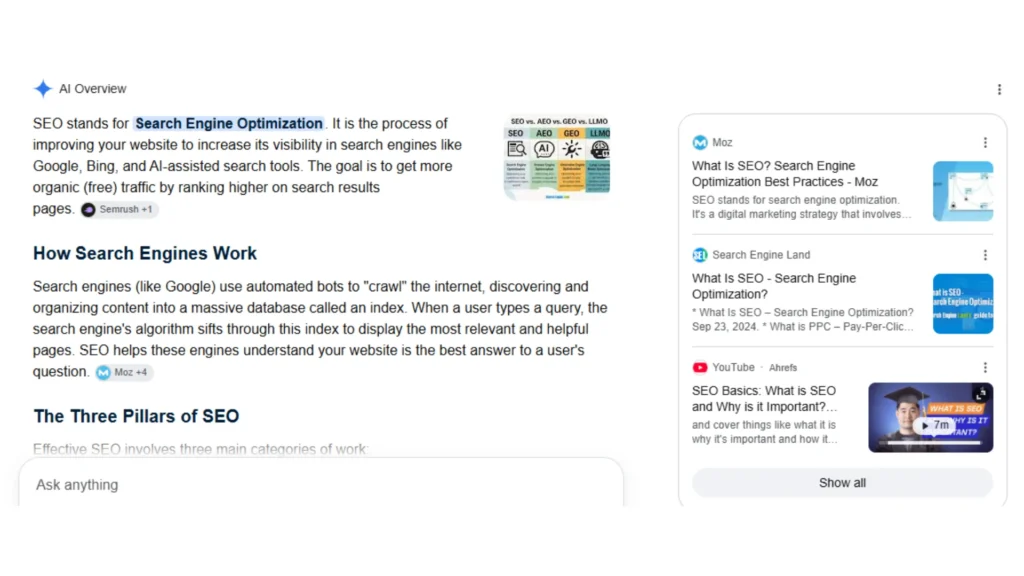
    Image of AI Overview

    Search behavior continues changing because AI-powered experiences increasingly influence information retrieval and user expectations. Accordingly, optimize content for AEO (Answer Engine Optimization) and GEO (Generative Engine Optimization) alongside traditional SEO practices.

    Helpful, accurate, and structured information supports evolving search experiences effectively. Consequently, adaptable strategies remain competitive despite frequent algorithm updates.

    When to Build Links as Your Website Grows:

    Eventually, getting other websites to link naturally strengthens growing websites after strong content foundations already exist. Additionally, link building can help competitive pages gain additional authority within challenging industries.

    Focus on relevance instead of the number of link-building opportunities because quality consistently outweighs quantity. Consequently, a reputable digital marketing agency may support ethical outreach when sustainable growth requires additional authority.

    Conclusion

    SEO without link building proves that sustainable growth depends on far more than earning external references. Accordingly, improving technical SEO, on-page optimization, helpful content, and internal linking creates stronger signals for search engines over time. Although backlinks remain valuable, websites can still achieve meaningful progress by prioritizing user intent and consistent quality improvements.

    Eventually, combining technical excellence with relevant content builds lasting authority and prepares websites for future algorithm updates. Focus on continuous optimization instead of shortcuts, and measure performance regularly for better long-term results. Which SEO strategy will you implement first to improve your website without relying heavily on backlinks?

    FAQs

    1. Is it possible to rank without backlinks?

    Yes, ranking without backlinks is possible for low-difficulty keywords with lower competition and modest search volumes. Strong content, technical SEO, and search intent optimization can achieve results.

    However, higher-difficulty keywords and competitive search volumes usually require extensive backlink strategies. Quality link acquisition becomes increasingly important as competition grows.

    2. Does internal linking help SEO?

    Yes, internal linking helps search engines understand page relationships and distribute authority across your website. It also improves navigation and user engagement.

    3. Can technical SEO improve rankings without backlinks?

    Yes, technical SEO improves crawlability, indexing, page speed, and overall user experience. These factors support stronger visibility even without external links.

    4. How long does SEO without link building take?

    Results vary by competition, website quality, and keyword difficulty. Many websites notice gradual improvements within several months of consistent optimization. Others may take 1-2 years to see a movement in their rankings.

    5. Does Google require backlinks for every page?

    No, Google does not require backlinks for every page. Helpful, relevant, and technically optimized pages can still earn visibility through multiple ranking signals.

  • What is Outsource Link Building?

    What is Outsource Link Building?

    Outsource link building in practice

    Poor-quality backlinks can waste marketing budgets and prevent websites from achieving consistent search engine visibility. Research consistently shows authoritative, relevant backlinks remain strong ranking signals, although quality link building takes time and careful execution.

    Consequently, many businesses choose to outsource link building instead of managing every campaign internally. This complete guide will explain what is outsource link building, how to outsource your campaign successfully and secure the best link opportunities for lasting SEO performance.

    What Does It Mean to Outsource Link Building?

    Outsource link building means hiring a specialist or reputable link-building agency instead of relying on an in-house team. Accordingly, experts handle outreach, content creation, and building backlinks through ethical practices supporting sustainable SEO growth. They secure high-quality backlinks from relevant publishers, strengthening your backlink profile and improving search engine rankings.

    Moreover, experienced professionals follow white-hat link building strategies, avoiding link farms and risky shortcuts. Consequently, businesses save time while focusing on core operations, although consistent collaboration remains essential for measurable organic traffic and lasting ranking improvements.

    How Link Building Outsourcing Differs From an In-House SEO Team:

    Link Building OutsourcingIn-House SEO Team
    Specialists use established outreach networks across multiple niche publishers.Teams build publisher relationships gradually because internal resources remain limited.
    Agencies adapt quickly to algorithm changes using proven link-building strategies.Internal teams balance technical SEO, content strategy, and additional marketing responsibilities.
    Costs are usually flexible, often charged per link or monthly campaigns.Fixed salaries and training increase long-term operational expenses.

    Benefits of Outsourcing Link Building

    Outsourcing link building provides access to experienced SEO specialists who secure relevant backlinks through proven outreach campaigns. Additionally, reputable link building agencies identify valuable link opportunities that improve domain authority and organic search visibility. Their expertise supports effective link building while maintaining ethical practices and avoiding risky backlink sources.

    Furthermore, agencies often share case studies, demonstrating measurable campaign success across different industries. Consequently, businesses gain high-quality links without expanding an in-house link building department, improving search rankings through sustainable strategies.

    How Outsourcing Supports Scalable SEO Link Building:

    Professional agencies scale outreach campaigns according to business goals without reducing backlink quality or relevance. Additionally, specialists identify niche publishers, guest posts, and broken link building opportunities using advanced tools like professional SEO platforms.

    They also adjust strategies after algorithm changes, ensuring consistent organic traffic growth. Consequently, businesses expand SEO efforts faster while maintaining high-quality content and reputable publisher relationships.

    Cost, Expertise, and Outreach Advantages Over In-House Efforts:

    Outsourcing often delivers broader expertise than maintaining a dedicated in-house SEO department for every campaign.

    • Firstly, SEO agencies provide experienced link builders with a proven track record across multiple industries.
    • Secondly, outreach teams maintain publisher relationships that generate high-quality backlinks more efficiently.
    • Finally, flexible pricing models reduce recruitment costs while supporting measurable campaign performance.

    When Should You Outsource Your Link Building?

    Businesses should outsource your link building when internal resources cannot consistently secure high-quality links through ethical outreach. Furthermore, outsourcing suits companies seeking faster organic search growth without expanding an in-house team. Experienced specialists also manage broken link opportunities, guest posts, and relevant backlink campaigns efficiently.

    Consequently, businesses improve search engine rankings while prioritizing product development and customer service. However, selecting the right partner remains essential because poor-quality backlinks may damage long-term SEO performance and overall ranking stability.

    How to Choose the Right Link Building Partner:

    Evaluate agencies using verified case studies, client testimonials, and a proven track record before making commitments. Additionally, confirm they prioritize white-hat methods, relevant backlinks, transparent reporting, and measurable campaign outcomes. Ask about content strategy, outreach processes, and anchor text practices before signing agreements.

    When Should You Not Outsource Your Link Building?

    You should avoid outsourcing when your business already has experienced in-house link builders delivering consistent SEO link building results. Additionally, companies operating within highly regulated industries often require direct control over relationship building and link acquisition activities.

    An internal team also protects confidential campaigns while aligning backlinks for your website with broader SEO strategies. Consequently, comparing in-house and outsourced link building helps determine whether outsourcing genuinely supports long-term business objectives and sustainable link quality.

    Situations Where an In-House Approach Is the Better Fit:

    An in-house link building team works better when employees possess strong industry expertise and established publisher relationships. Additionally, businesses requiring frequent collaboration between content, technical SEO, and marketing teams benefit from direct communication.

    Internal specialists also respond faster to product updates and changing campaign priorities. Consequently, maintaining in-house link builders improves consistency while strengthening relationship building across long-term SEO initiatives.

    Red Flags to Watch Before Hiring Link Building Services:

    Avoid providers promising guaranteed rankings or unusually cheap packages because quality link acquisition always requires careful planning. Additionally, agencies charging only per link without discussing relevance or link quality deserve extra scrutiny. Review their proven track record of success, reporting methods, and communication standards before signing agreements.

    How to Outsource Link Building?

    A structured process helps businesses outsource link building effectively while protecting long-term search visibility and brand credibility. Firstly, define measurable objectives before contacting potential providers with specific campaign expectations. Afterwards, compare agencies using transparent evaluation criteria instead of pricing alone.

    Finally, establish clear quality standards, reporting schedules, and communication processes before launching your outreach campaign. Following these steps creates a stronger foundation for sustainable backlinks and consistent SEO performance.

    Step 1. Define Your SEO Goals and Link-Building Requirements:

    Firstly, identify whether your priority involves increasing organic traffic, improving rankings, or earning backlinks for your website. Define preferred industries, target pages, and acceptable anchor text before planning outreach activities.

    For example, SaaS link building campaigns often require authoritative technology publishers instead of general business websites. Consequently, clear expectations help your link building partner deliver focused and measurable campaign outcomes.

    Step 2: Evaluate and Choose the Right Link Building Partner:

    Assess every link building partner using transparent processes, ethical outreach methods, and consistent reporting practices. Additionally, confirm experience within your niche, content quality standards, relationship building capabilities, and communication responsiveness.

    Review case studies, client feedback, and their approach toward sustainable link acquisition before making decisions. Consequently, choosing the right partner reduces unnecessary risks while supporting long-term SEO success.

    Step 3. Set Quality Standards, Communication, and Performance Metrics:

    Establish minimum link quality requirements, approved publishers, reporting frequency, and expected performance metrics before campaign execution. Additionally, define communication channels, response timelines, and review meetings to maintain campaign transparency throughout every stage. Track referring domains, relevant backlinks, organic traffic, and ranking improvements instead of counting links alone.

    Conclusion

    Outsource link building delivers long-term value when businesses focus on quality link building instead of chasing quick results. Additionally, experienced professionals strengthen digital marketing through ethical outreach, building relationships, and sustainable link acquisition. Since quality backlinks take time, choosing reliable partners and following best practices consistently produces stronger SEO outcomes.

    Whether you outsource backlink building or combine in-house efforts with external specialists, prioritize relevance and transparency throughout your link building campaign. Ultimately, the best link supports lasting authority instead of temporary ranking gains. Which outsourcing strategy will you implement first to strengthen your website’s SEO performance?

  • How HARO Link Building Fits Into a Comprehensive SEO Strategy

    How HARO Link Building Fits Into a Comprehensive SEO Strategy

    How HARO Link Building Fits Into a Comprehensive SEO Strategy

    There is a version of the link-building conversation that treats every tactic as a standalone intervention you do HARO for a few months, you do guest posting for a few months, you build a few resource pages, and you hope the combined effect adds up to meaningful ranking improvement. This approach produces uneven results, and the reason is almost always the same: the tactics are not integrated into a coherent strategy with a clear purpose, consistent execution, and the right measurement framework to understand what is working.

    HARO link building, the practice of pitching expert responses to journalists and media outlets in exchange for authoritative backlinks, is one of the most powerful tactics available in modern SEO. But like all powerful tactics, it produces the best results when it is understood and used as part of a broader strategic framework rather than as an isolated activity. This article explains how HARO fits into a comprehensive SEO strategy and what you need to have in place for it to produce its maximum effect.

    What HARO Actually Does for Your SEO

    Before talking about integration, it helps to be precise about what HARO link building specifically produces and why those outcomes matter strategically.

    HARO generates editorial backlinks, links placed by journalists and editorial teams at established media outlets, in the context of genuine editorial content, with the authority that comes from a real publication deciding that your perspective is worth citing. These are meaningfully different from the links generated through most other link-building tactics.

    Guest post links are earned by producing content for another site; they have editorial value, but they are typically on sites that accept outside contributions rather than organic editorial placements in content produced by the publication’s own journalists. Directory links provide citation signals but carry less topical authority weight than editorial links in context. PBN links carry significant risk and declining algorithmic value.

    The editorial link that comes from a journalist at Forbes, Entrepreneur, or a high-DA trade publication citing your CEO as a source in their article about your industry is a different kind of asset. It passes substantial link equity, it builds brand authority signals that extend beyond pure link equity, and it typically comes with the branded exposure that makes the link valuable for referral traffic as well as organic rankings.

    HARO, when executed well, produces these editorial links at scale. The strategic question is: what else needs to be in place for those links to produce their maximum SEO effect?

    The Technical Foundation That Links Require

    Editorial links are most valuable when they land on a website that search engines can fully crawl and evaluate. This sounds obvious, but the technical health of the site receiving the links determines how much of the authority those links pass actually translates into ranking improvement.

    The most common technical issues that reduce the value of otherwise excellent link building are: slow page load times (particularly on mobile) that create negative user experience signals; crawlability problems that prevent search engines from properly indexing the pages being linked to; duplicate content issues that dilute the page authority that linked pages accumulate; and Core Web Vitals failures that send negative quality signals to Google regardless of how strong the incoming link profile is.

    The practical implication is that a comprehensive SEO strategy addresses technical health before or alongside link building investment, not after. Earning authoritative links to a technically problematic site is like running excellent marketing for a broken product, the investment produces less return than it should.

    The advanced SEO strategy that combines AI-powered technical auditing with strategic link building investment identifies and addresses technical issues faster than manual auditing, ensuring that the link equity earned through HARO and other tactics is fully absorbed rather than partially lost to technical impediments.

    The Content Strategy That Makes Pitching More Effective

    HARO pitching success rates vary dramatically between organisations, and a significant portion of that variance is explained by the quality and specificity of the expertise the organisation can offer to journalists. The journalist who receives fifty responses to a source request for expert commentary on fintech regulation and selects one is making a judgment about which response is most credible, most specific, and most useful for their article.

    Organisations with strong content programmes, detailed, expert-authored articles, research publications, case studies, and data assets,have an advantage in HARO pitching because their spokespeople can reference specific positions, specific research, and specific examples that make their responses more credible and more useful. The generic expert response that offers a general perspective on a topic competes poorly against the specific expert response that references the organisation’s published research, cites specific data, and offers a perspective that is clearly grounded in genuine expertise rather than general familiarity.

    Building the content programme that makes HARO pitching more effective is therefore part of the comprehensive SEO strategy, not a separate activity. The articles, the research, and the data that the content team produces become the credibility assets that HARO pitchers reference. The expertise demonstrated in content becomes the expertise that journalists want to cite.

    Building the SEO Team That Can Execute at Scale

    Comprehensive SEO strategy requires people who can execute across multiple specialisations simultaneously: technical SEO, content strategy, link building outreach, and performance analysis. Building this team, whether internally or through agency relationships — requires the same quality of due diligence that any professional hiring decision deserves.

    For organisations building internal SEO teams, the background verification dimension of this hiring is worth addressing directly. Understanding how long background checks take for jobs for the candidates being evaluated helps integrate background check timelines into the hiring process without creating unexpected delays when a strong candidate is ready to start. Most standard employment background checks complete within five to ten business days when properly initiated, knowing this in advance allows hiring managers to schedule conditional offers with realistic start dates rather than being surprised by the gap.

    For agencies like HaroBuilder that engage contractors and specialists as part of their delivery model, using structured screening solutions for the team members who will have access to client accounts, client SEO data, and client brand assets is the professional standard that protects both the agency’s reputation and the clients who have entrusted sensitive strategic work to the team.

    The Measurement Framework That Connects Everything

    A comprehensive SEO strategy is only as good as its measurement infrastructure. Link building that is not connected to a measurement framework that tracks link acquisition alongside ranking changes, organic traffic trends, and ultimately commercial outcomes (leads, conversions, revenue) is link building that cannot be optimised because it cannot be properly evaluated.

    The measurement framework that works for HARO-inclusive SEO strategy tracks several specific things simultaneously. Link acquisition velocity: how many high-DA editorial links are being earned per month, and from what publication categories? Domain authority trend: is the site’s overall authority profile strengthening as the links accumulate? Keyword ranking movement: are the specific keywords the strategy is targeting showing measurable improvement in rankings? And organic traffic: is that ranking improvement translating into more qualified visitors from organic search?

    The last metric, qualified organic traffic, is the one that connects the SEO investment to actual business value. Ranking improvements that do not translate into traffic improvements often indicate keyword targeting issues. Traffic improvements that do not translate into conversion improvements often indicate landing page or offer issues. The comprehensive SEO strategy that includes measurement across this full chain, from link acquisition to ranking to traffic to conversion, is the strategy that can be continuously improved rather than periodically guessed at.

    The Long View on HARO as a Strategic Asset

    The strongest argument for HARO as part of a comprehensive SEO strategy is not the individual link value of any single placement. It is the compounding nature of the editorial authority that consistent HARO placement builds over time.

    The organisation that has been consistently cited in major publications as a trusted expert source for two or three years has built something that is genuinely difficult for competitors to replicate quickly: an earned media profile that search engines recognise as a signal of real-world authority. The backlink profile is visible in the link graph. The brand mentions are visible in brand search volume. The combination of these signals positions the domain differently than one with equivalent technical quality and content quality but without the earned editorial authority.

    HARO link building is the most efficient tactic currently available for building this kind of earned editorial authority at scale — more efficient than cold outreach guest posting, more authentic than sponsored content, more durable than the short-lived visibility of paid advertising. In a comprehensive SEO strategy designed for long-term sustainable organic growth, it is not an optional enhancement. It is a core component.

  • How Much Does SEO Cost in the UK? SEO Prices in 2026

    How Much Does SEO Cost in the UK? SEO Prices in 2026

    How Much Does SEO Cost UK

    Many business owners struggle to answer a simple question: How much does SEO cost UK businesses in 2026? Pricing varies widely across the UK, with agencies, freelancers, and in-house teams offering different structures. Research shows that monthly retainers, project fees, and hourly rates strongly influence the total investment required. However, a clear strategy and realistic budget can improve performance and deliver consistent long-term results. This guide breaks down pricing, service types, and options to help you make confident decisions.

    Average SEO Cost in the UK for 2026

    SEO costs in the UK during 2026 generally range between £750 and £5000 monthly for most businesses. Small businesses usually pay lower fees, whereas larger campaigns demand higher investment and broader SEO efforts. Pricing varies depending on SEO strategy, competition level, services offered, and overall business goal alignment.

    Monthly SEO:

    CategoryTypical Cost (UK)Details
    On-page SEO£300–£1,500Includes keyword optimisation, content updates, and technical SEO improvements accordingly.
    Off-page SEO£500–£2,000Focuses on link building, authority growth, and local search visibility for businesses in the UK.
    Technical SEO£400–£1,800Covers technical SEO audits, site speed, indexing, and structured data enhancements.
    Local SEO£300–£1,200Optimises Google Business Profile, local business listings, and conversion rate improvements.

    Project-based SEO:

    CategoryTypical Cost (UK)Details
    On-page SEO£1,000–£5,000One-time optimisation of pages, metadata, and content for targeted SEO needs.
    Off-page SEO£1,500–£6,000Link building campaigns and outreach projects for stronger domain authority.
    Technical SEO£1,500–£7,000Comprehensive SEO audits, fixes, and performance upgrades for better crawling.
    Local SEO£800–£3,500Local business optimisation and local search ranking improvements accordingly.

    Hourly SEO Pricing Model:

    CategoryHourly Rate (UK)Details
    On-page SEO£50–£150SEO professional adjusts content, keywords, and page structure efficiently.
    Off-page SEO£75–£200Focuses on outreach, link building, and campaign execution gradually.
    Technical SEO£80–£220Handles technical SEO audits, fixes, and site performance issues accordingly.
    SEO Consultancy£100–£300Strategic advice, SEO pricing guide insights, and pricing structure recommendations.

    Performance-based SEO:

    CategoryPricing ModelDetails
    On-page SEO% of resultsPayment depends on ranking improvements and measurable SEO work outcomes.
    Off-page SEOPer link/metricCharges apply per successful link building or authority milestone achieved.
    Technical SEOMilestone-basedPayment occurs after fixing technical SEO issues and improving site health scores.
    Local SEOLead-basedPayment aligns with generated leads, conversion rate, or local business growth.

    Types of SEO Services Available

    • On-page SEO: focuses on content optimisation, internal linking, and improving technical aspects of SEO structure.
    • Off-page SEO: involves link building strategies, brand mentions, and authority signals for successful SEO performance.
    • Technical SEO: ensures website speed, indexing, crawling, and technical SEO support for better rankings.
    • Local SEO: improves visibility through Google My Business optimisation and targets local customers across the UK.
    • Ecommerce SEO: optimises product pages, categories, and conversion paths, especially for small SEO campaigns.
    • Enterprise SEO: handles large-scale websites, accordingly using advanced SEO tools and tailored SEO strategies.

    Different Types of SEO Providers

    Provider TypeDescription
    SEO FreelancerSEO freelancer offers flexible services, and freelancers charge for SEO at comparatively lower rates.
    SEO ConsultantSEO consultant provides strategic advice, cost structure planning, and tailored SEO guidance for businesses.
    In-house SEOIn-house SEO teams manage delivering SEO internally, ensuring alignment with business goals and SEO performance.
    B2B SEO AgencyB2B SEO agency focuses on professional campaigns, offering SEO packages and comprehensive SEO services.
    SEO AgenciesSEO agencies across the UK provide SEO services, although prices vary depending on expertise and scale.
    Cheap SEO ProvidersCheapest SEO options attract small businesses, but quality and long-term SEO results may vary significantly.

    Pro Tip: Questions to ask before hiring an SEO provider!

    1. What experience do you have in my industry?

    2. Which SEO strategy will you use for my business needs?

    3. How do you measure SEO success and ROI?

    4. What SEO pricing model do you follow?

    5. What is included in your SEO service or package?

    6. How often will you report progress?

  • How to Be an SEO Expert?

    How to Be an SEO Expert?

    how to be an SEO expert

    Many aspiring marketers fail to rank websites despite applying basic techniques and outdated strategies. Research shows that over sixty percent of pages never receive organic traffic from search engines like Google. This happens because professionals lack proper training, practical experience, and updated trends knowledge. However, learning how to be an SEO expert requires mastering fundamentals, using online courses, and building real campaigns. This guide explains essential skills you need, proven methods, and career paths. Additionally, it shows how jobs and agencies shape long-term success.

    What is SEO?

    Search engine optimization, commonly called SEO, improves website visibility on major search engines like Google, and it helps businesses increase organic traffic by aligning content with search engine algorithms and user intent. SEO experts use keyword research, on-page optimization, and technical SEO to improve search rankings effectively, while marketing strengthens online presence and ensures websites appear prominently within search engine results pages, consequently enabling professionals to compete successfully within the evolving SEO industry landscape.

    Why SEO Efforts Matter in Digital Marketing

    SEO efforts play a central role in digital marketing because they improve organic search visibility and help businesses attract targeted audiences through optimized content and effective keyword placement strategies. Moreover, SEO strategies build credibility, as backlinks act like a vote of confidence for search engines, while improved user experience and faster websites influence search engine rankings positively; therefore, businesses investing in marketing achieve sustainable growth and long-term results across highly competitive markets.

    Basics of SEO You Must Learn First

    How Search Engine Works?

    Search engines like Google use search engine algorithms to crawl, index, and rank web pages efficiently, while they analyze content relevance, backlinks, and user experience signals before displaying results on search engine results pages, consequently helping professionals optimize websites effectively for better visibility and improved search rankings.

    How search engine works
    Key Components of SEO Marketing

    Key Components of SEO Marketing

    SEO marketing includes on-page SEO, technical SEO, and off-page strategies like link building and backlinks acquisition, while content marketing and keyword research improve organic search performance and audience engagement effectively, therefore combining these components ensures consistent efforts and significantly improved search engine rankings across highly competitive niches.

    Importance of Keywords in SEO

    Keywords play a vital role in search engine optimization because they connect user queries with relevant content, while effective keyword research helps SEO specialists identify search trends, user intent, and ranking opportunities efficiently, consequently properly placed SEO keywords improve search results visibility and drive consistent organic traffic growth over time.

    Importance of Keywords in SEO

    How Search Engines Work:

    Search engines like Google use search engine algorithms to crawl, index, and rank web pages efficiently, while they analyze content relevance, backlinks, and user experience signals before displaying results on search engine results pages, consequently helping professionals optimize websites effectively for better visibility and improved search rankings.

    Key Components of SEO Marketing:

    SEO marketing includes on-page SEO, technical SEO, and off-page strategies like link building and backlinks acquisition, while content marketing and keyword research improve organic search performance and audience engagement effectively, therefore combining these components ensures consistent efforts and significantly improved search engine rankings across highly competitive niches.

    Importance of Keywords in SEO:

    Keywords play a vital role in search engine optimization because they connect user queries with relevant content, while effective keyword research helps SEO specialists identify search trends, user intent, and ranking opportunities efficiently, consequently properly placed SEO keywords improve search results visibility and drive consistent organic traffic growth over time.

    How to Be an SEO Expert? 3 Main Pillars of SEO

    1. On-Page SEO:

    On-page SEO forms the foundation of search engine optimization, and SEO experts use it to optimize content, improve user experience, and increase search engine rankings across major search engines like Google effectively.

    • Keyword Research: Conduct keyword research using SEO tools, analyze search results, identify SEO keywords, assess competition, and align keywords with user intent, consequently improving organic search visibility and overall ranking.
    • Content Quality: Create high-quality content marketing pieces, optimize content with relevant keywords, ensure readability, maintain accuracy, and update regularly, therefore improving user experience, organic traffic, and search engine rankings consistently.
    • Meta Description: Write compelling meta descriptions with primary keywords, keep length optimal, ensure relevance, and include action phrases, consequently improving click-through rates and visibility within search engine results pages effectively.
    • Internal Linking: Build internal linking structures by connecting relevant pages, using anchor text wisely, and guiding users, therefore improving crawlability, user experience, and distributing SEO value across website pages efficiently.
    • Image Optimization: Optimize images by compressing files, adding descriptive alt text, and using proper formats, consequently improving page speed, accessibility, and overall on-page optimization for better SE rankings.
    • Header Tags: Structure content using header tags logically, include keywords naturally, maintain hierarchy, and improve readability, therefore helping search engines understand content and enhancing overall SEO efforts effectively.

    2. Off-Page SEO:

    Off-page SEO focuses on external factors like backlinks, brand authority, and SEO strategies, while SEO professionals build trust signals that search engines like Google consider as a vote of confidence.

    • Backlinks: Earn backlinks from reputable websites, create valuable content, perform outreach, and use link building strategies, consequently improving domain authority and search rankings across competitive niches effectively.
    • Digital PR: Implement digital PR by connecting with journalists, sharing insights, and promoting content, therefore increasing brand mentions, backlinks, and strengthening overall marketing performance significantly.
    • Guest Posting: Write guest posting articles for relevant websites, include contextual backlinks, and provide value, consequently building authority, improving SEO knowledge, and increasing organic traffic through trusted platforms.

    3. Technical SEO:

    Technical SEO ensures websites meet search engine algorithms requirements, and SEO specialists optimize infrastructure, improve performance, and enhance crawlability, therefore helping websites rank better within search engine results pages.

    • Site Audit: Perform an SEO audit using SEO tools, analyze technical issues, review on-page elements, and fix errors, consequently improving site health, SEO efforts, and search engine rankings effectively.
    • Site Speed: Improve site speed by compressing files, enabling caching, and optimizing code, therefore enhancing user experience, reducing bounce rates, and increasing organic search performance across major search engines.
    • Crawlability: Ensure crawlability by fixing broken links, updating robots.txt, and improving site structure, consequently helping search engines work efficiently and index pages correctly within search engine results.
    • URL Structure: Create a clean URL structure using keywords, keep URLs short, and maintain consistency, therefore improving readability, SEO ranking, and helping search engines like Google interpret pages accurately.
    • XML Sitemaps: Generate XML sitemaps, submit them through Google Search Console, and update regularly, consequently helping search engines discover pages quickly and improve indexing across large websites effectively.
    • Mobile Friendly: Design mobile-friendly websites using responsive layouts, optimize loading speed, and test usability, therefore improving user experience, search rankings, and performance across mobile search engine results pages.
    • Schema Markup: Implement schema markup by adding structured data, testing with tools, and validating code, consequently helping search engines display rich results and improving visibility within search engine results pages.

    Difference Between an SEO Specialist and SEO Experts

    An SEO specialist focuses on implementing on-page and off-page SEO tasks, while experts handle broader strategies within digital marketing campaigns effectively. Additionally, a digital marketing specialist or digital marketing manager often collaborates with SEO professionals to achieve overall marketing goals successfully. A specialist usually handles keyword placement, site audits, and fixing technical issues, whereas successful SEO experts develop different SEO strategies and guide teams. Consequently, becoming an expert may require deeper SEO skills and knowledge, practical SEO experience, and a strong understanding of SEO concepts.

    Conversely, SEO experts act as consultants or SEO pros who lead campaigns, while specialists execute typical SEO tasks daily. Moreover, SEO experts focus on long-term SEO success, while specialists manage routine SEO practices and short-term performance improvements. Accordingly, SEO specialist job postings often emphasize hands-on experience, whereas top SEO professionals require advanced SEO certifications and leadership abilities. Therefore, the majority of roles begin with specialist positions, but professionals eventually take steps to become highly reputable SEO experts.

    Advanced SEO Strategies for Professionals

    • Firstly, implement different SEO strategies, including mobile SEO, technical optimization, and advanced content marketing, consequently improving SEO success across competitive industries effectively.
    • Secondly, analyze SEO audits regularly, fix technical SEO issues, and optimize site performance, therefore ensuring consistent growth in search rankings and organic traffic visibility.
    • Thirdly, leverage SEO tools and techniques, including automation and data analysis, to refine strategies, consequently improving campaign effectiveness and overall SEO experience significantly.
    • Additionally, attend SEO conferences and webinars, learn industry updates, and connect with SEO communities, therefore strengthening SEO knowledge and professional credibility consistently.
    • Moreover, align SEO focuses with broader marketing strategy goals, ensuring integration with digital marketing agencies and campaigns, consequently improving brand visibility and long-term performance.

    Essential SEO Tools Every Professional Uses

    SEO professionals rely on powerful tools to execute SEO practices effectively, while tools like Google Analytics and Google Search Console help monitor website performance and search engine results accurately. Additionally, Google Page Speed Insights identifies technical SEO issues and improves site speed, which enhances user experience significantly. Moreover, platforms like Ahrefs and Semrush provide keyword research data, backlink analysis, and competitor insights, therefore helping professionals optimize strategies and achieve better success across various digital marketing campaigns.

    Local SEO and Its Importance

    Local SEO plays a vital role as a component of digital marketing, especially for businesses targeting nearby audiences through search engines like Google. Additionally, it helps digital marketing agencies improve visibility for local clients by optimizing listings, keywords, and online presence effectively. Moreover, local SEO strategies increase traffic, improve search rankings, and drive conversions by focusing on location-based queries. Therefore, mastering local SEO becomes essential for professionals aiming to become good at SEO and deliver measurable results consistently.

    Why Link Building is Important in SEO?

    Link building remains a core part of SEO fundamentals because it strengthens authority and improves rankings significantly. Additionally, backlinks signal trust to search engines, consequently increasing visibility and organic traffic for websites consistently.

    “Backlinks are the backbone of success because they build credibility and authority over time.”

    Moreover, SEO campaigns rely on quality links to outperform competitors and align with current SEO trends. Therefore, mastering link building through SEO training and practical experience supports long-term growth in SEO jobs and agency environments.

    How to do an SEO Audit

    Firstly, review SEO basics including site structure, content quality, and keyword usage across important pages. Secondly, analyze technical issues like broken links, page speed, and mobile usability, therefore improving overall performance. Additionally, check backlinks, on-page elements, and indexing status, consequently ensuring effective SEO campaigns and better search visibility through consistent SEO audits.

    What is an SEO Consultant?

    An SEO consultant provides expert guidance on SEO fundamentals, strategies, and campaign improvements for businesses. Additionally, consultants analyze SEO campaigns, recommend SEO tools, and improve performance using practical experience. Therefore, companies often hire consultants through SEO agencies to achieve better rankings and long-term digital marketing success.

    Building a Career as an SEO Professional

    How to Become an SEO Specialist Professionally:

    Firstly, commit to structured training and build strong SEO fundamentals through reliable online courses consistently. Additionally, focus on basics of search engine, practice concepts daily, and earn SEO certifications to validate your growing expertise. Moreover, develop essential skills you need, including analysis, content optimization, and technical awareness for better results. Therefore, stay consistent, because becoming an SEO expert requires discipline, patience, and continuous improvement through learning and execution.

    Gaining Experience Through Real Projects

    Secondly, take action by working on real SEO campaigns, because practical experience strengthens your confidence and abilities significantly. Additionally, start freelancing or join an SEO agency, where you handle real challenges and client expectations effectively. Moreover, test strategies, measure outcomes, and refine your approach, consequently improving your performance with every project. Therefore, focus on consistent execution, because hands-on experience transforms basic knowledge into real-world expertise and measurable growth.

    Creating a Long-Term SEO Career Path

    Finally, focus on building long-term growth by improving skills as an SEO expert and tracking emerging SEO trends regularly. Additionally, stay consistent with learning, adapt strategies, and expand your knowledge to remain competitive in the field. Moreover, our Haro Builder team started with SEO fundamentals, then shifted toward link building after recognizing its overall importance. Therefore, follow a similar path, because steady efforts and smart decisions lead to sustainable career success.

    FAQs

    1. What is SEO ranking?

    SEO ranking refers to the position of a webpage in search engine results pages. Higher rankings increase visibility and drive more organic traffic to websites consistently.

    2. What is SEO writing?

    SEO writing involves creating content that aligns with user intent and search engine guidelines. It focuses on clarity, keyword placement, and value to improve visibility and engagement.

    3. What tools should a beginner learn first?

    Beginners should focus on analytics tools, keyword research tools, and auditing platforms. These tools help analyze performance and improve campaigns effectively.

    4. Are jobs in this field in demand in the US?

    Yes, these jobs continue growing due to increasing demand for digital marketing professionals. Companies require experts who can improve organic traffic and online visibility consistently.

    5. How important are industry trends for professionals?

    Trends guide strategies and help professionals adapt to algorithm updates quickly. Ignoring trends can negatively impact rankings and overall performance significantly.

    6. Can beginners start with online courses only?

    Yes, beginners can start with online courses to learn basics and strategies. However, combining learning with practical experience ensures better long-term results.

  • How to Do SEO Yourself? 5 DIY SEO Tips

    How to Do SEO Yourself? 5 DIY SEO Tips

    how to do seo yourself

    Many small business owners fail to get results despite investing time in digital marketing efforts. Research shows that most websites receive minimal traffic because they ignore effective SEO tactics and local SEO strategies. Consequently, many wonder how to do SEO yourself without hiring expensive experts or agencies. This DIY SEO guide explains simple steps to improve rankings and boost visibility consistently. Additionally, you will learn practical methods tailored for small business growth and sustainable online success. The complete guide below explains proven techniques to help you get results confidently.

    How Does Search Engine Optimization Work?

    Search Engine Optimization works by improving how users and search engines access and interpret website content. It uses keyword research and optimization techniques to align pages with relevant search result queries. Google Search Console and Google Analytics help track search engine optimization efforts and measure performance improvements accurately. Additionally, the strategies focus on on-page and off-page SEO for balanced website growth. Consequently, better structure and backlinks increase search engine ranking and help search engines index pages efficiently.

    What “Search Engine” Algorithms Look For:

    • Search engine algorithms analyze keyword placement, meta description, H1, and alt tag usage for content relevance.
    • They evaluate Technical SEO factors like speed, mobile usability, and crawlability to optimize your website effectively.
    • Additionally, algorithms assess backlink quality and link-building patterns to determine authority and trust signals.
    • They consider user engagement signals, because users and search engines prefer valuable and readable content.
    • Consequently, consistent SEO efforts and proper optimization improve visibility across competitive search results pages.

    Core SEO Elements That Impact Ranking

    SEO ElementDescription
    Keyword ResearchKeyword research helps identify terms users search for, using a reliable keyword research tool effectively.
    On-Page SEOIt optimizes H1, meta description, alt tag, and content for better search engine ranking.
    Technical SEOIt ensures proper indexing, faster loading, and smooth crawling for search engine bots.
    BacklinksBacklinks from authoritative sites strengthen credibility and improve ranking in competitive search results.
    Analytics ToolsTools like Google Analytics and Google Search Console track SEO audit data and performance metrics.

    SEO-Friendly Structure for Websites

    An SEO-friendly website structure helps search engines crawl pages and index content without unnecessary confusion. Firstly, use clear navigation and logical hierarchy so users and search engines locate information quickly. Secondly, optimize internal linking and tag structure, because it distributes authority across important pages effectively. Additionally, Technical SEO improvements like fast loading and mobile responsiveness enhance overall user experience significantly. Finally, consistent SEO audit practices and free SEO tools help maintain performance and optimize your website continuously.

    How to Do SEO Yourself? 5 DIY SEO Tips

    1. Keyword Research SEO Optimization:

    Firstly, learn how to do SEO by starting keyword research using a reliable free tool, because it builds strong SEO basics. Secondly, use tools like Google Analytics and Search Console to identify keywords generating consistent website traffic for your pages. Additionally, analyze competitors and select achievable keywords, because effective SEO focuses on ranking opportunities with lower competition initially.

    Afterward, group keywords into topics and assign them to pages, making your website SEO friendly. Finally, update content regularly, because it is a long-term investment improving SEO performance gradually.

    2. On-Page SEO Optimization Techniques:

    Initially, optimize titles, headings, and descriptions because on-page SEO improves visibility in search results significantly. Secondly, include keywords naturally throughout content, ensuring SEO best practices guide structure and readability consistently. Additionally, optimize images using alt tags and proper formatting, making your website more accessible for users and search engines.

    Furthermore, structure URLs clearly, because SEO makes content easier to crawl and index your website effectively. Finally, update pages frequently, because working on your SEO consistently helps boost your website traffic and engagement.

    3. Technical SEO Essentials for Beginners:

    Firstly, fix technical SEO issues like slow loading speed, broken links, and mobile responsiveness problems affecting performance. Secondly, ensure search engines crawl and index your website correctly using tools like Google Search Console regularly. Additionally, create XML sitemaps and improve structure, because technical SEO basics support better indexing and ranking outcomes.

    Then, complete technical SEO tasks frequently, ensuring dedicated improvements maintain long-term site stability. Finally, monitor changes through software, because effective SEO requires ongoing adjustments and consistent technical improvements.

    4. Off-Page SEO and Link Building Strategies:

    Initially, understanding off-page SEO involves actions outside your website, including backlinks and online brand mentions. Secondly, build backlinks through guest posting, freelance SEO opportunities, and outreach campaigns targeting authoritative websites. Additionally, Off-Page SEO involves actions like social sharing, which improves SEO marketing visibility across different platforms.

    Also, consider whether your SEO includes networking strategies, because link building strengthens credibility over time. Finally, partner with an SEO agency or consultant if necessary for professional SEO support and faster results.

    5. SEO Audit and Checklist for DIY Optimization:

    Firstly, perform a free SEO audit using a reliable audit tool to identify errors and performance gaps. Secondly, follow a DIY SEO checklist covering tasks such as fixing broken links and improving page speed. Additionally, review SEO performance using tools like Google Analytics and Search Console for accurate tracking insights.

    After that, fix issues and update pages, because it takes consistent effort and monitoring. Finally, maintain regular activities, ensuring your SEO optimization strategy delivers sustainable and measurable long-term improvements.

    6 SEO Tools to Boost Your Website Performance

    1. Google Analytics tracks website traffic, user behavior, and SEO performance, helping improve marketing strategy decisions.
    2. Ahrefs acts as an advanced SEO tool for backlink analysis, keyword research, and competitor tracking.
    3. SEMrush provides comprehensive SEO software for keyword tracking, site audits, and SEO optimization strategy planning.
    4. Ubersuggest works as a free SEO tool offering keyword ideas, content suggestions, and traffic estimation insights.
    5. Screaming Frog identifies technical SEO tasks, including broken links and duplicate content issues, quickly.
    6. Yoast SEO improves on-page SEO by optimizing meta tags and ensuring SEO-friendly content structure.

    Using Google Search Console for Insights

    Google Search Console provides valuable insights into how search engines interpret and rank your website content effectively. Firstly, track indexing status and resolve errors, ensuring search engines crawl and index your website properly. Secondly, analyze search queries and impressions, because SEO focuses on improving performance in search results consistently. Additionally, you can check indexing errors and overall page issues, explaining why pages are not appearing on Google. Furthermore, add your sitemap, detect violations, and index articles quickly using tools like Google.

    Quick SEO Tips for Immediate Results

    • Firstly, optimize titles and meta descriptions, because tips like these improve click-through rates quickly.
    • Secondly, improve loading speed and mobile usability, ensuring your website is accessible to all users.
    • Additionally, update existing content with targeted keywords, because DIY SEO tips to boost rankings work faster.
    • Furthermore, build quality backlinks, since off-page SEO involves actions that increase authority and trust.
    • Also, fix technical SEO issues immediately, because the best practices require a healthy and optimized website.
    • Lastly, stay consistent with SEO activities, because it can be done effectively with willingness to learn continuously.

    Conclusion

    Learning how to do SEO yourself gives small business owners control over their digital marketing success. By applying consistent tactics and improving local SEO, you can gradually get results without heavy investments. Additionally, this DIY guide shows that patience and regular updates play important roles in long-term growth. Many people still ask, Is SEO dead?, Yet consistent efforts clearly prove its ongoing effectiveness. Therefore, focusing on quality content and technical improvements strengthens visibility and website authority effectively. If you follow these steps consistently, your efforts will produce measurable improvements over time.

    Are you ready to apply these strategies and transform your website performance today?

    FAQs

    1. What tools can I use for DIY SEO?

    You can use Google Analytics, Search Console, and other free tools. These tools help track traffic, keywords, and performance metrics effectively.

    2. What is keyword research in SEO?

    Keyword research identifies terms users search for related to your content. It helps target the right audience and improve search rankings effectively.

    3. Does content quality affect search engine rankings?

    Yes, high-quality content improves user engagement and search engine ranking. It also helps build trust and authority within your niche.

    4. What is the role of backlinks?

    Backlinks act as votes of trust from other websites to your content. They improve domain authority and help boost search rankings.

    5. Is SEO a one-time process or ongoing?

    It is an ongoing process that requires updates and regular improvements. Continuous effort ensures long-term growth and consistent website traffic.

  • Is SEO Dead in 2026? How AI Is Changing the Rules of SEO

    Is SEO Dead in 2026? How AI Is Changing the Rules of SEO

    Is SEO Dead

    Many marketers still ask, “Is SEO dead?” as AI overviews reshape search visibility today. Concerns rise as Google’s AI changes how users interact with results and AI chat systems expand. LLMs and AI search reduce clicks, yet SEO is not dead in reality. Google’s AI overviews influence ranking patterns, while optimizing for Google still drives organic discovery. The solution combines AI tools, updated strategies, and strong content planning for 2026 and beyond. This article explains how SEO adapts to AI-driven search and evolving digital marketing performance.

    Is SEO Dead in 2026? The Debate Around Modern SEO

    Many marketers question whether SEO is dead, especially after rapid growth in AI search technologies. However, search engine optimization still drives organic search traffic, although strategies have significantly evolved. Search engines like Google, Bing, and even platforms like Reddit continue shaping visibility and ranking factors. Meanwhile, generative AI and LLMs influence how people search and interact with search results. Consequently, marketers must adapt SEO strategies to align with AI tools, changing user experience, and modern digital marketing expectations.

    Why Many Marketers Claim SEO Is Dead:

    Many marketers argue SEO is dead because zero-click search and AI overviews reduce website traffic. Additionally, AI search results from ChatGPT and Perplexity often answer queries directly without requiring clicks. Consequently, traditional SEO methods struggle to maintain ranking and visibility across evolving search engines and platforms.

    How the SEO Industry Responds to “SEO Is Dead” Claims:

    The SEO industry strongly rejects claims that SEO is dead, emphasizing adaptation instead. Experts highlight that search engine optimization now includes GEO, AI tools, and authoritative content marketing strategies. Furthermore, marketers focus on optimizing for LLMs, user experience, and search engines like Google, Bing, and emerging AI platforms.

    What Changed in SEO Between 2025 and 2026:

    The Rise of AI Search and Its Impact on SEO

    AI search significantly transforms how people search, access information, and evaluate search results across platforms. Generative AI tools like ChatGPT and Perplexity provide direct answers, reducing reliance on traditional search engines. Consequently, zero-click search increases while organic search traffic declines. However, marketers still optimize content for visibility within AI search results and LLMs. Furthermore, search engines like Google integrate AI overviews, reshaping user experience and ranking signals. Therefore, SEO strategies must align with AI-driven search behavior and evolving digital marketing trends.

    Traditional SEO vs AI-Driven SEO Strategies

    How AI Tools Are Reshaping SEO Strategies

    How Marketers Use AI to Improve Content Strategy:

    Marketers use AI tools and AI models to improve content strategy and optimize search queries effectively. Additionally, AI SEO helps refine content creation for better visibility in AI search results. Consequently, marketers, update your SEO strategy for Google Search Console insights and align with AI-driven search trends.

    Automation and Data Insights in Modern SEO:

    Automation improves SEO performance by analyzing search queries across Google Search and Bing platforms. Furthermore, AI crawlers process data faster, helping marketers track AI-driven search patterns. Consequently, marketing strategy benefits from AI models that identify visibility in AI search results and enhance content strategy accuracy.

    ChatGPT, AI Search, and the New Search Experience

    How ChatGPT Influences Search Behavior:

    ChatGPT and AI chatbots significantly influence AI-driven search behavior across Google Search and AI platforms. Additionally, users prefer AI summaries instead of traditional search engines like Google. Consequently, SEO may shift toward generative engine optimization while marketers adjust marketing strategy to maintain visibility in AI search results.

    AI Assistants and Their Role in Search Results:

    AI assistants reshape the search experience by providing AI summaries directly within AI search results. Moreover, search engines like Google integrate AI overviews and AI modes for better responses. Consequently, SEO isn’t dead but evolves as AI models influence visibility in AI search and optimize user engagement.

    GEO and the Future of Search Optimization

    GEO and the Future of Search Optimization

    What GEO Means for Marketers:

    GEO, or generative engine optimization, helps marketers optimize for AI-driven search systems effectively. Additionally, it supports visibility in AI search results across Google and Bing platforms. Consequently, marketers, update your SEO strategy to align with AI models, ensuring SEO still performs in modern search environments.

    How GEO Improves Visibility in AI Search:

    GEO improves visibility in AI search results by aligning content strategy with AI crawlers and AI summaries. Furthermore, it enhances ranking on Google Search and Bing through AI needs optimization. Consequently, SEO performance increases while AI tools help marketers track AI search visibility across platforms.

    GEO vs Traditional SEO Approaches:

    Traditional SEO focuses on ranking on Google and optimizing for search engines like Google and Bing. Conversely, GEO targets AI search optimization across AI platforms and AI models. Additionally, SEO isn’t dying but shifting toward AI-driven search, where generative systems influence visibility and search results significantly.

    Why SEO Still Matters for Google Search

    SEO still plays a vital role in Google Search despite the rise of AI search technologies. Additionally, search engines like Google and Bing continue relying on solid SEO signals for ranking content effectively. Moreover, SEO isn’t dead or outdated because traditional search engines still drive organic search traffic. Consequently, marketers, update your SEO strategy using Google Search Console insights. Therefore, SEO performance remains important for visibility in AI search results and long-term marketing strategy success in 2026 and beyond.

    Conclusion

    The question Is SEO Dead? continues circulating as Google’s AI and AI Overviews reshape search behavior. However, SEO is not dead because it still supports visibility across AI chats and LLMs and AI search systems. Additionally, Google’s AI overviews and optimizing for Google remain key to digital success in 2026 and beyond. Marketers now combine AI tools with traditional strategies for stronger performance in search results. Moreover, SEO continues evolving alongside AI-driven search and changing user intent globally. Ultimately, success depends on adapting content strategies to both AI systems and search engines effectively today. Do you think SEO will fully disappear in future search?

    FAQs

    1. Does Google still use traditional SEO ranking signals?

    Yes, Google still uses traditional ranking signals for search results, and AI only enhances how results are displayed.

    2. What is the role of AI in modern SEO?

    AI helps analyze keywords, content, and user search intent, and it improves optimization efficiency and content strategy decisions.

    3. Is organic traffic declining because of AI search?

    Organic traffic is shifting due to AI search results, however quality content still attracts steady search traffic.

    4. What is the future of SEO with AI tools?

    SEO will combine AI tools and traditional optimization methods, and this hybrid approach improves search performance and visibility.

    5. Should businesses still invest in SEO in 2026?

    Yes, businesses should continue investing in SEO strategies because it remains essential for long-term digital marketing success.