HARO Builders – Header

Category: Business

  • What Branding Mistakes Do Startups Often Make Online?

    What Branding Mistakes Do Startups Often Make Online?

    What Branding Mistakes Do Startups Often Make Online

    Introduction

    Building a startup in today’s digital-first world means your brand often makes its first impression online. Before a customer ever speaks to you, visits your office, or tries your product, they encounter your website, social media presence, and overall digital identity. This makes online branding one of the most critical aspects of early-stage success, yet it is also one of the most misunderstood. Many startups rush into branding decisions without a clear strategy, leading to costly mistakes that slow growth and damage credibility.

    Entrepreneurs frequently underestimate how nuanced branding truly is. It is not just about logos, colors, or slogans, it is about perception, trust, and consistency across every digital touchpoint. When startups fail to align their branding with their audience, value proposition, and long-term goals, they risk blending into the noise or, worse, appearing unprofessional. Understanding the most common branding mistakes can help founders build a stronger, more resilient brand from the beginning.

    Startups Focus Too Much On Visuals And Not Enough On Strategy:

    Many startups fall into the trap of believing branding is primarily about aesthetics. They invest heavily in logos, color palettes, typography, and sleek website designs, assuming these elements alone will attract customers. While visual identity is important, it is only one piece of a much larger puzzle. Without a clear brand strategy, defining who you are, what you stand for, and who you serve, visuals become empty decoration rather than meaningful communication.

    A strong brand strategy includes defining your target audience, clarifying your unique value proposition, and establishing a consistent voice. When startups skip these foundational steps, they often create branding that looks polished but fails to connect emotionally with customers. As a result, even beautifully designed brands struggle to convert visitors into loyal users because they lack depth and direction.

    Focusing On Aesthetics Over Customer Acquisition:

    One of the most common branding mistakes startups make is prioritizing visual elements over actual business growth. Many founders invest heavily in polished brochures, premium stationery, and elaborate brand kits before validating their market or generating consistent revenue.

    Paige Arnof-Fenn, Founder & CEO, Mavens & Moguls emphasizes that early-stage businesses should focus on activities that fill the pipeline with customers rather than spending excessively on aesthetics. While professionalism matters, visual branding alone does not accelerate sales or build meaningful traction.

    Key mistakes include:

    • Overspending on design assets before product validation
    • Prioritizing brand appearance over customer acquisition
    • Investing in materials that do not generate ROI
    • Delaying launch due to perfectionism

    Startups should instead allocate resources toward building a functional website, acquiring early customers, and gathering testimonials that strengthen their brand credibility organically.

    Ignoring Target Audience Research Leads To Misaligned Branding:

    One of the most critical mistakes startups make is failing to deeply understand their audience before building their brand. Without proper research, founders rely on assumptions about customer preferences, pain points, and behaviors. This leads to branding that feels disconnected and irrelevant, making it harder to build trust and engagement.

    Effective audience research helps startups tailor their messaging, tone, and positioning. It ensures that branding resonates with real needs rather than imagined ones. Key aspects of audience research include:

    • Identifying demographics and psychographics
    • Understanding customer pain points and motivations
    • Analyzing competitors and market positioning
    • Gathering feedback through surveys and interviews

    When startups invest time in understanding their audience, they create brands that feel personal and relevant, significantly increasing their chances of success.

    Inconsistent Branding Across Digital Channels Damages Trust:

    Consistency is one of the cornerstones of effective branding, yet many startups struggle to maintain it across platforms. They may use different tones on social media, inconsistent visuals on their website, and varying messaging in email campaigns. This fragmented approach confuses potential customers and weakens brand recognition.

    A consistent brand creates familiarity and trust over time. When users encounter the same voice, style, and messaging across all channels, it reinforces credibility and professionalism. Startups should establish clear brand guidelines that define:

    • Tone of voice and messaging style
    • Visual identity including colors and fonts
    • Logo usage and placement
    • Content style and formatting

    By maintaining consistency, startups can build a cohesive identity that strengthens customer confidence and loyalty.

    Overinvesting in Non-Essential Branding Materials Early On:

    Many startups make the mistake of allocating large portions of their budget to physical branding assets before validating their business. As highlighted in the quote, investing in expensive brochures, letterheads, and premium business cards may feel like progress, but it rarely contributes directly to customer acquisition in the early stages.

    Instead, startups should prioritize assets that drive growth and visibility. Building a functional website, creating digital materials, and focusing on customer acquisition strategies are far more impactful. Early-stage branding should be lean, flexible, and adaptable as the business evolves. Overspending on non-essential materials can drain resources that are better used for marketing and product development.

    Neglecting Website Quality And User Experience:

    A startup’s website is often its most important branding asset, yet many founders treat it as an afterthought. Poor design, slow loading times, and confusing navigation can quickly turn potential customers away. Even if your product is excellent, a subpar website creates doubt about your professionalism and reliability.

    User experience plays a crucial role in shaping perceptions. A well-designed website should be intuitive, fast, and optimized for both desktop and mobile users. Key elements of a strong website include:

    • Clear and compelling messaging on the homepage
    • Easy navigation and logical structure
    • Fast loading speed and mobile responsiveness
    • Strong calls to action guiding user behavior

    Investing in a high-quality website helps startups establish credibility and convert visitors into customers more effectively.

    Failing To Prioritize Content And Storytelling:

    Branding is not just about what you sell but how you communicate your story. Many startups focus heavily on product features while neglecting storytelling, which is essential for building emotional connections with customers. Without a compelling narrative, brands struggle to stand out in crowded markets.

    Effective storytelling highlights your mission, values, and the problem you are solving. It allows customers to relate to your brand on a deeper level. Startups should focus on creating content that educates, inspires, and engages their audience. This includes blog posts, videos, social media content, and case studies that reinforce their brand identity.

    Treating Seo As A One Time Task Instead Of An Ongoing Strategy:

    A common misconception among startups is that search engine optimization can be completed once and then ignored. As emphasized in the quote, SEO is an ongoing process that requires continuous effort and adaptation. Search engines frequently update their algorithms, and user behavior evolves over time, making it essential to stay proactive.

    Startups that treat SEO as a long-term strategy are more likely to achieve sustainable growth. This involves regularly updating content, optimizing keywords, and monitoring performance. Important SEO practices include:

    • Publishing fresh, high-quality content consistently
    • Monitoring keyword rankings and search trends
    • Updating existing pages to maintain relevance
    • Avoiding suspicious or excessive changes that may trigger penalties

    By committing to ongoing SEO efforts, startups can maintain visibility and strengthen their online presence.

    Deleting Content And Losing Valuable Search Rankings:

    Another critical mistake highlighted in the quote is the tendency to delete outdated pages without considering their SEO value. When startups remove pages, they often lose the rankings and traffic associated with those URLs, which can significantly impact their visibility.

    A better approach is to update or redirect content rather than removing it entirely. For example, if a product is discontinued, the page can include a message guiding users to alternative solutions. This preserves search rankings while maintaining a positive user experience. Startups should treat their content as a long-term asset rather than disposable material.

    Lack Of Clear Brand Positioning In Competitive Markets:

    In crowded industries, failing to define a clear position is a major branding mistake. Startups often try to appeal to everyone, which results in generic messaging that fails to stand out. Without a distinct identity, customers struggle to understand what makes the brand unique.

    Strong positioning involves identifying your niche and communicating it clearly. It requires answering key questions about your brand’s purpose and differentiation. When startups establish a clear position, they attract the right audience and build stronger connections, ultimately leading to better conversion rates and customer loyalty.

    Overpromising And Underdelivering On Brand Promises:

    Trust is the foundation of any successful brand, and overpromising can quickly erode it. Some startups exaggerate their capabilities or make bold claims they cannot consistently fulfill. While this may generate short-term interest, it often leads to disappointment and negative reviews.

    A sustainable branding strategy focuses on authenticity and reliability. Startups should set realistic expectations and consistently deliver value. By aligning promises with actual performance, they can build long-term trust and credibility with their audience.

    Neglecting Social Proof And Customer Feedback:

    Social proof is a powerful tool for building trust, yet many startups fail to leverage it effectively. Testimonials, reviews, and case studies provide validation that your brand delivers on its promises. Without these elements, potential customers may hesitate to engage with a new and unfamiliar brand.

    Startups should actively seek feedback from early customers and showcase positive experiences. This can include:

    • Customer testimonials on the website
    • Reviews on third-party platforms
    • Case studies demonstrating real results
    • User-generated content on social media

    By highlighting social proof, startups can strengthen their credibility and encourage new customers to take action.

    Ignoring Brand Evolution As The Business Grows:

    Branding is not static, yet some startups resist adapting as they grow. As markets change and businesses evolve, branding must also evolve to remain relevant. Holding onto outdated messaging or visuals can limit growth and create disconnects with new audiences.

    Successful startups treat branding as a dynamic process. They regularly evaluate their positioning, messaging, and visual identity to ensure alignment with their current goals. This flexibility allows them to stay competitive and continue resonating with their audience over time.

    Conclusion

    Online branding is one of the most powerful tools a startup has, but it must be approached strategically and thoughtfully. From understanding your audience to maintaining consistency and investing in the right areas, avoiding common branding mistakes can significantly impact your growth trajectory. Startups that prioritize substance over surface-level design are more likely to build meaningful and lasting connections with their customers.

    By learning from common pitfalls and applying proven principles, entrepreneurs can create brands that stand out, build trust, and drive long-term success. Branding is not a one-time task but an ongoing commitment that evolves alongside your business. When done right, it becomes a powerful driver of recognition, loyalty, and sustainable growth.


  • 10 Profitable Micro SaaS Ideas for 2026 (Startup Guide)

    10 Profitable Micro SaaS Ideas for 2026 (Startup Guide)

    Micro SaaS Ideas

    Most entrepreneurs waste months building software business ideas that never reach profitable business sustainability. Many micro saas ventures outperform traditional saas because niche saas tools attract loyal small business owners. However, the global saas market remains crowded, hence founders need innovative micro saas ideas with low startup costs.

    Accordingly, this startup guide presents profitable saas opportunities, unlike traditional saas products targeting broad audiences. It explains how to build a micro saas, validate saas product ideas, and launch your micro saas successfully. The complete guide appears below, helping entrepreneurs build a profitable micro saas business confidently.

    What is SaaS?

    SaaS (Software as a Service) is a cloud-based software delivery model that allows users to access applications via the internet. Instead of installing software on local devices, users pay a subscription to use these services, which are maintained and updated by the provider. This model eliminates the need for manual updates, installation, and management, offering users access to essential business tools. Popular examples include project management, CRM, and analytics platforms, which businesses utilize for operations, marketing, and customer support.

    What is Micro SaaS?

    Micro SaaS refers to small-scale, niche software services focused on solving specific problems for targeted audiences. Typically, these products are developed and maintained by small teams or even solo entrepreneurs. Unlike large-scale SaaS solutions, micro SaaS platforms often have minimal startup costs and aim to address highly specific business needs. They generally cater to smaller businesses or individuals, offering features like automation, analytics, or project management tools with recurring revenue models. For additional context on how these tools fit larger business ecosystems, read this guide on What is B2B SaaS

    Growth of the SaaS Landscape in 2026

    The SaaS landscape in 2026 is expected to continue expanding, particularly in niche markets. Companies will increasingly adopt SaaS products to enhance operational efficiency and minimize costs. The rise of AI-driven platforms will also contribute significantly to this growth, as businesses seek smarter, automated solutions.

    Micro SaaS products, particularly those addressing specific pain points, are poised for significant success. As businesses evolve, SaaS platforms will become essential tools for enhancing productivity, data management, and customer engagement.

    The Role of AI in Micro SaaS Products:

    AI will play a pivotal role in micro SaaS products by providing advanced automation and insights. Small teams can integrate AI into their solutions to enhance customer experiences through personalized recommendations, optimized workflows, and predictive analytics.

    For example, AI-powered tools can automate tasks like data entry, project management, or customer support, saving time for business owners. AI integration allows entrepreneurs to offer scalable services without requiring large development teams, thereby reducing startup costs and increasing profitability in the long run.

    Advantages of Starting a Micro SaaS Business

    • Low Startup Costs: Micro SaaS products require minimal initial investment compared to traditional software businesses.
    • Scalable Revenue Model: Recurring subscriptions ensure consistent income, providing financial stability.
    • Targeted Market: Niche focus allows businesses to serve specific pain points and cater to a dedicated audience.
    • Flexibility: Entrepreneurs can start small, operating with a small team or solo, then scale accordingly.
    • AI Integration: The use of AI in micro SaaS products boosts automation and data analysis, enhancing product value.
    • No-Code Tools: The availability of no-code platforms enables quick development and reduces the need for complex coding.
    • Market Demand: With businesses increasingly moving online, the demand for specialized SaaS solutions continues to grow.
    • Simplicity: Unlike large SaaS companies, micro SaaS businesses can maintain simplicity in their offerings while addressing specific customer needs.
    • Agility: Small teams can adapt quickly to market trends and customer feedback, optimizing their product regularly.
    • Profitable: With the right business model and a niche market, a micro SaaS startup can be highly profitable with steady growth.

    10 Profitable Micro SaaS Ideas for 2026

    In 2026, the micro SaaS sector will continue to thrive as businesses seek specialized solutions. Here are 10 profitable micro SaaS ideas with great potential:

    1. AI-Powered Content Creation Tools

    Why this: Content creation is in high demand for businesses and marketers. AI-powered tools can automate writing and content generation, making them highly attractive.

    How to start: Use AI tools like OpenAI or GPT to create a content platform. Integrate SEO features to help users optimize their content.

    Example: Tools like Jasper AI help businesses generate blog posts, social media updates, and even email campaigns with minimal input.

    2. Online Appointment/Scheduling Software

    Why this: Many small business owners, such as consultants, salons, and personal trainers, require simple scheduling tools to manage appointments efficiently.

    How to start: Build a simple yet robust platform that syncs with calendars and automates reminders.

    Example: Calendly is an excellent example, offering automated scheduling and calendar integrations for professionals across industries.

    3. Analytics Dashboards for Specific Niches

    Why this: Businesses need data insights to improve decision-making, and tailored analytics tools can serve niche markets.

    How to start: Focus on one industry, like eCommerce or real estate, and build customizable dashboards that track key metrics.

    Example: Tools like Data Studio provide customizable reports and dashboards for various industries, helping businesses understand their metrics in depth.

    4. Mini CRM for Freelancers

    Why this: Freelancers often struggle with managing client communications and invoices. A simple CRM helps them stay organized.

    How to start: Develop a CRM tool with features like task management, invoice creation, and client follow-up tracking, tailored for freelancers.

    Example: HoneyBook is an example, offering freelancers easy client management and project tracking features.

    5. Keyword Research & SEO Tools

    Why this: With SEO being critical for business success, offering a tool to help users find the best keywords is highly valuable.

    How to start: Create a keyword research tool that provides insights based on search volume, competition, and relevance.

    Example: Tools like Ubersuggest provide keyword suggestions, competition analysis, and SEO insights for digital marketers.

    6. Proposal & Documentation Automation

    Why this: Professionals and businesses often need to create proposals and contracts quickly. Automating this process saves time and effort.

    How to start: Build a tool that allows users to generate custom proposals and contracts based on templates and inputs.

    Example: PandaDoc is a popular tool that automates document generation for sales teams and freelancers.

    7. Micro Project Management Tools

    Why this: Small teams need lightweight project management tools to stay organized without the complexity of larger platforms.

    How to start: Create a simple project management platform with essential features like task assignment, due dates, and collaboration tools.

    Example: Trello provides an intuitive and simple platform for team collaboration and task tracking with flexible boards and lists.

    8. Niche CRM for Specific Industries

    Why this: CRMs designed for specific industries can offer more targeted features for businesses like real estate, fitness, or healthcare.

    How to start: Choose a niche and build a CRM with customized workflows and features suited to that industry.

    Example: Real Geeks offers a CRM solution tailored for real estate agents, helping them manage leads and clients effectively.

    9. Landing Page Builders

    Why this: Landing pages are essential for online marketing and sales funnels. A simple, easy-to-use builder can serve many entrepreneurs and small businesses.

    How to start: Develop a platform that allows users to drag-and-drop elements to create high-converting landing pages.

    Example: Leadpages provides a no-code landing page builder, enabling users to design pages for marketing campaigns with ease.

    10. Industry-Specific SaaS Tools

    Why this: Businesses in specific industries face unique challenges. SaaS products tailored to those challenges can solve pressing pain points.

    How to start: Research niche industries and identify common problems. Build a SaaS solution that addresses these needs.

    Example: MindBody is an industry-specific SaaS for fitness centers, offering scheduling, membership management, and payment processing tools.

    How to Launch a Profitable Micro SaaS Startup

    Launching a profitable micro SaaS startup begins with identifying a specific problem in a niche market. Building a solution that directly addresses this problem with a simple, scalable product can significantly reduce startup costs. Unlike traditional SaaS models, micro SaaS businesses focus on smaller, niche audiences, which allows founders to apply more precise growth strategies.

    In this stage, understanding how PPC agencies optimize funnels and budgets becomes highly relevant, as it provides a practical guide for structuring acquisition funnels, managing ad spend, and scaling subscriptions efficiently. With a recurring revenue model, these insights support sustainable growth and long-term profitability.

    Validating Your Micro-SaaS Idea Before Launch:

    • Research your target audience: Conduct surveys and interviews to confirm that your idea addresses a real problem.
    • Analyze competitors: Understand existing solutions and identify how your micro SaaS can be different.
    • Prototype your product: Create a simple MVP to test its functionality and appeal to potential customers.
    • Feedback loop: Collect early feedback to refine your product and ensure it’s market-ready.

    Building a Scalable SaaS Product:

    • Choose the right platform: Select a platform that can scale with growing user demand, such as cloud services.
    • Automate key processes: Utilize automation to handle tasks like billing, customer support, and product updates.
    • Focus on user experience: A smooth, intuitive interface will keep customers engaged and reduce churn.
    • Modular design: Develop a flexible product that can easily be enhanced with new features as needed.

    Attracting Early Customers and Investors:

    • Create a compelling pitch: Craft a clear, concise message that highlights the value and unique aspects of your micro SaaS.
    • Utilize your network: Leverage connections and social media to generate buzz and attract initial users.
    • Offer early access: Give potential customers early access to your SaaS product in exchange for feedback.
    • Focus on value: Show how your SaaS tool solves a specific problem for your target audience.

    Key Strategies for Growing Your Micro SaaS Business

    • Firstly, focus on niche saas problems, because small business owners prefer precise micro saas solutions.
    • Additionally, build a micro saas product with low startup costs, ensuring profitable business scalability.
    • Secondly, use modern saas platforms, because efficient saas development accelerates profitable saas growth for entrepreneurs worldwide.
    • Moreover, unlike traditional saas, many micro saas ventures succeed through faster customer feedback competitive saas landscape.
    • Thirdly, emphasize innovative micro saas ideas that make running a business simpler for ambitious entrepreneurs.
    • Furthermore, track global saas market trends, henceforth adjusting your saas solution accordingly.
    • Finally, reinvest revenue, because successful micro saas companies prioritize steady, sustainable expansion.

    How to Stand Out in the Competitive Market

    Firstly, identifying unique value propositions helps startup ideas become profitable saas for niche saas audiences worldwide markets. Accordingly, micro saas refers to focused saas product ideas solving specific pain points for entrepreneurs globally.

    Secondly, building a strong brand helps micro saas business gain trust among entrepreneurs and small businesses globally. Moreover, successful saas branding differentiates best micro saas from traditional saas products within crowded saas landscape.

    Thirdly, innovative ideas in software business features help build a profitable business faster for modern saas companies. Furthermore, responsive customer support enables build your own micro saas to outperform great saas competitors consistently overall.

    Final Countdown: Preparing for Your Micro SaaS Launch

    Overall, micro saas refers to focused saas solutions designed for small business owners seeking efficiency. These profitable micro saas ideas prove many micro saas companies succeed despite competitive saas landscape pressures. Unlike traditional saas, basic micro saas platforms grow steadily because they solve specific operational problems.

    Consequently, entrepreneurs can build a saas with fewer resources, simpler saas development, and clearer market positioning. Furthermore, successful micro saas depends on execution, customer feedback, and consistent product improvement. This guide equips founders to start a saas confidently, but which micro saas venture fits your long-term vision best?

    FAQs

    1. Can solo founders run successful micro SaaS companies?

    Yes, many successful micro saas companies operate with solo or small teams.
    Automation and focused scope make solo execution feasible.

    2. How is micro SaaS different from traditional SaaS?

    Micro saas targets narrow problems, unlike traditional saas products serving broad markets.
    This focus improves customer retention and faster validation.

    3. What industries suit micro SaaS solutions best?

    Service businesses, ecommerce, marketing, and finance suit micro saas solutions well.
    These sectors need specialized tools for daily operations.

    4. How do micro SaaS platforms acquire customers?

    They rely on content marketing, partnerships, and direct outreach strategies.
    Clear value propositions drive organic adoption.

    5. Is micro SaaS suitable for first-time entrepreneurs?

    Yes, micro saas suits beginners because risks remain lower than large saas businesses.
    It allows founders to build a profitable business incrementally.

  • High Net Worth Financial Planning Tips

    High Net Worth Financial Planning Tips

    high net worth financial planning

    Many assume accumulating wealth solves everything, but managing that wealth often becomes the real challenge. Recent industry reports show that over 50% of high-net-worth individuals lack a proactive financial planning strategy, exposing them to unnecessary risk. To overcome this, you need high net worth financial planning tips that show how to work with a financial advisor, deploy investment strategies, and customize a comprehensive financial plan. This article provides a full guide to addressing unique challenges, balancing goals and risk tolerance, and securing your financial future.

    Core Elements of High Net Worth Financial Planning

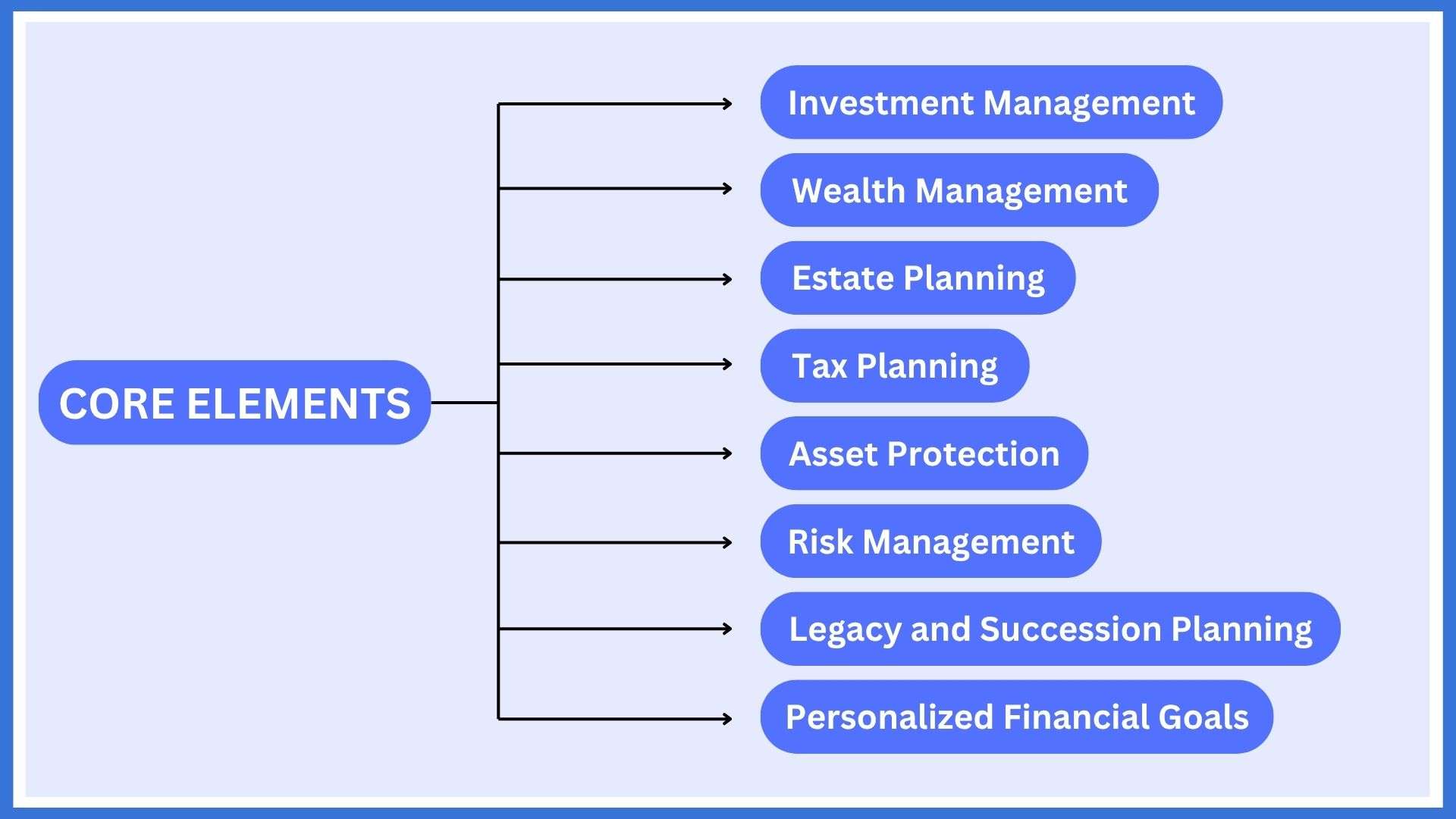
    High-net-worth financial planning focuses on personalized strategies to preserve, grow, and transfer significant wealth effectively. A comprehensive financial plan must address both personal and business-related financial needs for individuals and families with complex financial structures. The following are the core elements of this process:

    core elements of high net worth financial planning

    Who Qualifies as High Net Worth in the U.S.?

    A high-net-worth individual (HNWI) is someone with substantial investable assets, excluding their primary residence. Those with greater financial capacity fall into the ultra-high-net-worth (UHNWI) category. These classifications help financial advisors and wealth management firms create strategies suited to complex financial needs.

    • High-Net-Worth Individual (HNWI): $1 million or more in investable assets
    • Ultra-High-Net-Worth Individual (UHNWI): $30 million or more in investable assets

    High Net Worth Financial Planning Tips

    Create a Tailored Financial Plan:

    Work with a financial advisor to design a customized financial plan that reflects your unique needs. It should clearly define financial goals, investment strategies, and short-term liquidity options to sustain your financial well-being.

    Diversify Your Investment Portfolio:

    Spread your wealth across various asset classes to minimize volatility and enhance returns. A well-diversified investment portfolio ensures stability even during uncertain economic conditions, thereby supporting consistent wealth management outcomes.

    Prioritize Tax Planning Early:

    Effective tax planning reduces your tax liability and increases savings potential. Utilize trusts, tax-deferred accounts, and investment products with inherent tax benefits to preserve your wealth efficiently.

    Implement Asset Protection Measures:

    Establish legal structures that protect your assets from potential claims. Techniques like insurance layering, asset titling, and liability diversification are essential for long-term wealth preservation.

    Focus on Estate and Legacy Planning:

    Develop a estate plan to ensure smooth wealth transfer to future generations. Incorporate succession planning to maintain family control, reduce disputes, and uphold generational continuity.

    Work with a Financial Advisor You Trust:

    Partnering with the right financial advisor or wealth management firm allows you to make informed decisions. Their management services help align your financial affairs with strategic goals and market opportunities.

    Review and Adjust Regularly:

    Monitor your financial performance periodically. Investment opportunities evolve, and adjusting strategies accordingly ensures your significant wealth remains optimized over time.

    How Financial Advisors Customize Wealth Strategies

    A skilled financial advisor evaluates every high-net-worth individual’s income sources, investment opportunities, and financial goals to build a tailored strategy. They coordinate investment management, asset protection, and tax planning approaches to meet short-term liquidity and long-term growth requirements. Additionally, advisors assess business owners’ succession concerns and wealth transfer priorities to ensure smooth transitions.

    By collaborating closely, they design investment portfolios that align with lifestyle, risk management, and generational priorities. Consequently, clients benefit from customized solutions that safeguard assets, deliver returns, and secure enduring financial well-being for individuals and families alike.

    Why a Financial Advisor Matters for High Net Worth Individuals:

    A professional financial advisor offers strategic insight for high-net-worth individuals seeking comprehensive wealth management solutions. They coordinate investments, tax planning, and estate structures to maintain stability and growth. Hence, clients benefit from objective advice that supports informed decisions and enhances long-term financial well-being across diverse financial affairs.

    Choosing the Right High-Net-Worth Financial Planning Advisor:

    Selecting the right financial advisor requires reviewing experience, credentials, and approach toward high-net-worth financial planning. Choose one who understands complex financial structures and provides transparent management services. Moreover, ensure their philosophy aligns with your financial goals, risk tolerance, and commitment to wealth preservation for future generations.

    Investment and Wealth Management Strategies

    • Develop a Comprehensive Financial Plan: A qualified financial planner can help design a comprehensive financial plan that aligns investment goals with financial objectives, risk appetite, and long-term vision for financial success.
    • Adopt Diversified High-Net-Worth Investment Approaches:  Implement strategies for high-net-worth individuals that include global diversification, private equity, real estate investments, and trading affiliate opportunities.
    • Leverage a Trusted Advisor’s Expertise: A trusted advisor or wealth management team provides informed financial advice, helping you make confident investment decisions aligned with your financial picture and market conditions.
    • Focus on Tax Optimization Strategies: Effective tax optimization strategies can reduce your tax burden significantly. Understanding complex tax laws helps ensure compliance while enhancing after-tax income growth.
    • Plan for High-Net-Worth Retirement: High-net-worth retirement planning focuses on sustaining income streams, preserving capital, and maintaining financial freedom through structured asset allocation.

    Asset Protection and Risk Mitigation

    Effective asset management requires balancing growth with protection to ensure long-term financial security. A high-net-worth financial advisor implements financial planning strategies that shield wealth against market downturns and legal liabilities. Financial planning for high net worth individuals includes insurance coverage, trust structures, and asset diversification. Managing your wealth effectively through these measures safeguards your family’s financial well-being and ensures stability even during economic fluctuations, thereby preserving both current and future prosperity.

    Integrating Wealth Planning with Lifestyle Goals

    Comprehensive wealth planning connects financial strategies with personal aspirations to maintain a fulfilling lifestyle. A financial advisor can help design a customized plan that aligns lifestyle choices with financial goals. Balancing financial freedom and personal values ensures a secure financial future. Finding the right financial expert is essential because they understand your unique challenges and tailor strategies that sustain your family’s financial stability. Consequently, wealth planning becomes both purposeful and sustainable across generations.

    FAQs

    1. Can a financial planner help with succession planning?

    Yes, they develop legacy planning to ensure smooth wealth transfer.

    2. What benefits come from using multiple asset classes?

    Diversification mitigates risk and enhances return across changing market cycles.

    3. Do UHNWIs need different strategies?

    Absolutely, they face deeper complex tax laws, larger portfolios, and more legacy issues.

    4. How often should I review my financial plan?

    At least annually, or when your goals and objectives evolve.

    5. How to find the right financial advisor?

    Look for experience with high-net-worth individuals, trustworthiness, and alignment with your values.

  • The Power of Refusal: Lessons Founders Discovered by Saying No

    The Power of Refusal: Lessons Founders Discovered by Saying No

    The Power of Refusal

    Introduction

    The entrepreneurial journey is often defined not only by the opportunities seized but also by the opportunities declined. For founders, the power of refusal can shape a business as profoundly as the most celebrated yes. Behind every company that stands the test of time lies a series of pivotal refusals, moments when leaders chose principle over profit, focus over distraction, and long-term vision over short-term wins.

    While it may seem counterintuitive in a culture that glorifies growth at all costs, saying no can often be the catalyst for authentic success. It is a safeguard that keeps businesses aligned with their values, protects founders from burnout, and ensures that companies grow in the right direction. This article explores the real-life experiences of founders across diverse industries who discovered invaluable lessons by refusing tempting yet misaligned opportunities.

    The Clarity of Purpose That Comes From Saying No

    One of the most powerful benefits of saying no as a founder is the clarity it brings. When every appealing offer is accepted, businesses risk becoming unfocused, losing sight of the very purpose that drew their first customers. Founders who practice the discipline of refusal often discover that their vision sharpens, enabling them to double down on what truly distinguishes them.

    Clarity not only strengthens brand identity but also builds trust. Customers, clients, and even employees recognize when a company stands firm in its mission. This consistency communicates reliability and authenticity, two qualities that often matter more than the latest product or trend. The power of refusal or saying no is not just a decision; it is a statement of values.

    The freedom to uphold vision by rejecting shortcuts:

    Saying no also brings freedom. Adrian Czarnoleski, an SEO consultant, recalled a turning point in his career when the opportunity to scale quickly came at the cost of his philosophy:

    “One tipping point for me was when I was asked to pass on the opportunity to partner with a larger online agency. On paper, it was a dream: access to their list, resources in the middle, and an express pass to scale. The problem? I’d need to sacrifice the ability to have full control over how I worked and would need to transition into the ‘churn and burn’ approach for SEO that didn’t sit right with me.”

    Adrian’s refusal to compromise on quality allowed him to select clients who valued long-term, meaningful results. While the decision meant slower growth initially, it ultimately became the very reason his business thrived. His story is a testament that not all glittering opportunities are truly golden, and that true progress often comes from defending the noes, not chasing the yeses.

    The discipline of saying no as a financial safeguard:

    Saying no doesn’t just protect values, it can also protect the financial health of a business. Reem Khatib, a partner at Tax Law Advocates, explained how many founders mistake deferring bookkeeping or handling taxes themselves as a cost-saving measure, only to face serious consequences later.

    “Saying ‘no’ isn’t just a boundary, but a financial strategy. One of the most practical (and overlooked) tax-saving moves I advise founders to make is saying no to deferring bookkeeping and DIY tax prep. It feels cost-effective in the moment, but it’s the fastest route to misreporting income, triggering audits, and racking up penalties.”

    She recalled working with a founder who racked up a six-figure tax liability from misfiled returns and unreported income. With expert help, they managed to reduce the debt, but the stress and credit damage could have been avoided. Her story is a reminder that the real savings often come not from cutting corners, but from refusing short-term fixes that cost more in the long run.

    The courage to reclaim control by redefining dependence:

    Saying no can also mean choosing ownership over convenience. Jessica Rich, owner of Bona Dea Naturals, experienced this when she decided to step away from total reliance on Amazon.

    “A pivotal moment in my entrepreneurial journey came when I decided to say ‘no’ to building my business solely on Amazon, she shared. Early on, the platform felt like a dream, sales surged, and success seemed effortless. But that momentum came with instability: listings could vanish overnight, and her lack of control left her business vulnerable. What looked thriving on the surface was fragile beneath.”

    Jessica’s decision to move away from the seeming safety of Amazon was a leap of faith. It meant abandoning guaranteed revenue to build something truly her own—a dedicated online store featuring her products alongside other women-owned wellness brands she believed in. In doing so, she discovered that sustainable growth isn’t found in quick wins, but in building a foundation rooted in purpose, independence, and integrity. Her story reminds us that true success often begins with the courage to say no to what feels easy, and yes to what feels right.

    The power of saying no to protect customer trust:

    Revenue opportunities can be tempting, but not every yes aligns with long-term credibility. Meyr Aviv, Founder and CEO at iMoving, shared how refusing questionable partnerships helped his company build a stronger foundation.

    “One of the hardest lessons I’ve learned as a founder is that saying no can be more powerful than saying yes. Early in iMoving’s journey, we turned down requests to onboard moving companies that lacked transparency or had a history of complaints.”

    Turning down those partnerships meant walking away from easy revenue, but it reduced disputes by more than 30%, lowered costs, and increased customer satisfaction. For founders, his lesson is clear: every yes dilutes focus, but the right no builds trust and becomes the foundation for responsible growth. Meyr’s experience highlights that brand reputation often hinges not on what you take on, but on what you consciously reject.

    The innovation that comes from refusing inefficiency:

    Founders often imagine saying no as shutting doors, but in many cases it opens the way for better focus and innovation. Gregory Shein, CEO of Corcava, built his company on the principle of streamlining rather than complicating.

    “The best founders learn that saying ‘no’ is an act of discipline. Declining low-value opportunities protects trust by showing clients and partners that you stand for quality, not quantity. It also creates space for innovation, as teams can channel their focus into fewer, high-impact initiatives. Most importantly, it honors people, your employees and customers, by ensuring their efforts and investments are never wasted on distractions.”

    He emphasized that declining low-value opportunities protects trust and gives teams space to focus on high-impact work. For him, saying no to inefficiency is about honoring both customers and employees by ensuring their efforts aren’t wasted. His approach shows how deliberate refusal can create the space needed for meaningful innovation. His story demonstrates that discipline in refusal often becomes the pathway to clarity, efficiency, and more meaningful progress.

    Practical Strategies For Founders to Embrace The Power of No:

    Founders can learn from these stories by adopting strategies that help them recognize when to refuse opportunities:

    • Evaluate alignment: Ask whether the opportunity aligns with your mission, values, and vision.
    • Consider long-term impact: Short-term gains should not undermine long-term sustainability.
    • Protect differentiators: Guard the qualities that make your business unique.
    • Stay authentic: Refuse anything that forces you to compromise your integrity or culture.

    By implementing these practices, founders create businesses that thrive authentically, without chasing every shiny opportunity.

    Conclusion

    Saying no is not a weakness in business; it is a form of strength. For the founders highlighted here, each refusal became a cornerstone of growth, clarity, and reputation. From preserving legacies to defending values, their stories prove that the decisions we decline can be just as powerful as the ones we accept.

    Ultimately, the power of refusal lies in its ability to protect what matters most: vision, integrity, authenticity, and legacy. Founders who master the art of saying no discover that growth isn’t about chasing everything, it’s about choosing wisely, and sometimes bravely, to walk away.

  • My Experience with Icons8 Ouch AI Illustrations: What Works in Real Projects

    My Experience with Icons8 Ouch AI Illustrations: What Works in Real Projects

    ai illustrations

    Looking for decent AI illustrations has always been a task that somehow consumes way more time than it should. You know the drill – endless browsing through stock sites, saving dozens of “maybe” options, only to realize none work for your project. I’ve been using Icons8’s Ouch platform for about eighteen months across different client projects, so here’s my honest take on what works, what doesn’t, and where this thing fits into real-world workflows.

    What You’re Getting

    Icons8 has been pushing Ouch beyond your typical stock illustration library, and honestly, they’ve got a point. The platform currently holds over 300,000 vector graphics covering everything from those shiny new 3D AI illustrations everyone’s obsessed with to good old flat design that still gets the job done. They’ve organized everything into style categories like Corporate, Realistic, Universal, and “Trendy” (whatever that means), but the critical bit is that each category stays visually consistent. No more of that “grabbed random stuff from Google Images” look that makes your design scream amateur hour.

    The AI illustration generation thing is new, though the real value still lies in their professionally created stuff. Their Mega Creator tool lets you edit things in your browser without needing to shell out for Adobe subscriptions, which is a godsend for smaller teams watching every penny.

    Here’s where Ouch gets interesting – instead of dumping complete, unchangeable illustrations on you, most of their stuff breaks down into separate pieces you can mess with. Characters come separate from backgrounds, objects live on their layers, and effects work independently. This means you can customize things beyond just swapping colors around.

    File Formats That Don’t Suck

    Professional work demands flexibility, and Ouch delivers without getting complicated about it. SVG files scale appropriately across everything from phone screens to massive displays – crucial when your design needs to work everywhere. PNG gives you solid backup when SVG decides to throw browser tantrums. Animation support covers GIF for social stuff, MOV for presentations, Lottie JSON for web work, and After Effects files for motion design.

    The technical quality stays consistent, which matters more than you’d think. SVG files keep their structure intact, so you can modify colors and elements without everything falling apart. PNG exports come with proper transparency. Animation files stay reasonably sized without killing loading performance.

    Version control works smoothly since SVG uses XML underneath. Development teams can collaborate on illustration changes through regular Git workflows without any special setup.

    Customizing Stuff

    The component approach completely changes how you hunt for illustrations. Instead of searching for that mythical perfect match, you find something close enough and fix the parts that don’t work. Swap out character clothes entirely. Replace backgrounds completely—overhaul color schemes from scratch. Rearrange elements however you need. Each piece works independently, so modifications don’t create weird cascade failures.

    Mega Creator handles most editing tasks through your browser without monthly software bills. Drag stuff around, change colors with standard tools, and resize components. It’s nowhere near Illustrator for complex work, but it handles everyday tweaks without the learning curve or licensing costs smaller teams want to avoid.

    This editing approach proved particularly useful on a financial services project where we needed illustrations matching specific brand colors while looking professional. The component system lets us get precise color matching across multiple illustrations without starting over or hiring custom work.

    How Developers Use This Stuff

    Frontend teams integrate these graphics as functional interface pieces, not just decoration. Onboarding flows need clear visual progression that guides users without confusing them. Empty states need graphics that explain what’s happening without making people feel stupid. Error pages benefit from appropriate imagery that keeps users confident. Loading animations provide engaging content, while backend systems do their thing.

    Responsive implementation works because SVG scales naturally across screen sizes. Component structure adapts to different viewport constraints through CSS manipulation. Standard development practices produce reliable, predictable results that don’t break during deployment.

    The desktop app enables direct drag-and-drop into Sketch, Figma, Photoshop, and code editors like VS Code. API endpoints support automated workflows and dynamic content generation for organizations needing systematic asset management without manual bottlenecks.

    E-commerce sites frequently need commerce-specific graphics throughout their interfaces. Shopping cart processes, payment flows, and customer journey visualization benefit from consistent visual treatment that clearly reinforces brand identity while communicating functionality. The extensive shopping clipart collection provides retail-focused illustrations, including product displays, checkout processes, and customer interaction graphics essential for online store development and conversion optimization.

    Marketing Team Reality

    Content marketing demands visual consistency across blog posts, email campaigns, social media, and landing pages without hiring freelancers for every single piece. Brand coherence beats individual illustration perfection when building recognition over months of customer touchpoints.

    Email campaigns create specific technical headaches that catch teams off guard. Large files trigger spam filters automatically. Complex animations destroy mobile loading speeds. Ouch’s optimized files maintain visual engagement without creating deliverability disasters. Brand color modifications maintain consistency without rebuilding assets every single time.

    Social media workflows benefit from animation format variety. GIF files work everywhere. MOV files provide higher quality for video-focused channels. Lottie JSON animations integrate smoothly into web-based social media management tools.

    Educational Use Cases

    Academic institutions deploy AI illustrations throughout learning management systems and course development. Visual learning approaches require consistent styling across course materials, lecture presentations, assessment interfaces, and supplementary resources with which students interact.

    Education-focused collections address teaching needs like concept visualization and process explanation without looking childish. The illustrations maintain academic appropriateness while enhancing comprehension through visual communication.

    Universities extend usage to research presentations, academic journal submissions, grant proposal documentation, and institutional communications where visual quality affects funding decisions and professional credibility. Educational pricing acknowledges budget constraints in academic environments while providing necessary format access and customization options.

    Pricing That Makes Sense

    Economic reality shapes illustration sourcing decisions, especially for early-stage companies. Professional custom illustration work costs way more than most budgets allow. Free resources often look unprofessional enough to damage credibility with investors and potential customers.

    Free usage with attribution requirements works for internal tools and MVP development when you’re still figuring out product-market fit. Monthly subscriptions at $24 eliminate attribution while unlocking additional formats and priority support. This progression accommodates natural growth from startup to funded company, requiring complete brand control and professional appearance.

    Team management includes user access controls and usage tracking. Enterprise customers get white-label options and dedicated support for large implementations requiring service-level agreements and compliance documentation.

    Measuring What Matters

    Implementation success gets measured through concrete metrics, not aesthetic opinions from committee reviews. User comprehension improvements in interface workflows, engagement duration increases on content pages, conversion rate optimization in marketing and sales funnels, brand perception enhancement through user research, and customer support ticket reduction through more transparent visual communication that helps people solve problems.

    Technical performance considerations include file size impact on page loading speeds, cross-browser compatibility requirements across different environments, mobile device optimization, and accessibility compliance standards. SVG implementations outperform bitmap alternatives while providing better scalability and modification options for future updates.

    A healthcare application project demonstrated measurable impact. Form completion rates improved by 23% after adding contextual illustrations to guide users through complex medical information entry. The visual elements provided emotional context that the text alone couldn’t communicate effectively.

    Where It Falls Short

    Highly specialized industries run into significant limitations that generic illustration libraries struggle with. Medical documentation requires anatomical precision beyond general illustration capabilities. Industrial process diagrams demand specific technical accuracy standards. Scientific research visualization needs exact representational fidelity that broad-market collections can’t consistently provide without extensive modification.

    Attribution requirements create operational headaches for white-label products or client service work requiring complete brand control and customization flexibility. Free-tier usage works fine for internal project development but becomes problematic in commercial applications where attribution conflicts with client branding requirements and professional expectations.

    While promising, the AI generation feature currently produces inconsistent results that often need manual refinement. Despite the additional cost and timeline impact, projects requiring unique visual elements still need custom illustration work.

    Current Development Status

    Recent platform improvements include expanded animation format support, enhanced integration with industry-standard design tools, and the introduction of 3D AI illustrations collection. Development activity suggests ongoing platform investment rather than maintenance-only status, though some frequently requested features remain absent.

    The broader Icons8 ecosystem integration covers icon libraries, stock photography collections, audio resource libraries, and design application tools. This unified approach simplifies vendor relationship management and billing consolidation for organizations requiring comprehensive digital asset management solutions.

    API development continues with enhanced endpoints for automated workflows and integration with popular design tools. The AI illustrations generator shows promise but needs significant refinement before matching the quality and consistency of curated collections.

    Bottom Line After Extended Use

    Icons8 Ouch adequately handles AI illustrations requirements for standard professional design contexts, though it falls short of the revolutionary solution their marketing suggests. The modular component architecture, comprehensive file format variety, and flexible pricing model effectively solve common workflow bottlenecks and budget constraints.

    Highly specialized applications still need custom illustration solutions, but routine design work benefits from the systematic, scalable approach despite acknowledged limitations. The component-based design philosophy aligns with contemporary development practices emphasizing modularity, reusability, and brand consistency across multiple touchpoints.

    Success requires an honest evaluation of specific organizational requirements against documented platform capabilities and known constraints. Teams that understand strengths and limitations achieve better workflow efficiency and visual communication results than those expecting magical solutions to every illustration challenge.

    Web developers, marketing professionals, software engineers, educational staff, and resource-constrained organizations find practical value in this visual asset management approach. The key lies in realistic expectation setting and strategic implementation that leverages platform strengths while acknowledging boundaries.

  • From Risk to Reward: The Bold Moves That Built Empires

    From Risk to Reward: The Bold Moves That Built Empires

    risk to reward

    Introduction

    Every business empire, whether born from a home office or a high-rise corner suite, is built on a series of decisions. But occasionally, one choice emerges as the moment that changes everything, a pivot in strategy, a leap into uncertainty, or a refusal to settle for less. These decisions are rarely easy, but they separate the dreamers from the doers. They turn stagnation into momentum and spark movements that transform industries.

    In this article, we examine the stories behind such transformative decisions, the kind that reshape companies, redefine cultures, and redirect entire careers. Through the experiences of visionary founders and CEOs, you’ll see that the most powerful decisions often come with the greatest risks. These moments of clarity, courage, and conviction offer invaluable lessons for anyone navigating the ever-evolving landscape of modern business.

    Betting Everything on a Vision with No Safety Net

    When Matthew Oldham, a British entrepreneur, found himself unemployed and facing the logistical chaos of Brexit, he stood at a precipice. His full-time job in the Netherlands was gone, and immigration rules forced him to leave the country. For most, this would have been a signal to find security. For Oldham, it became the catalyst to bet entirely on himself.

    Relocating to Vietnam, he dedicated himself full-time to building BipBapBop, a kid-friendly educational platform offering coloring pages and Amazon books. The lower cost of living allowed him to hire a development team and create software to manage Amazon advertising, the very problem that plagued his publishing efforts. That single decision turned a side hustle into a scalable, focused business.

    • Key Takeaways:
      • Geographic relocation can be a strategic business move.
      • Betting on yourself can align all your energy behind your vision.
      • Lower-cost markets can enable faster development and higher ROI.

    Pivoting the Product to Match Real Market Demand

    Nikita Sherbina, Co-Founder and CEO of AIScreen, faced a pivotal moment when his company realized its digital signage tool wasn’t scaling. Rather than push forward with a generic solution, Sherbina led a bold pivot, transforming the platform into a customizable SaaS solution tailored for multi-location businesses.

    The result? A rapid expansion of their customer base and entry into the enterprise market. This one shift in product focus fundamentally redefined their growth trajectory. It wasn’t just about adding features; it was about listening to the market and aligning the product with real needs. Similarly, many SaaS platforms are enhancing user experience by adopting tools like realistic text to speech, making their content more accessible and engaging across diverse audiences.

    • Impact of the Pivot:
      • Doubled the customer base in one year.
      • Attracted high-value enterprise clients.
      • Shifted from a tool to a platform with long-term scalability.

    Focusing on Buyer Intent Instead of Volume Metrics

    Todd Stephenson, Co-founder of Roof Quotes, was initially lured by the promise of cheap traffic and massive click volumes. But over time, the realization hit hard: thousands of visitors meant nothing if none of them were ready to buy. Contractor complaints were mounting, and conversion rates were poor.

    The game-changer came when Stephenson decided to pull the plug on two ad networks in one week, despite their high traffic numbers. He rebuilt the intake process to screen for real intent and focused only on channels that brought high-quality leads. That decision slashed complaints and boosted their close rate to nearly 28%, turning their platform from a traffic machine into a lead conversion engine.

    • Core Lessons:
      • Intent trumps volume when it comes to lead generation.
      • Cutting ineffective tools can be more valuable than optimizing them.
      • A rigorous intake process is key to delivering value to both clients and partners.

    Letting Go of Outsourced Growth and Taking Control

    For Thomas Franklin, Founder & CEO of Swapped.com, the tipping point came after wasting €42,000 with an external agency chasing vanity metrics. Frustrated, he made a high-risk move, he fired the agency with no backup plan. Instead, he handed growth over to his in-house engineers, with just €500 per week and a Slack channel to monitor results.

    The results were immediate. CAC dropped by 24%, speed doubled, and the company’s entire culture transformed. Suddenly, marketing was a cross-functional team of engineers, analysts, and designers who understood the feedback loop. The company became faster, leaner, and more accountable, all from one hard call.

    • Culture Shifts Sparked by One Decision:
      • Accountability replaces ambiguity when data is transparent.
      • Growth becomes a shared mission rather than a siloed function.
      • Removing bureaucracy speeds execution and learning.

    Leadership Style Shapes the Legacy of an Empire

    Leaders who empower their teams create sustainable cultures. Howard Schultz of Starbucks emphasized employee benefits and training, fostering loyalty and innovation. On the other hand, overly controlling leadership can stifle creativity and slow response times.

    Empowered teams are more likely to take calculated risks, solve problems proactively, and contribute to the overall mission. Leadership that trusts rather than micromanages produces a stronger, more adaptable organization. One simple way to recognize and celebrate team efforts is by sending an eCard that shows genuine appreciation.

    Culture determines whether an organization embraces risk or avoids it. Leaders like Richard Branson encourage trial and error, accepting failure as part of the innovation journey. A culture that rewards initiative builds confidence in risk-taking.

    To foster such a culture:

    • Celebrate both wins and well-reasoned failures.
    • Provide psychological safety for idea-sharing.
    • Build systems for feedback and experimentation.
    • Encourage leaders at every level to challenge norms.

    Raising Venture Capital and Shifting the Entire Playbook

    In 2015, Tailor Brands took what seemed like a massive leap, raising $1M in VC funding. For Co-founder and CEO Yali Saar, it marked the moment they moved from a revenue-driven mindset to a growth-focused operation. With institutional capital came new KPIs, new pressures, and a faster pace.

    The transition was transformative. Tailor Brands expanded rapidly, serving over 180,000 customers, and the team’s strategic lens shifted permanently. What had once been a bootstrap operation now operated with scale in mind. The funding didn’t just buy time, it forced a new way of thinking, operating, and growing.

    • What Changed Post-Funding:
      • Growth metrics replaced traditional revenue tracking.
      • Operational decisions were driven by speed and scale.
      • The company culture matured to match investor expectations.

    Resilience Turns Setbacks into New Starting Points:

    No empire is built without setbacks. Whether it’s product flops, market crashes, or public criticism, resilience is what keeps visionaries in the game. Walt Disney was fired for a “lack of imagination” before building his entertainment empire. Jack Ma was rejected from dozens of jobs before founding Alibaba.

    These failures weren’t final, they were formative. They shaped the strategies, perspectives, and toughness needed to succeed in later stages.

    Rebuilding after failure requires reflection, recalibration, and renewed focus. Leaders must assess what went wrong without ego, learn rapidly, and adjust their approach. Empires that last aren’t the ones that avoid failure, they’re the ones that grow from it.

    How resilient leaders bounce back:

    • Conduct post-mortems without blame.
    • Pivot when new opportunities emerge.
    • Maintain a long-term perspective despite short-term pain.
    • Use failure stories to inspire internal teams.

    Conclusion

    Behind every thriving business is a moment of bold clarity, a decision to pivot, let go, double down, or redefine success. The stories shared here remind us that greatness is rarely born from comfort. Whether it’s relocating to another country, walking away from bad leads, firing a failing agency, or transforming a product roadmap, these choices stem from courage and conviction.

    As you build your journey, reflect on the decisions that may be holding you back, or the risks you’ve been too hesitant to take. Often, it’s the single move that feels most uncomfortable that unlocks the biggest breakthrough. From risk truly does come reward, if you’re brave enough to bet on your vision.

  • Top 2025 Business Trends and Growth Strategies Driving Success This Year

    Top 2025 Business Trends and Growth Strategies Driving Success This Year

    2025 business trends and growth strategies

    Introduction

    The year 2025 is shaping up to be a landmark year in the evolution of modern business. With disruptive technologies, shifting customer behavior, and global economic pressures, companies must adapt faster than ever. Business strategies that worked a few years ago are no longer enough to guarantee survival, let alone growth. From artificial intelligence integration to flexible work models, new patterns are emerging that redefine how companies plan, operate, and scale.

    Understanding these trends is not just about staying competitive—it is about staying relevant. Leaders in every sector are rethinking how they engage customers, empower employees, and allocate resources. This article explores the biggest business trends shaping 2025 and outlines clear, actionable strategies for business growth. Each section dives deep into key developments, supported by examples, strategic insights, and opportunities that forward-thinking businesses can capitalize on now.

    Artificial intelligence is driving smarter business operations

    AI tools are becoming everyday business essentials:

    Artificial intelligence is no longer an optional upgrade—it is the engine behind faster, smarter decision-making in 2025. Businesses use AI tools to analyze customer data, automate workflows, and generate new revenue streams through predictive analytics. Thanks to affordable platforms and open-source solutions, machine learning is being adopted in large enterprises and mid-sized, and smaller businesses.

    From customer service chatbots to automated fraud detection, AI is helping companies reduce operational costs while improving accuracy and consistency. Businesses that invest in training staff to collaborate with AI rather than fear it will gain a significant advantage. Many companies are now hiring AI strategists to explore and implement these tools across departments.

    Smart automation improves both productivity and accuracy:

    The impact of AI extends far beyond surface-level automation. It is now enabling intelligent operations, where systems can adapt, learn, and optimize based on real-time data. For example, supply chains are using AI to predict demand shifts and reroute logistics more efficiently. HR departments use AI to improve hiring decisions and reduce bias.

    • Automating repetitive tasks allows human workers to focus on creative problem-solving.
    • Predictive maintenance in manufacturing minimizes downtime.
    • AI content tools help marketing teams generate copy at scale.

    Remote and hybrid work models are becoming long-term standards

    Employees now expect flexibility as a default:

    Workplace flexibility has evolved from being a benefit to a baseline expectation by 2025. Remote and hybrid work models are no longer reactive—they are now deeply integrated into business strategies. Companies that embraced this shift early have seen increased employee satisfaction and access to a wider talent pool.

    To remain competitive in recruiting, businesses are offering more than just work-from-home options. They are creating infrastructure for remote collaboration, investing in wellness programs, and offering training for digital communication. Culture-building has moved online, and HR teams are rethinking engagement strategies that reach employees wherever they are.

    Managing distributed teams requires new tools and strategies:

    To make remote models work long-term, companies are investing in advanced project management platforms, virtual whiteboards, and asynchronous communication tools. They are also setting clearer policies around performance and time management. In addition, cybersecurity is getting extra attention due to the risks of having employees work across unsecured networks.

    • Virtual team-building exercises are replacing traditional office perks.
    • Cloud-based platforms ensure access to tools and files from anywhere.
    • Video check-ins and daily standups maintain accountability and culture.

    Sustainability is becoming a business imperative, not a choice

    Customers and investors demand environmental accountability:

    Environmental concerns have shifted from activism to boardroom discussions. In 2025, sustainability is no longer just a marketing message—it is a value proposition that customers and investors actively seek out. Businesses are being asked to show transparency in sourcing, production, and emissions, with ESG (Environmental, Social, and Governance) scores now influencing stock valuations and brand perception.

    Companies that proactively adopt green practices are finding new customer loyalty, regulatory incentives, and even operational savings. From packaging choices to energy consumption, every part of the business is now evaluated through a sustainability lens.

    Green innovation unlocks growth opportunities:

    Beyond compliance, sustainability is driving innovation. Companies are rethinking their products and services through circular economy models, green tech, and sustainable logistics. New business models—such as product-as-a-service and carbon credit marketplaces—are opening new revenue streams.

    • Eco-friendly products are commanding premium pricing.
    • Green certifications enhance brand trust and visibility.
    • Waste reduction strategies lower costs and improve margins.

    Customer experience is the new battleground for loyalty and retention

    Expectations are higher and more personal than ever:

    In 2025, customer experience is not just about product satisfaction—it is about the entire journey. Customers expect personalized service, instant response times, and seamless interactions across channels. Businesses that fail to deliver are seeing churn rise, even if their products remain competitive in price or quality.

    Advanced CRM systems, AI personalization tools, and customer journey mapping are critical to staying ahead. Businesses must listen to feedback in real time and make continuous improvements that show responsiveness and care. As Josh Qian, COO and Co-Founder of Best Online Cabinets, explains:

    “I’ve noticed a significant shift toward hybrid shopping experiences. Customers are blending online and in-store interactions more than ever. To adapt, we’ve enhanced our virtual consultation services so that clients can get personalized advice from our experts while they browse our online catalog. It has created a more cohesive experience, bridging the gap between digital and physical touchpoints.”

    Omnichannel service is the default customer expectation:

    Customers are interacting with businesses through multiple channels—email, chat, social media, and in-store—and they expect consistency across them all. In 2025, successful businesses unify their communication to deliver a frictionless experience that feels personalized at every touchpoint.

    • Integrating chatbots with live support ensures 24/7 availability.
    • Loyalty programs based on real behavior increase engagement.
    • Consistent branding across digital and physical platforms builds trust.

    Digital marketing strategies are shifting toward authenticity and trust

    Traditional ads are losing ground to user-driven content:

    The digital advertising space is evolving fast. In 2025, consumers are increasingly ignoring banner ads and polished promotions. Instead, they trust peer reviews, influencer recommendations, and user-generated content. Brands are now collaborating with micro-influencers and creating customer ambassador programs to generate authentic engagement.

    Algorithm changes on major platforms also reward genuine interaction. That means businesses must prioritize storytelling, community building, and transparency over pure sales messaging.

    Privacy changes are reshaping digital outreach strategies:

    With increasing regulations and privacy-conscious users, businesses can no longer rely solely on third-party data for targeting. The move to cookieless tracking is driving a new era of consent-based, value-driven marketing. First-party data is becoming gold, collected through newsletters, gated content, and loyalty platforms.

    Meanwhile, social commerce has grown in influence. Businesses are now tapping into platforms like Instagram Shops and TikTok’s native shopping tools to make products more discoverable. These tools allow businesses to connect directly with consumers in the environments where they already spend time. As Paige Arnof-Fenn, Founder & CEO, Mavens & Moguls explains:

    “Social media is 24/7, but don’t let it drive you crazy. SMBs don’t need to blog or be on every platform, but make sure you’re active and consistent on the ones where your audience actually engages. Tell a consistent story to build trust. Make sure your audience feels connected so when they need what you offer, they think of you first.”

    Data-driven decision making is becoming a business necessity

    Companies that ignore data insights risk falling behind:

    “In 2025, companies are finally waking up to the scam of bulk link packages. It’s no longer about racking up thousands of junk backlinks — it’s about securing a handful of editorial placements on sites that actually matter. At GetMeLinks, we’re watching clients crush competitors by prioritizing relevance and real traffic over raw volume.
    Agencies that are still pushing low-cost mass link blasts? They’re setting brands up for Google penalties, tanked rankings, and long-term reputation damage. And make no mistake: Google’s tolerance for this stuff is gone.” –
    Alejandro Meyerhans, CEO of GetMeLinks

    Data analytics is not just for the IT team—it is embedded into marketing, sales, HR, and even customer service. Businesses are investing in upskilling employees to read and act on analytics regularly.

    The right data strategy enables faster and smarter scaling:

    Having access to data is not enough—it is about having the right strategy to collect, interpret, and act on it. Successful companies in 2025 are setting clear data governance policies, investing in BI tools, and integrating analytics into all core processes.

    • Real-time dashboards guide faster business pivots.
    • A/B testing helps optimize product and content strategies.
    • Predictive analytics forecasts demand and customer behavior.

    Business models are becoming more agile and adaptable

    Static planning is being replaced by agile frameworks:

    Business planning in 2025 is no longer an annual affair—it is a continuous process of learning and adapting. Companies are adopting agile frameworks to test new ideas quickly, learn from customer behavior, and pivot when needed. This allows for faster product development, quicker market entry, and more resilience in times of uncertainty.

    Leaders are empowering small cross-functional teams to act like mini-startups within the company, giving them ownership and tools to move fast and iterate. This trend is helping companies stay nimble while still maintaining long-term strategic vision.

    Revenue diversification is the key to long-term security:

    Many businesses are no longer relying on one core revenue stream. Instead, they are building ecosystems, offering services, subscription models, and digital products that support their main offering. This diversification protects against industry disruption and economic downturns.

    • Product bundles create added value and reduce churn.
    • Subscription models increase predictable income.
    • Partnering with complementary businesses extends reach.

    Small businesses are gaining ground through innovation and local loyalty

    Tech accessibility is leveling the competitive field:

    One of the biggest shifts in 2025 is the rise of small and medium-sized businesses using enterprise-level tools. Thanks to cloud platforms, no-code apps, and online marketplaces, small companies can now scale rapidly, compete globally, and deliver professional experiences without massive budgets.

    With personalization, community connection, and agility, small businesses are carving out strong niches. They are increasingly seen as more trustworthy and authentic than large corporations. Creative branding elements like custom patches can also help these businesses stand out while reinforcing brand identity through merchandise, uniforms, or promotional giveaways.

    Hyperlocal strategies drive deeper community engagement:

    Consumers are showing renewed interest in local businesses, driven by the desire for personalized service and ethical consumption. Small businesses are tapping into this by emphasizing local sourcing, storytelling, and neighborhood involvement.

    • Partnering with local influencers builds trust and reach.
    • In-store events create memorable customer touchpoints.
    • Social impact initiatives drive customer loyalty.

    Conclusion:

    2025 is not about doing more—it is about doing smarter. The most successful businesses this year will be those that embrace change, prioritize agility, and listen closely to both customers and employees. From AI-powered operations to value-based marketing, the trends covered here represent both a challenge and an opportunity for any organization aiming for sustained growth.

    Rather than following every trend, the key is choosing the strategies that align with your business goals and customer expectations. Whether you are a small business owner or a corporate strategist, adopting the right mix of innovation, flexibility, and purpose can position your brand to thrive, not just in 2025 but well into the future.

  • 10 Local Restaurant SEO Tips To Boost Online Presence

    10 Local Restaurant SEO Tips To Boost Online Presence

    restaurant seo

    Are you finding it hard to get your restaurant website to the top of search results? For restaurant owners, being visible online isn’t just an option, it’s a necessity. Many diners search for local restaurants online before deciding. And if your restaurant isn’t ranking high on search engines, you’re likely missing out on valuable traffic to your website and, ultimately, customers. A well-rounded restaurant SEO strategy, from optimizing your Google Business Profile to implementing local search keywords, can make all the difference in boosting your online presence.

    Whether you’re looking to drive more online orders or increase foot traffic, these 10 Restaurant SEO tips will guide you through simple, effective steps to improve search rankings, making your restaurant easier to find online. Dive into this guide to discover the best practices that can bring your restaurant name to the top of search results.

    What is Restaurant SEO?

    Search Engine Optimization (SEO) is enhancing a website to improve its visibility on search engines like Google. For restaurants, local SEO is critical because it directly impacts how easily local customers can find them online. This strategy involves optimizing a restaurant’s website and Google Business Profile, enabling it to rank higher in local search results.

    Optimizing a restaurant website for SEO involves using relevant keywords sparingly and structuring content effectively. Focus on clear, concise information about the business, such as hours of operation, menu options, and contact details. Moreover, adding an online ordering option can make the restaurant more accessible, potentially attracting more local customers.

    The Importance of Restaurant SEO for Growth

    SEO holds undeniable value for restaurants by boosting their online presence and visibility. In a crowded market, local SEO plays a critical role in reaching nearby customers searching for dining options. Optimizing a restaurant website and Google Business Profile helps restaurant owners appear in local search results, thereby attracting potential customers actively seeking their cuisine.

    Local SEO strategies benefit restaurants by helping them rank higher in local search, thus reaching more potential customers. Additionally, strong SEO efforts build a foundation for a broader marketing strategy, which further enhances online visibility. For restaurant owners aiming to thrive in the competitive restaurant industry, these SEO strategies are essential for success.

    10 Local Restaurant SEO Tips To Boost Online Presence

    1. Use Relevant Keywords for Local Search:

    Choosing relevant keywords for your restaurant website is essential for capturing the attention of local customers. Incorporate terms that reflect your restaurant’s unique features, such as cuisine type (e.g., “Italian restaurant,” “Mexican restaurant”), location, and popular dishes.

    Including these keywords in your website’s content and metadata increases visibility in local search results, helping nearby potential customers discover your restaurant when searching for dining options.

    Additionally, keywords that highlight your restaurant’s special offerings or ambiance, like “family-friendly Italian restaurant,” can make your listing more attractive to specific audiences, giving you a competitive edge in the local market.

    2. Identify Your Target Customers:

    Identifying your target customers is essential for successful local SEO on a restaurant website. Focus on understanding local demographics like age, income, and lifestyle to create a tailored marketing strategy. Analyze competitors’ local search rankings to gain insight into what attracts local customers.

    Consider cultural preferences if you operate a niche restaurant like Mexican or Italian. Finally, ensure your website includes updated business listings, contact information, and links to social media to reach potential customers effectively.

    3. Create Location-Specific Content:

    Crafting content that emphasizes your restaurant’s specific location can substantially enhance its local SEO performance. When potential diners search for nearby dining choices, content optimized with your location makes your restaurant more visible in local search results.

    Mentioning your neighborhood, city, and notable nearby landmarks on your website and social media channels further helps local customers discover your restaurant online. Additionally, such content signals to search engines that your business is a relevant, accessible option in the area, thereby boosting your chances of reaching a wider audience.

    4. Optimize Your Google Business Profile:

    Optimizing your Google Business Profile effectively enhances your restaurant’s local visibility, drawing nearby customers. Begin by ensuring that your business name, address, and contact information are accurate, updated, and consistent across online listings. These details make it simpler for potential customers to locate your restaurant when they search online.

    To further boost your profile, regularly post updates, such as special offers, new menu items, or events your restaurant might be hosting. These updates keep your profile active and offer reasons for customers to revisit your page, thus maintaining ongoing engagement.

    5. Ensure Consistent Business Listings Across Platforms:

    Consistency across business listings is crucial for restaurant SEO success, as accurate information improves search visibility. To boost your online presence, ensure your restaurant’s name, address, and phone number (NAP) remain identical on platforms like Google My Business, Yelp, and TripAdvisor. Inconsistent details can confuse both search engines and potential customers, negatively impacting your restaurant’s online visibility.

    Additionally, listing your restaurant in online directories helps capture local traffic, particularly from customers searching nearby. Moreover, local festivals and events provide excellent opportunities to update your listings with special offers or seasonal menus, which can drive additional interest.

    6. Focus on Customer-Centric SEO Strategies:

    To effectively grow your restaurant’s online presence, a robust customer-centric SEO strategy is essential. Local SEO techniques can help your restaurant appear prominently in search results, making it easier for nearby customers to find your restaurant online.

    By focusing on on-page SEO, you ensure relevant keywords are seamlessly included in headings, descriptions, and meta tags, which improves search rankings. 

    Optimizing for mobile devices is vital since many users search for restaurants on the go; a responsive, fast-loading mobile website ensures accessibility for these customers. 

    7. Add Structured Data for Rich Snippets:

    To optimize website content for rich snippets, implementing structured data is essential. Structured data organizes information in a way that search engines understand, making it easier to present relevant details on search result pages. Therefore, businesses can significantly enhance their online visibility by integrating structured data elements. For instance, applying schema markup helps highlight specific content like product reviews, star ratings, and pricing, all of which attract user attention.

    Moreover, structured data types vary based on content needs. For instance, a local business can use LocalBusiness schema, whereas an article page might benefit from using Article schema. This customization allows for relevant information to be displayed directly, making search results more informative and actionable for users.

    8. Attract Reviews to Boost Local Search Results:

    For restaurants aiming to boost local search results, attracting customer reviews is key to enhancing online visibility. Positive feedback builds credibility and encourages new patrons to visit, making reviews a powerful tool for reputation. After dining, staff can politely ask guests to share their experiences online. Sending follow-up messages or emails with review links also increases engagement.

    Additionally, offering incentives like small discounts on future visits can motivate customers to leave reviews. Regularly responding to feedback, whether positive or negative, demonstrates care and professionalism. Altogether, a proactive review strategy helps restaurants stand out, strengthening their position in local search rankings.

    9. Leverage Social Media for Local SEO Traffic:

    Social media is essential for restaurants aiming to increase local SEO traffic and attract nearby customers. Regular posts showcasing daily specials, events, or popular dishes, tagged with localized hashtags, can boost visibility within the community.

    Using popular social media apps like Facebook, X, and Instagram and engaging with local food influencers brings the restaurant closer to potential diners in the area, driving brand recognition. Consistently updated social profiles, including location, contact details, and hours, build trust and improve search engine accuracy. 

    Encouraging diners to tag the restaurant in their photos or leave reviews enhances credibility, creating valuable user-generated content that attracts more locals and strengthens the restaurant’s online presence.

    10. Track SEO Performance and Adjust Strategies:

    Monitoring SEO performance for a restaurant website is essential to attract and retain customers. Regularly reviewing metrics like organic traffic, keyword rankings, and online bookings helps gauge how well the site is reaching diners and driving reservations. For instance, tracking keywords related to location, menu items, and dining experiences can reveal which search terms are bringing in local customers.

    To optimize further, use tools like Google Analytics to understand user behavior on the site. Adjusting strategies based on these insights—such as updating menu-focused keywords or enhancing local SEO—ensures the restaurant remains visible and appealing to new and returning guests.

    Conclusion

    Applying these 10 SEO tips can transform your restaurant’s online visibility, helping you rank higher and attract more customers. By refining your Google Business Profile, focusing on relevant keywords, and keeping up with local SEO best practices, you’ll build a strong online presence that appeals to both new and returning customers. Boosting your search engine ranking isn’t just about being found—it’s about becoming the go-to restaurant for local diners. Are you ready to make SEO part of your restaurant’s winning strategy? Which of these Restaurant SEO tactics will you start implementing first to grow your restaurant’s reach?

    FAQs

    1. Why is a mobile-friendly website important for local businesses?
    Mobile-friendly sites provide a better experience for users searching on phones, which boosts engagement.

    2. How do high-quality photos impact customer decisions online?
    Clear, appealing photos attract customers by providing a visual impression of the business.

    3. Can online booking or ordering features enhance a business’s SEO?
    Yes, they improve user experience, which can lead to higher engagement and better SEO performance.

    4. What role do backlinks play in SEO for local businesses?
    Backlinks from reputable sources enhance credibility, improving the business’s ranking potential.

    5. How can blogging benefit a local business?
    Blogs provide helpful information, engage readers, and can attract more visitors to the website.

  • TikTok vs YouTube: Which One is Better for Business? (2025)

    TikTok vs YouTube: Which One is Better for Business? (2025)

    tiktok vs youtube

    Are you struggling to decide between TikTok vs YouTube as the best platform for your business? With both platforms dominating the video-sharing platform landscape, businesses face challenges in selecting one that aligns with their goals. Research shows that TikTok content thrives on creativity, while YouTube users often prefer long-form videos for educational and detailed insights.

    This divide highlights the dilemma for businesses aiming to balance short-form content for virality and longer videos for authority building. Choosing the right platform impacts engagement, reach, and monetization opportunities, making the decision critical for long-term success.

    Here’s the good news: you don’t need to figure it out alone. This guide compares TikTok’s algorithm with YouTube content strategies to help you decide which video-sharing platform suits your business. Read on for insights into audience preferences, ad strategies, and tips to maximize your success in 2025.

    How TikTok Stands Out for Business Growth

    TikTok’s expansive user base makes it an excellent platform for businesses targeting younger audiences. Its unique algorithm advantages enable even smaller creators to achieve broad content discoverability, allowing videos to go viral rapidly. Businesses can leverage these features by creating short-form video content that aligns with ongoing viral trends. Moreover, in-feed ads and sponsored challenges offer cost-effective advertising opportunities for reaching millions without overspending.

    TikTok’s engagement strategies, such as hashtag challenges and tutorials, encourage user participation and foster a vibrant community. Comparatively, TikTok emphasizes creativity over high production quality, making it accessible to businesses of all sizes. Thus, TikTok’s influence grows significantly because of its ability to turn brief moments into lasting impressions.

    What Makes YouTube a Powerful Business Platform

    YouTube supports long-form content, enabling businesses to deliver in-depth tutorials, product reviews, interactive presentations, or storytelling. With YouTube Shorts, it also appeals to audiences who prefer short-form content, offering flexibility. Furthermore, its search-based discoverability and integration with Google ensure that optimized video content ranks high in search results, increasing visibility. Revenue generation on YouTube includes ad revenue, memberships, and sponsored deals, which provide robust monetization options for creators.

    Additionally, YouTube helps businesses establish brand authority through educational content, tutorials, and thought leadership videos, which appeal to a diverse demographic. By balancing both short and long formats, YouTube effectively supports businesses in building a solid presence and maintaining audience loyalty.

    TikTok vs YouTube: Comparing Monetization Models

    Monetization Models

    TikTok vs YouTube offers distinct opportunities for creators to earn revenue and grow their brand. The TikTok creators earn through the Creator Fund, brand collaborations, and sponsored in-feed ads. Meanwhile, YouTube’s ad revenue and the YouTube Partner Program allow creators to monetize through ads, memberships, and live streams. Sponsored educational videos and product reviews are common revenue sources on YouTube, with its longer videos supporting detailed content. 

    While TikTok trends boost visibility quickly, YouTube sustains steady growth through long-form content. Choosing the best platform depends on goals like audience engagement and preferred monetization opportunities.

    Brands evaluating TikTok vs YouTube for revenue should consider audience demographics, campaign reach, and content longevity to make informed decisions.

    Content Format and Length: A Key Differentiator

    When comparing TikTok vs YouTube, content format and length significantly impact audience engagement. TikTok thrives on short-form content, like 10-second TikTok videos, designed for audiences with limited attention spans. Conversely, YouTube excels with long-form content, such as 10-minute YouTube videos, allowing creators to post in-depth tutorials, reviews, and storytelling. Businesses must evaluate which platform aligns with their objectives. For instance:

    • TikTok’s bite-sized content is ideal for quick marketing campaigns.
    • YouTube supports detailed content that builds trust and authority.

    Adapting your strategy to either platform ensures your content connects with the right audience. TikTok vs YouTube ultimately depends on whether concise or comprehensive content better serves your business goals.

    Demographics and Target Audience Analysis

    TikTok vs YouTube presents a clear distinction in audience demographics. TikTok’s younger, trend-driven users typically range between 16-34, making it suitable for brands targeting millennials and Gen Z. This audience is especially drawn to fashion trends, lifestyle content, and viral aesthetics. For example, fashion tutorials resonate strongly on platforms like TikTok, where style inspiration thrives. Meanwhile, YouTube’s diverse user base spans all age groups, providing opportunities to promote varied products and services. Matching the platform with your audience is key to success. For example:

    • TikTok content connects well with users engaging in viral challenges and trends.
    • YouTube content caters to broader audiences, particularly those seeking detailed, educational videos or product reviews.

    Balancing both platforms helps businesses expand reach and align strategies with demographic insights. When evaluating TikTok vs YouTube, consider which audience aligns best with your products or services to drive meaningful engagement.

    Advertising Features and Budget Considerations

    Businesses often compare TikTok and YouTube when deciding the best video-sharing platform for advertisements. TikTok’s algorithm emphasizes bite-sized content, allowing in-feed ads to reach users between the ages of 16 to 34 efficiently. These ads are easier and faster to create and require minimal production costs. TikTok trends ensure businesses can capitalize on viral moments to showcase products or services effectively.

    Tips for maximizing ad budgets on TikTok:

    • Leverage TikTok trends for timely and engaging campaigns.
    • Create bite-sized content that grabs attention within the first 15 seconds.
    • Target users between the ages of your ideal demographic for higher engagement rates.

    Conversely, YouTube offers a variety of monetization opportunities through ad revenue, sponsorships, and the YouTube Partner Program. Ads that appear on videos ranging from 10 seconds to 10-minute YouTube videos provide flexibility in targeting broader demographics. Businesses can also run ads alongside educational videos or long-form videos to engage specific audiences.

    Tips for maximizing ad budgets on YouTube:

    • Utilize royalty-free background music to avoid copyright claims and enhance ad appeal.
    • Focus on ad placement with long-form videos for detailed storytelling.
    • Monitor metrics like watch time and conversions to adjust campaigns accordingly.

    Key Differences Between TikTok and YouTube

    Innovations and Trends to Watch in 2025

    In 2025, both TikTok and YouTube are embracing significant innovations to enhance user engagement and content creation. TikTok is integrating Augmented Reality (AR) features, allowing creators to produce immersive experiences that captivate audiences. Additionally, the platform is focusing on AI-driven content creation, enabling more personalized and engaging videos.

    On the other hand, YouTube is expanding its AI capabilities, introducing tools that assist creators in generating ideas, titles, and even full videos, thereby streamlining the content creation process.

    Moreover, YouTube is enhancing its Shorts feature, incorporating generative AI to offer new creative possibilities for short-form content. These developments indicate a trend towards more interactive and intelligent content creation tools on both platforms.

    TikTok or YouTube: Making the Right Choice for Your Business

    Final Thoughts on Leveraging Both Platforms

    YouTube gives businesses the advantage of depth with long-form videos, while TikTok offers immediacy with short, engaging clips. Using both platforms strategically can help brands reach diverse demographics and maximize impact. Content creators should focus on optimizing for each platform’s unique audience and strengths. For example, TikTok works well for viral, 15-second trends, whereas content on YouTube suits more detailed storytelling. Leveraging monetization opportunities from both platforms ensures a well-rounded strategy. Ultimately, understanding where your audience engages most and aligning goals with platform features can yield significant success.

  • How to Streamline Your HR Operations with the Best Software Solutions

    How to Streamline Your HR Operations with the Best Software Solutions

    Streamline Your HR Operations with the Best Software Solutions

    HR professionals are accountable for many operational activities, including hiring, onboarding, compliance training, payroll processing, and benefits administration. They are always bombarded with work, which dwindles their energy and hampers operating efficiency. Even the most capable teams can find these tasks overwhelming. That is why simplifying HR operations is critical for cultivating a healthy work environment. Thanks to streamlined processes, HR staff can focus on strategic initiatives, such as talent management, to drive organizational growth. However, you need to integrate an HR platform to do so.

    Why Is There a Need for HR Solutions?

    Streamlining HR operations is no easy feat. HR teams must manage never-ending processes to promote a scalable, productive, and sustainable organization with employees at its core. That’s why tech-driven HR platforms are indispensable for streamlining operations and elevating organizational performance. How do HR solutions do this?

    • They increase productivity by automating tedious tasks, allowing HR teams to concentrate on strategic objectives.
    • These eliminate redundancies and cut operational costs, improving revenue generation.
    • They ensure adherence to labor laws and industry regulations, ensuring compliance with ever-evolving HR policies.
    • These nurture workforce development that leads to higher workforce satisfaction and retention.
    • They alleviate workload through strategic resource allocation, which drives team productivity.
    • These equip employees with self-service portals that build trust and enhance engagement.

    Top Solutions to Transform HR Operations

    Let’s explore the essence of some of the leading HR platforms, which are enriched with unparalleled functionalities to optimize your HR workflows and operations.

    Criterion HRIS – The Customizable Powerhouse:

    Criterion HRIS streamlines HR processes and is a comprehensive yet agile solution for refining HR operations. With customizability baked into its DNA, it is the first choice of organizations seeking flexibility in operational workflows.

    Its modular design makes it easier to tailor it to your needs. Whether you want talent management or employee self-service portals, this HR powerhouse offers an array of services to delight your employees. Incorporate Criterion HRIS and take your firm to new heights.

    Unique Specs:

    • Preconfigured strategic reports
    • Advanced data encryption
    • Performance reviews
    • Workforce management
    • Geo-coding
    • Global multi-entity payroll

    factoHR- The Comprehensive HR Ecosystem:

    factoHR offers a unified platform designed to manage the entire employee lifecycle, transforming cumbersome manual processes into effortless digital workflows. It acts as an integrated HR ecosystem that centralizes all functions, from onboarding and core HR to performance and payroll. 

    factoHR ensures exceptional accuracy and scalability, empowering your HR team to shift focus from routine tasks to strategic organizational growth. Implement factoHR to cultivate a productive and engaged workforce.

    Unique Specs:

    • Mobile-first employee self-service
    • Integrated statutory and tax compliance
    • Advanced payroll processing
    • Recruitment and applicant tracking
    • Goal and performance management
    • Shift and attendance tracking

    Bamboo HR – A Reliable HR Partner:

    Integrating an array of fully functional HR tools into one platform, Bamboo acts as a cohesive system that streamlines HR workflows. It is renowned for its user-friendly, client-centric interface, which helps transform the HR landscape with efficiency and elegance.

    Bamboo simplifies cumbersome HR operations, from streamlining recruitment to handling performance management to strengthening employee satisfaction. Its scoring point lies in its tailor-made workflows that escalate organizational goals by tying all loose ends.

    Unique Specs:

    • Employee experience management
    • Integrations marketplace
    • Time off and benefits tracking
    • HR data and exporting
    • Offboarding
    • Applicant tracking system

    Workable HR – A Future-Ready HR Solution:

    Source, recruit, and retain valuable talent with Workable. This leading HR solution has taken organizations by storm with its impeccable range of adaptable and flexible functionality. It is not your typical HR solution but an innovative one redefining the HR landscape.

    Harnessing a powerful set of reliable tools, it attracts top talent. Its unprecedented extensive job ad syndication and talent CRM program make it your best choice. Workable streamlines HR processes by featuring e-signatures and document management, acting as a central hub.

    Unique Specs:

    • Careers page builder
    • Passive candidate sourcing tools
    • Employee referral program
    • Evaluation tools
    • AI-assisted applicant screening
    • One-click payroll reporting

    Factorial HR – A Tech-Intensive Program:

    Is your HR team juggling to maintain a balance between operational efficiency and employee development? Factorial HR is at your disposal, with extensive modules for HR managers, CEOs, and employees. Now, streamlining tasks and optimizing employee management is a breeze.

    From recruiting top talent to tracking employee goals and managing their expenses, everything is a child’s play with Factorial HR. It centralizes all HR procedures to ensure efficient workforce planning, improving business productivity. With Factorial’s API, you can even build customizable integrations, which is a plus.

    Unique Specs:

    • Talent acquisition
    • Goals and OKR tracking
    • Payroll preparation and review
    • Employee portal
    • Document management
    • HR reports and KPI

    Zenefits – A Compliance-Driven HR:

    It is a robust and user-friendly platform designed to simplify complex HR tasks. Zenefit’s diverse feature portfolio makes it a suitable fit for all-sized businesses. Offering boundless flexibility and scalability, it empowers you to embrace success without compromising on functionality.

    It is best known for payroll processing with tax compliance built-in. Leveraging this HR virtuoso, you can trade complexity with certainty as it is laced with robust tools to assess and mitigate risk while staying compliant. Schedule a Zenefits demo to navigate its ins and outs.

    Unique Specs:

    • Benefits administration
    • Talent recruitment and retention
    • Time and attendance management
    • Workforce analytics
    • Compensation benchmarking

    Benefits of Implementing HR Solutions

    Investing in HR technology delivers tangible benefits that go beyond hiring and recruitment. These diversified solutions address the HR team’s and employees’ concerns about cultivating a positive work culture.

    Enhanced Communication – The Key to Organizational Success

    Incorporating HR platforms means no one misses a beat. These solutions know communication is the key to business success and prosperity. They promote coordination and collaboration by strengthening internal communication, inspiring employees and stakeholders, and keeping them in the loop.

    Elevated Employee Satisfaction – The Pillar of Workforce Retention

    Extensive HR tools like Criterion HRIS empower the workforce with self-service tools, improving their overall experience. HR tools chosen based on reviews and ratings from aggregator sites like Find HR Software paint a canvas of employee growth and productivity with tools like performance management, employee engagement, and learning management. This enables HR managers to address employee concerns, taking their satisfaction to new heights.

    Streamline HR Operations – The Driving Force for Organizational Efficiency

    Promising business growth HR platforms fuel organizational efficiency by streamlining HR operations. They save time, enhance data accuracy, eliminate redundancy, and automate time-consuming procedures like payroll management, talent acquisition, and employee data management. Tools like a paystub maker also help HR teams simplify payroll creation and ensure precise, compliant pay documentation. This way, HR managers can focus on strategic initiatives.

    Success Stories: The Impact of HR Solutions:

    Businesses that adopt advanced HR platforms often report measurable improvements.

    • Reduced Administrative Overhead: Automated workflows cut down processing times by up to 50%.
    • Improved Compliance: Features like audit trails and automated alerts minimize legal risks. Implementing such tools minimizes around 35% of compliance errors.
    • Enhanced Employee Engagement: Streamlined processes create a better workplace environment, which has increased employee satisfaction by over 25%.

    Final Thoughts

    Streamlining HR operations is no longer a luxury; it’s a necessity for organizations aiming to thrive. Feature-rich HR platforms like Zenefits and Criterios HRIS empower HR teams to work smarter, not harder, delivering measurable improvements in efficiency and employee satisfaction. By embracing cutting-edge HR technology, you can unlock new levels of efficiency and productivity for your organization, enabling sustained growth and success.