
Category: Business

  • What is Phantom Tax? Understand The Basics

    What is Phantom Tax? Understand The Basics

    Phantom Tax

    Facing a tax bill without receiving any cash can be confusing and frustrating. Phantom tax arises when taxpayers have taxable income without actually receiving the cash. This situation leads to unexpected tax liabilities and a higher tax burden.

    For instance, the IRS still considers income from zero-coupon bonds or distributions from partnerships, even when not received in cash. Taxpayers must pay taxes on this income, increasing their tax liability. 

    Understanding the concept of phantom tax and planning for it is crucial. This article provides a complete guide to help taxpayers manage phantom income effectively and mitigate its impact.

    What is Phantom Tax?

    Phantom tax occurs when taxpayers owe taxes on income that has not been actually received. This type of income, known as phantom income, can arise from various sources like partnerships, investments, or distributions. Taxpayers are required to pay tax on the taxable income even if no cash was received.

    The Internal Revenue Service (IRS) treats this as income for tax purposes, leading to potential tax liabilities. Tax planning becomes crucial in managing these unexpected tax burdens. Investors and stakeholders must stay informed to mitigate the tax implications effectively.

    Impact on Taxpayers:

    • Taxable income increases without receiving any cash.
    • Creates a tax burden that affects liquidity.
    • Requires careful tax planning to manage liabilities.
    • Often necessitates consultation with a tax professional.

    Examples of Phantom Tax

    Phantom tax can result from various financial situations where income is recognized but not actually received. For instance, a partnership might distribute profits on paper without a cash payout. Similarly, capital gains from reinvestments or depreciation recaptures can lead to phantom tax. Taxpayers might find themselves liable for taxes on these unrealized gains or losses. The IRS mandates tax payments on these incomes, which can complicate financial planning and increase the overall tax burden for individuals and businesses.

    Common Scenarios:

    • Partnerships distributing profits not received as cash.
    • Reinvested capital gains triggering tax liabilities.
    • Depreciation recaptures increasing taxable income.
    • Investments generating income without actual cash distributions.

    Tax Planning for Phantom Income
    tax planning for phantom income

    Strategies to Mitigate Impact:

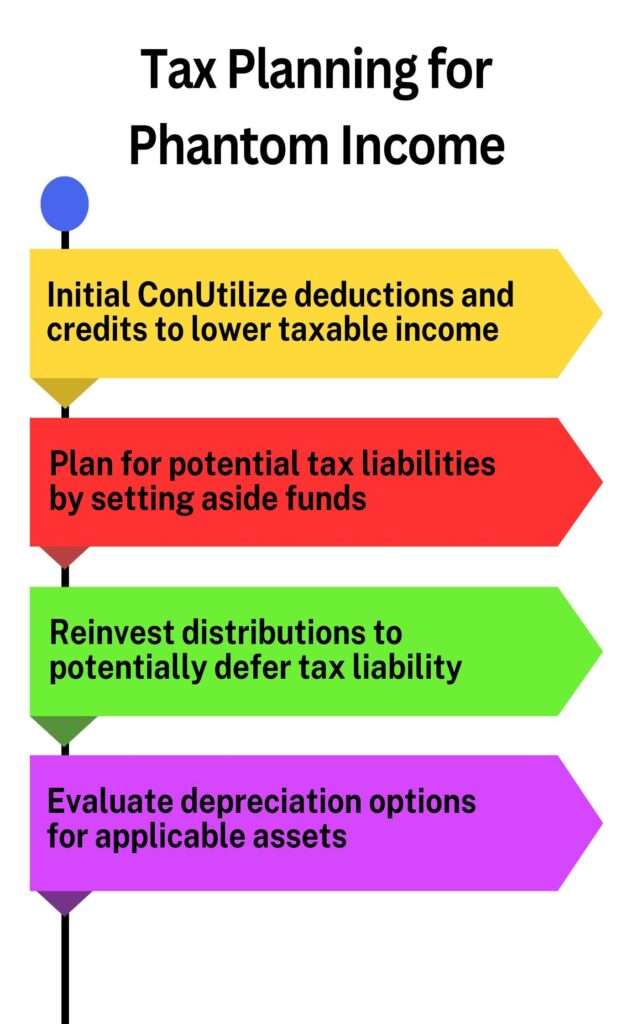
    Tax planning is crucial when dealing with phantom income, which increases taxable income without actual cash received. To mitigate the impact, consider the following strategies:

    • Utilize deductions and credits to lower taxable income.
    • Plan for potential tax liabilities by setting aside funds.
    • Reinvest distributions to potentially defer tax liability.
    • Evaluate depreciation options for applicable assets.

    Professional Advice:

    Consulting a tax professional is vital for managing phantom income. They can provide tailored strategies to minimize tax burden and ensure compliance with IRS regulations. Tax professionals can also help identify deductions, understand potential tax implications, and develop a comprehensive tax plan, mitigating unexpected tax liabilities.

    Managing Phantom Tax Liabilities

    Effective Management Techniques:

    Effective management involves proactive planning and informed decision-making. Techniques include:

    • Regularly review financial statements to anticipate taxable income.
    • Implement tax-efficient investment strategies.
    • Utilize depreciation to offset gains and reduce taxable income.
    • Maintain adequate liquidity to cover unexpected tax liabilities.
    • In addition to financial strategies, prenuptial agreements can help protect assets, ensuring more effective management of potential tax liabilities.

    Tools and Resources:

    Several tools and resources can assist in managing phantom tax liabilities effectively:

    • Tax planning software can help forecast and plan for tax liabilities.
    • Financial advisors can offer personalized investment strategies.
    • IRS publications provide detailed guidance on relevant tax regulations.
    • Online calculators help estimate potential tax impacts and required payments.

    Tax Deductions Related to Phantom Income

    Phantom income often leads to unexpected tax liabilities. To manage these, specific tax deductions can be utilized. For example, individuals can offset their rental income with mortgage interest deductions.

    Additionally, capital losses from other investments might help mitigate the effects of phantom income. Understanding the Internal Revenue Code and relevant tax laws is essential to identify all available deductions.

    Engaging an experienced tax professional can aid in maximizing these deductions and potentially avoid significant tax burdens. Effective tax planning strategies should be considered each tax year to address these issues.

    Cryptocurrency and Phantom Income

    Cryptocurrency transactions can result in phantom income, impacting your tax liabilities. For instance, zero-coupon bonds in the crypto space might increase in value, creating taxable income even if no cash is received.

    According to the Internal Revenue Code, such increases are considered phantom income and subject to tax. Crypto investors should report these gains accurately to avoid penalties. Services offering Paybis crypto payouts can help streamline the process of receiving digital assets, but it’s still essential to track and report any resulting gains properly.

    It’s crucial to understand the specific tax rules governing cryptocurrency and seek professional advice. Experienced tax professionals can help navigate these complex tax issues, ensuring compliance and optimizing your tax strategy.

    Stake and Phantom Income

    Stake-related activities often result in phantom income, which arises even if no cash is received. For example, equity partners in firms structured as partnerships may report phantom income from increases in their stake value. This income is still considered taxable and must be reported. An operating agreement might outline how this income is distributed and managed.

    Stakeholders should be aware of the potential tax liabilities and understand the tax rules applicable to their investments. Consulting with tax professionals can provide strategies to manage these unexpected tax liabilities effectively, ensuring compliance and optimal tax outcomes.

    Conclusion

    Phantom tax can lead to unexpected tax burdens, requiring careful tax planning and professional advice. Understanding the tax rules and implications is essential for managing phantom income. Have you ever faced phantom tax issues? Share your experiences and strategies for handling such tax challenges.

  • What is the Standard Credit Card Size?

    What is the Standard Credit Card Size?

    Credit Card Size

    Ever wondered why your credit card fits perfectly in every machine? Credit card size follows a global standard. This ensures that cards issued by any bank or credit union work seamlessly worldwide. According to the ISO standard, credit cards have precise dimensions. The thickness remains consistent, whether for plastic or metal credit cards.

    These specifications ensure compatibility with ATMs and card readers globally. This article provides a complete guide on the standard dimensions of credit cards. Learn why all cards are the same size and how these standards emerged.

    Credit Card Size

    Standard Measurements:

    Standard Credit Card Size
    • Credit cards have dimensions of 85.6 mm by 53.98 mm.
    • These measurements also translate to 3.370 inches by 2.125 inches.
    • Both credit cards and debit cards adhere to these standard measurements.
    • Identification cards often follow the same size for uniformity.

    Global Standard:

    • The International Organization for Standardization (ISO) sets the global standard.
    • According to ISO/IEC 7810, the standard size is 85.60 mm by 53.98 mm.
    • This standard size ensures compatibility with card readers and ATMs globally.
    • Bank cards, including those from Bank of America, comply with these standards.
    • Both plastic and metal cards follow these international dimensions.

    Thickness of a Credit Card

    Typical Thickness:

    Credit cards typically have a thickness of 0.76 mm, which equals 0.03 inches. This standard thickness allows for compatibility with card readers and ATMs. Most credit and debit cards follow this specification to ensure seamless use. The International Organization for Standardization (ISO) sets these dimensions to maintain uniformity across different types of cards.

    Variations in Thickness:

    Some cards, like metal cards, can be thicker than the standard 0.76 mm. These variations in thickness cater to specific market demands and user preferences. Metal cards often provide a premium feel and additional durability. However, despite being thicker, they must still fit in standard card readers and ATMs.

    Standard Credit Card Features

    • The standard dimensions of a credit card ensure its universal compatibility with card machines.
    • Typical credit card thickness is 0.76 mm, allowing it to fit into any card reader.
    • The front of the card contains the card number, cardholder’s name, and expiration date.
    • The back of the card includes the card verification value (CVV) for security purposes.
    • Cards are made from durable plastic or metal for enhanced durability and longevity.
    • Every credit card must adhere to ISO standard specifications.
    • Metal credit cards offer a premium feel and added weight compared to plastic cards.
    • Rewards cards provide incentives such as cashback, points, or miles for purchases.
    • Platinum cards often come with higher credit limits and exclusive benefits.

    Credit Card Issuers

    Credit card issuers include banks and credit unions, providing various card options tailored to consumer needs. Major issuers like Visa, Mastercard, and American Express dominate the market, offering a range of card features and benefits. Since the first credit card was issued, the industry has evolved, introducing metal credit cards and enhanced security measures. Banks and credit unions issue cards that adhere to global standards for size and thickness, ensuring they fit into any payment terminal.

    Credit vs Debit Cards

    Credit Card Offers

    Credit card offers vary widely, catering to different spending habits and financial needs. Rewards cards provide cashback, points, or travel miles for purchases, while charge cards require full payment each month without a set credit limit. Platinum cards offer premium features like higher limits and exclusive benefits. When evaluating card offers, consider the annual fees, interest rates, and rewards programs to find the best fit for your financial goals.

    Conclusion

    The standardized global dimensions for credit card size are 85.60 mm x 53.98 mm, with a thickness of 0.76 mm. These dimensions ensure compatibility with ATMs and card machines worldwide. Credit card companies must adhere to these international standards to maintain uniformity and functionality. Since the first credit card was issued, the industry has seen innovations like metal credit cards, which follow the same size standards. Whether it’s a plastic or metal card, the dimensions remain consistent to fit into any card reader. Do you think these standards improve the user experience with credit cards?

    FAQs

    1. Do metal credit cards have the same dimensions as plastic ones?

    Yes, metal cards follow the same size standards as plastic cards.

    2. Why is the size of a credit card important?

    It ensures the card fits into ATMs and card readers universally.

    3. Can debit cards have different sizes than credit cards?

    No, debit cards follow the same standard dimensions as credit cards.

    4. What is the importance of the credit card thickness?

    The thickness ensures the card works smoothly in card machines.

    5. Who sets the standards for credit card sizes?

    The ISO (International Organization for Standardization) sets these standards.

  • 10 Most Profitable Dropshipping Business Ideas in 2024

    10 Most Profitable Dropshipping Business Ideas in 2024

    dropshipping business ideas

    Starting a business can be challenging. Finding the right niche for a profitable dropshipping business adds complexity. Selecting a niche can significantly impact your success. Smart home products, fitness equipment, and eco-friendly items are trending. These niches offer lucrative opportunities in 2024. A well-thought-out business plan is crucial. This guide provides an overview of the top 10 profitable dropshipping business ideas for 2024.

    Learn about the best dropshipping products, suppliers, and business strategies. Read on to find your perfect dropshipping niche and start your profitable business today.

    10 Dropshipping Business Ideas

    1. Home Decor:

    Home decor items provide a profitable dropshipping business model. This niche attracts a broad target audience seeking stylish and functional pieces for their homes, by offering a range of products, from wall art to furniture like sofas, an online store can cater to diverse tastes. Partnering with reliable dropshipping suppliers ensures a seamless process. High profit margins can be achieved by sourcing unique and high-quality decor items. To start a dropshipping business in this category, focus on trends and customer preferences to create a successful dropshipping store.

    2. Smart Home Products:

    Smart home products represent one of the best dropshipping business ideas for 2024. The growing demand for home automation and security solutions makes this niche highly profitable. Products like smart lights, security cameras, and home assistants appeal to tech-savvy consumers. By selecting reliable dropshipping suppliers, an online business can offer the latest gadgets. A well-curated selection of smart home products can drive significant profit margins. To build a successful dropshipping store, market to a target audience interested in enhancing their home’s functionality and security.

    3. Eco-Friendly Products:

    Eco-friendly products offer a profitable dropshipping business opportunity. As consumers become more environmentally conscious, the demand for sustainable products increases. Items like reusable bags, bamboo toothbrushes, and eco-friendly cleaning supplies can attract a dedicated customer base. To start a dropshipping business in this niche, find suppliers committed to sustainability. Highlighting the environmental benefits of your products can boost sales. A focus on eco-friendly products can lead to a successful and profitable dropshipping business, appealing to a growing market segment.

    4. Fitness and Wellness:

    Fitness and wellness products present a highly profitable dropshipping business model. The ongoing focus on health and well-being drives demand for items like yoga mats, resistance bands, and wellness supplements. Partnering with reputable dropshipping suppliers ensures a steady supply of popular products. By targeting fitness enthusiasts and health-conscious individuals, an online store can achieve significant profit margins. To create a successful dropshipping business in this niche, keep up with the latest trends and continually update your product offerings.

    5. Pet Supplies:

    Pet supplies remain one of the best dropshipping business ideas. People constantly seek high-quality products for their furry friends, making this a profitable business model. Items like pet food, toys, and grooming tools are always in demand. Collaborating with reliable dropshipping suppliers can help maintain a diverse inventory. By targeting a broad audience of pet lovers, a dropshipping store can achieve substantial profit margins. Focus on quality and customer satisfaction to build a successful dropshipping business in the pet supplies niche.

    6. Beauty and Skincare:

    A dropshipping business focusing on beauty and skincare products can be highly profitable. The market includes a wide range of items such as facial cleansers, moisturizers, makeup, and serums. High demand exists for both organic and premium beauty products. Selecting reputable suppliers or manufacturers offering dropshipping services ensures quality products. Key benefits include low startup costs and a vast potential customer base. Utilizing platforms like Shopify for your dropshipping store can streamline operations. Including trending products can attract more customers, leading to increased sales and success in your dropshipping venture.

    7. Tech Accessories:

    Tech accessories present a lucrative dropshipping opportunity due to constant demand and innovation. Products like phone cases, charging cables, and smart home devices remain popular. The dropshipping business model allows for a low-risk entry into this market. Collaborating with suppliers offering dropshipping services ensures a diverse product range. Key benefits include minimal inventory management and a broad target audience. Utilizing major dropshipping platforms simplifies the process of setting up your store. Successful dropshipping in this niche requires staying updated with the latest tech trends to attract tech-savvy customers.

    8. Fashion and Apparel:

    Starting a dropshipping business in fashion and apparel can be highly rewarding. This niche includes clothing, accessories, and footwear for various demographics. Utilizing Shopify dropshipping can simplify store management and marketing. Collaborating with reliable dropshipping suppliers ensures a steady supply of trendy and high-quality products. The key to success lies in identifying a profitable niche within the fashion industry. Benefits include low startup costs and the ability to quickly adapt to fashion trends. Effective marketing and a user-friendly online store can attract a large customer base, ensuring sustained growth.

    9. Kitchen and Dining:

    A dropshipping business centered on kitchen and dining products offers great potential. Items such as cookware, utensils, and dining sets are always in demand. Finding suppliers offering dropshipping services ensures a consistent supply of quality products. Key benefits include low overhead costs and a wide range of potential customers. Utilizing dropshipping platforms helps in setting up an efficient online store. Focusing on high-quality and innovative kitchen products can attract a dedicated customer base. Regularly updating your product catalog to include new and trending items ensures ongoing interest and sales.

    10. Baby Products:

    Dropshipping baby products can be a very profitable business model due to constant demand. This niche includes items like baby clothing, toys, and accessories. Collaborating with suppliers offering dropshipping services guarantees a steady supply of high-quality products. Key benefits include low startup costs and a loyal customer base of parents and caregivers. Utilizing platforms like Shopify can streamline the process of setting up and managing your store. Focusing on safety and quality can attract more customers, leading to increased sales and a successful dropshipping business in the baby product niche.

    How to Start a Dropshipping Business?

    Starting a dropshipping business involves several essential steps. First, choose a profitable niche for your dropshipping business. Consider dropshipping niches like smart home products, fitness equipment, or eco-friendly items. Next, research and find reliable suppliers or manufacturers offering dropshipping services. Platforms like Shopify can help you set up a dropshipping store easily.

    • Select a profitable niche.
    • Research and find reliable suppliers.
    • Set up your store on platforms like Shopify.

    Create a business plan outlining your goals, target market, and marketing strategies. Find the right dropshipping supplier to ensure product quality and timely delivery. Market your store through social media, SEO, and paid advertising to attract customers. Monitor your business performance and adjust your strategies as needed.

    Starting a dropshipping business can be a low-risk business model with the potential for high profitability. Success in your dropshipping venture depends on thorough research, planning, and execution.

    Conclusion

    In 2024, dropshipping business ideas offer numerous profitable opportunities. Success in dropshipping depends on choosing the right niche and suppliers. Consider dropshipping niches such as home decor, smart home products, and eco-friendly items. Setting up a Shopify dropshipping store and crafting a solid business plan can help grow your business.

    Finding reliable dropshipping suppliers ensures high-quality products and customer satisfaction. Dropshipping is a profitable business model that offers low-risk and high-reward opportunities. Have you identified the best dropshipping business ideas for your venture in 2024?

    FAQs

    1. Is Shopify good for dropshipping?

    Yes, Shopify is a popular platform for dropshipping businesses due to its ease of use and integration options.

    2. What are the benefits of a dropshipping business?

    Low risk, no inventory management, and flexibility in product selection are key benefits.

    3. How to market a dropshipping business?

    Use social media, SEO, and paid ads to attract customers to your online store.

    4. What is a low-risk business model in dropshipping?

    Dropshipping itself is a low-risk model as it requires minimal upfront investment.

    5. How do you find reliable dropshipping suppliers?

    Use platforms like AliExpress, Oberlo, and SaleHoo to find reputable suppliers.

  • What Does “Standing on Business” Mean?

    What Does “Standing on Business” Mean?

    Standing on Business

    Feeling out of touch with the latest slang terms can be frustrating. One phrase that has taken over social media is “standing on business.” This phrase, popularized by Drake’s newest album and his song “Daylight,” has evolved into a viral sensation among young people. It has transcended its origins and become a part of everyday vocabulary.

    DK Metcalf, the wide receiver for the Seattle Seahawks, and other notable personalities use this term. The phrase “standing on business” means to prioritize and uphold one’s personal matters and work ethic.

    For those wanting to learn the meaning and usage of this new slang, this guide provides everything you need to know. The article will explain its origins, how it’s used in text slang, and why it’s become so popular.

    Context of “Standing on Business”

    “Standing on Business” originated in African American Vernacular English (AAVE) and signifies taking responsibility and handling affairs seriously. This phrase has gained popularity in urban vernacular, especially through social media platforms like TikTok. 

    The term embodies a commitment to one’s grind and dedication to completing tasks. Platforms like Urban Dictionary define it as ‘To Take care of your business’. Handling matters with integrity and seriousness. The phrase has transcended its initial context. People now use it widely in various social and professional settings.

    “Standing on Business” in Text Slang

    In text slang, “Standing on Business” represents a commitment to personal responsibility and perseverance.

    For example, He always stands on business, handling his tasks with precision and dedication to achieve his goals.

    In this sentence, “stands on business” means he prioritizes his responsibilities and approaches them with a strong work ethic, ensuring that everything is done thoroughly and efficiently.

    The phrase is frequently used on social media, where trends and vernacular evolve rapidly. TikTok has played a significant role in popularizing this saying, with influencers like Druski incorporating it into their content.

    Users employ this phrase to convey a sense of duty and diligence in their actions. It highlights the importance of taking care of one’s responsibilities without delay. As a part of African American Vernacular English (AAVE), it reflects cultural nuances and the significance of hard work.

    How It Differ from Traditional Business Language?

    “Standing on business” differs from traditional business language by emphasizing personal responsibility and dedication. While traditional terms focus on formalities and processes, this phrase, rooted in African American Vernacular English, highlights the grind and commitment, often used in social media and popular culture.

    Where Did The Slang “Standing on Business” Come From

    The slang term “standing on business” has gained popularity recently, especially after being featured in Drake’s newest album. Drake’s song “Daylight” includes the phrase, which has since taken over social media streets. The exact words Drake said in the song are, “I’m standing on business, I’m fearless and ruthless.” This line has caught the attention of young people and has become a viral catchphrase.

    Drake "Standing on Business"

    Picture: @champagnepapi/Instagram

    The phrase “standing on business” ultimately symbolizes prioritizing and upholding one’s work ethic and personal matters. It means to stand strong and handle one’s business without hesitation. This phrase is part of African American Vernacular English (AAVE) and has transcended its origins, becoming a popular colloquialism. Influencers, musicians, athletes, and even entrepreneurs use it to convey determination and commitment.

    This catchy phrase has risen due to widespread use on platforms like Instagram and TikTok. Notable personalities like DK Metcalf, the wide receiver for the Seattle Seahawks, have used it, adding to its mainstream appeal. The expression has found its way into everyday vocabulary, making it a prominent part of modern slang.

  • Amazon FBA vs Dropshipping in 2024: Weighing the Pros and Cons

    Amazon FBA vs Dropshipping in 2024: Weighing the Pros and Cons

    amazon fba vs dropshipping

    Choosing Amazon FBA vs dropshipping can be challenging. This decision affects your e-commerce business’s success. Amazon FBA vs dropshipping offers distinct advantages and drawbacks. Each model impacts fulfillment, inventory, and profit margins. Amazon FBA allows sellers to use Amazon’s fulfillment centers, ensuring fast prime shipping.

    However, FBA fees can be high. On the other hand, the dropshipping business model lets you sell products without holding inventory. This model may result in lower profit margins. To understand which is the better option for 2024, a detailed comparison is needed. This guide covers the pros and cons of each model.

    How Amazon FBA and Dropshipping Works?

    Amazon FBA handles inventory and order fulfillment for sellers. Products are stored in Amazon warehouses and shipped directly to customers. Sellers use Amazon’s platform for customer service and returns, reducing their workload.

    Dropshipping involves a supplier who ships products directly to customers. Sellers list items on their ecommerce store without holding inventory. When an order is placed, the supplier ships the product to the customer, allowing sellers to focus on marketing and sales.

    Amazon FBA vs Dropshipping: Which One’s Better?

    Amazon FBA offers several advantages, including access to Amazon’s vast customer base and streamlined fulfillment processes. The need for inventory storage can increase costs, but Prime eligibility enhances customer trust and sales potential.

    Dropshipping, on the other hand, requires a lower initial investment since sellers don’t need to purchase inventory upfront. The dropshipping model allows for flexibility but can result in lower profit margins and longer shipping times. Shopify is a popular platform for setting up a dropshipping business due to its user-friendly interface.

    Choosing between Amazon FBA and dropshipping depends on your business model and goals. Amazon FBA suits those who prefer streamlined fulfillment and access to a large customer base, while dropshipping offers lower upfront costs and greater flexibility.

    Amazon FBA vs Dropshipping: Pros and Cons

    Amazon FBA

    Dropshipping

    Difference Between Amazon FBA and Dropshipping

    E-commerce Platforms and Integrations

    Numerous e-commerce platforms and integrations are available for those choosing between Amazon FBA and dropshipping. Shopify is a popular choice, allowing seamless integration with various dropshipping services. For those selling products on Amazon, using the FBA program simplifies fulfillment. Amazon handles inventory storage and shipping, making it easier for FBA sellers.

    BigCommerce and WooCommerce also offer robust solutions for dropshipping businesses. These platforms support integrations with major suppliers and streamline the dropshipping process. Sellers can easily manage their Shopify store or BigCommerce site while utilizing Amazon FBA for fulfillment. If you are looking to invest in online business, these e-commerce platforms provide a solid foundation to start and grow your venture.

    E-commerce business models like dropshipping and FBA benefit from tools like Oberlo, ShipStation, and Inventory Source. These integrations help manage orders and track inventory effectively. Utilizing these platforms and integrations ensures a smoother fulfillment process and enhances overall business efficiency.

    Conclusion

    Deciding between Amazon FBA vs dropshipping depends on your business goals. Each model offers unique benefits and challenges. Amazon FBA provides robust fulfillment services, while dropshipping offers lower upfront costs. Which model do you think suits your business needs in 2024? Share your thoughts in the comments!