
HARO Builders – Header

Category: Marketing

  • SEO for Cybersecurity: Key Strategies to Improve Online Visibility

    SEO for Cybersecurity: Key Strategies to Improve Online Visibility

    seo for cybersecurity

    Cybersecurity firms work hard to protect businesses from online threats, but many struggle to gain visibility in search results. Without a strong online presence, even the best cybersecurity solutions can go unnoticed. This is where SEO for cybersecurity becomes essential it helps companies improve their rankings, attract the right audience, and establish authority in the cybersecurity industry. Most of the online experience begins with a search engine, meaning businesses that fail to optimize their websites risk losing potential clients to competitors.

    To stand out, SEO for cybersecurity must focus on on page SEO, keyword optimization, technical improvements, and content marketing. Additionally, tracking SEO performance through tools like Google Search Console ensures continuous growth. This guide provides effective SEO strategies for cybersecurity websites, helping firms rank higher in search and reach businesses actively searching for cybersecurity solutions. If your firm is not showing up in search results, these strategies will help you fix that.

    The Importance of SEO for Cybersecurity Companies

    Cybersecurity companies need search engine optimization to compete effectively in an industry filled with high-stakes solutions. A well optimized cybersecurity website can improve search engine rankings and bring in organic traffic from relevant searches. Without strong SEO strategies, even high-quality cybersecurity services may struggle to reach the target audience.

    “SEO is not just about ranking high on Google search; it’s about getting the right traffic.” – Neil Patel

    This highlights the necessity of strategic keyword research, avoiding keyword stuffing, and focusing on long-tail keywords that align with search terms people use to find cybersecurity solutions.

    Eventually, a strong SEO marketing strategy enhances online presence, improves search results, and positions a cybersecurity business as a trusted industry leader.

    How SEO Benefits Cybersecurity Firms in a Competitive Market

    Cybersecurity firms face tough competition, requiring them to optimize their search engine results for better visibility. Proper SEO strategies help businesses attract the right audience, ensuring their cybersecurity services appear prominently on Google Search.

    Moreover, technical SEO plays a crucial role in enhancing website speed and security, which directly impacts search engine results pages. Integrating unified SASE solutions can further strengthen site protection and performance. Implementing meta descriptions, structuring content with relevant keywords, and ensuring mobile friendliness improve overall search engine optimization.

    Consequently, firms with strong SEO strategies can position themselves as industry leaders, gaining authority through well placed backlinks and high quality content that addresses cyber threats.

    Increasing Visibility with SEO for Cybersecurity Business:

    • Properly optimized cybersecurity websites rank higher in search engine rankings and attract more potential clients.
    • Using long tail keywords enhances targeting precision and improves organic traffic from niche audiences.
    • High quality backlinks from reputable sites boost credibility and elevate search engine results.
    • Avoiding keyword stuffing ensures content remains natural and aligns with search terms used by clients.
    • Strong technical SEO measures improve site security, loading speed, and overall SEO performance.

    SEO for Cybersecurity: 5 Key Strategies
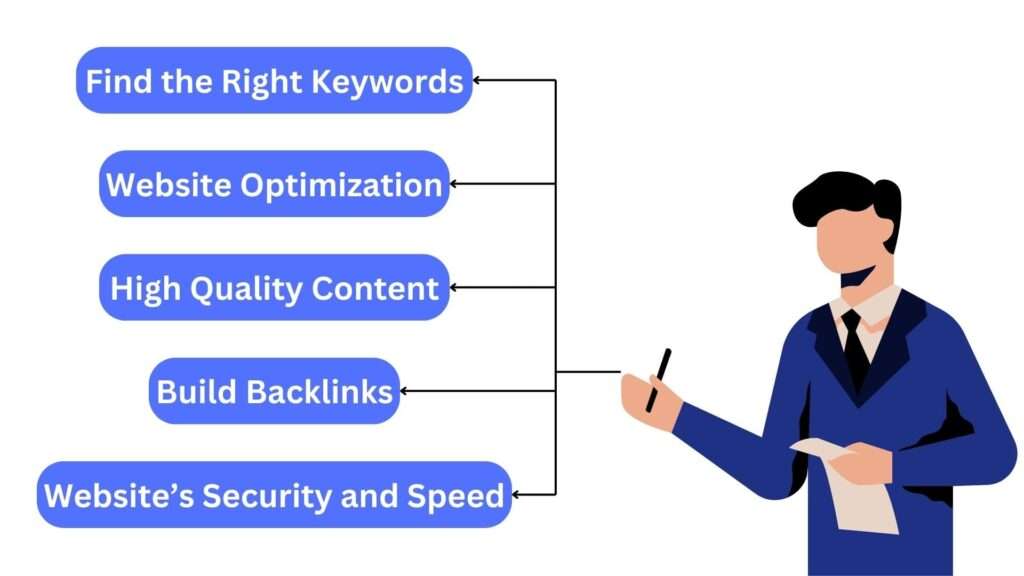
    SEO Strategies for Cybersecurity

    1. Find the Right Keywords for Your Cybersecurity Business:

    Finding the right keywords is the first step to making your cybersecurity firm show up in search results. Using tools like Google Keyword Planner helps figure out what terms people type when searching for cybersecurity solutions. You need to mix broad and specific keywords, like “cybersecurity services for small businesses” or “network security expert” to attract the right audience. Also, placing these keywords naturally in your content makes sure search engine crawlers understand what your website is about. But don’t overstuff them Google ranks content better when it’s helpful, not just packed with words.

    2. Optimize Your Website with On Page SEO:

    On-page SEO is all about making your website easier for search engines like Google to read. That means using clear title tags, meta descriptions, and structured URLs. A page about cybersecurity SEO strategy should have a URL like yoursite.com/cybersecurity-seo-strategy instead of something messy like yoursite.com/page12345. Also, adding internal linking helps users navigate better while telling Google which pages are important. Image alt text is another must it helps search engine crawlers understand images while improving accessibility. These simple fixes can improve search rankings and help your site load faster, which is another SEO ranking factor. To further analyze and improve your website’s speed, tools like Feedthebot can provide insights on how to optimize your site’s performance and boost its SEO ranking.

    3. Create High Quality Content on Cybersecurity Topics:

    Content is king when it comes to SEO for cybersecurity websites. Writing blog posts, guides, and whitepapers on trending cybersecurity topics helps bring more visitors to your site. However, content needs to be useful, not just stuffed with keywords. Try answering questions that people are searching for, like “How to protect small businesses from cyber threats”. It’s also helpful to refine your content to ensure clarity and readability — many creators use online tools to rephrase complex ideas and make their writing more engaging. Adding case studies and real-world examples makes content even stronger. Also, updating old articles regularly keeps them fresh and relevant. Search engines like Google prefer websites that keep up with the latest cybersecurity trends, so make sure your site isn’t outdated.

    4. Build Backlinks to Improve SEO Performance:

    Backlinks are like votes of confidence from other sites. When high-authority websites link to your content, Google sees your site as trustworthy. Cybersecurity firms can get backlinks by writing guest posts for industry blogs, sharing expert SEO tips, and creating valuable research reports. Another way is reaching out to cybersecurity professionals and collaborating on content. The key is getting quality backlinks, not just a bunch of random ones. A single link from a well-respected cybersecurity industry site is better than ten from low-quality directories.

    5. Improve Your Website’s Security and Speed:

    Google ranks secure websites higher because it wants to protect users from threats. That’s why every cybersecurity firm needs SSL encryption (HTTPS) without it, Google might warn visitors that your site isn’t safe. Besides security, site speed is also critical. Pages that take too long to load make users leave fast, hurting SEO rankings. Compressing images, reducing unnecessary code, and using fast hosting services can improve search performance. If a website loads quickly and stays secure, it ranks better in search results while providing a better user experience.

    Local SEO for Cybersecurity Businesses

    If your cybersecurity business serves a specific area, local SEO is a must. Here’s what it includes:

    • Google Business Profile: Make sure your profile is claimed, accurate, and regularly updated.
    • Consistent NAP (Name, Address, Phone Number): Keep business info the same across directories.
    • Local Listings: Get listed on cybersecurity-related business directories for better visibility.
    • Localized Content: Write articles and service pages that mention your city or region.
    • Customer Reviews: Encourage happy clients to leave positive reviews on Google and other platforms.

    How to Set Up Local SEO for Your Cybersecurity Firm?

    First, claim your Google Business Profile and add all details, like services, photos, and operating hours. Then, make sure your business name, address, and phone number are exactly the same everywhere online.

    Next, list your firm in directories related to cybersecurity and tech services. Additionally, creating localized blog content can attract clients searching for cybersecurity help in your area.

    Lastly, focus on getting customer reviews Google ranks businesses with real, positive feedback higher.

    With the right local SEO strategies, cybersecurity firms can reach more potential clients in their area and build a strong online presence.

    SEO for Cybersecurity: The Power of Backlinks

    Backlinks serve as a major ranking factor in search engine optimization, helping cybersecurity websites establish authority and trustworthiness. A well structured SEO strategy should include acquiring high quality links from industry-relevant sources to improve search engine rankings.

    Moreover, backlinks from authoritative sources signal to Google search that the content is credible, positively impacting search engine results pages. This is particularly crucial for cybersecurity firms, as trust is a key factor in securing clients. 

    Ultimately, acquiring high-quality backlinks boosts SEO performance, increases organic traffic, and strengthens the online presence of cybersecurity businesses in a competitive market.

    The Impact of Digital Marketing on Local SEO Performance

    Digital marketing significantly enhances local SEO, making it easier for cybersecurity companies to reach regional clients. Since many small businesses require cybersecurity solutions, optimizing for local SEO ensures these firms appear in search engine results when potential customers search for security services. Additionally, maintaining Google search listings with accurate business details, customer reviews, and location based search terms helps improve credibility.

    Local SEO involves refining content with relevant keywords that align with regional interests, further improving search engine rankings. Best SEO software for businesses can streamline this process by optimizing local search efforts and tracking performance. Consequently, effective SEO marketing strategies not only boost a cybersecurity business’s presence but also position them as a trusted option in their geographical area.

    Conclusion

    Improving SEO for cybersecurity websites requires a combination of keyword optimization, on page SEO, expert SEO techniques, and strong backlink-building strategies. Furthermore, search engine crawlers favor well structured content that helps search engines understand the relevance of your services. SEO marketing isn’t just about rankings it establishes credibility in the cybersecurity field, making your firm a trusted resource for clients searching for cybersecurity solutions.

    However, successful SEO isn’t a one time effort. SEO involves optimizing continuously, tracking results through Google Search Console, and adapting strategies based on the latest cybersecurity trends. Now, ask yourself is your current SEO approach helping you rank higher in search, or is it time to rethink your strategy?

    FAQs

    1. What role does content play in SEO for cybersecurity?
    High-quality, relevant content establishes authority and improves search engine visibility.

    2. How can I measure the success of my SEO efforts?
    Utilize tools like Google Search Console to monitor search rankings and website performance.

    3. What are common SEO mistakes to avoid in the cybersecurity industry?
    Avoid keyword stuffing, neglecting mobile optimization, and ignoring analytics data.

    4. How often should I update my cybersecurity content for SEO?
    Regular updates keep content relevant, which is favored by search engines.

    5. Can local SEO benefit my cybersecurity firm?
    Yes, optimizing for local search can attract clients in your specific geographic area.
  • Is SEO Dead in 2025? How AI Is Changing the Game

    Is SEO Dead in 2025? How AI Is Changing the Game

    seo dead

    As artificial intelligence (AI) continues to reshape the digital landscape, everyone has the same question, Is SEO dead? The short answer – NO! AI-driven tools transform search engines, altering how users interact with search results. Traditional SEO tactics like keyword stuffing are becoming obsolete as search algorithms prioritize high-quality, user-centric content.

    To remain competitive, marketers must integrate AI into their content strategies, focusing on delivering valuable information that aligns with user intent. This article provides a comprehensive guide on adapting to these changes, ensuring your digital marketing efforts remain effective in the evolving SEO landscape.

    Is SEO Dead or Evolving in 2025?

    SEO dead? Not quite! In 2025, SEO is evolving rather than disappearing. AI-driven search algorithms now focus on user intent, content quality, and contextual relevance. Traditional tactics like keyword stuffing and excessive backlinking no longer guarantee top rankings. Instead, Google’s Search Generative Experience (SGE) prioritizes structured, informative, and user-centric content.

    Businesses must adapt by integrating AI tools for keyword research, content optimization, and real-time analytics. The shift demands a focus on expertise, trustworthiness, and value-driven content. As AI continues to refine search experiences, SEO remains vital but requires a modern approach. Staying ahead means embracing AI’s capabilities while maintaining strategic content creation.

    How AI Is Shaping Search Results?

    Artificial Intelligence (AI) has revolutionized how search results are generated, particularly with innovations like Google’s Search Generative Experience (SGE). Unlike traditional methods, SGE leverages Custom Generative AI Solution to interpret complex queries, offering users context-rich and precise responses. This shift prioritizes user intent over outdated practices like keyword stuffing and fostering high-quality and relevant content.

    Consequently, marketers must adapt by focusing on optimization strategies that emphasize clarity, contextual alignment, and structured content capable of appearing in featured snippets. These advancements demand a strategic overhaul of digital marketing efforts for businesses, especially B2B.

    AI tools now enable marketers to identify optimal search terms, optimize content for SERPs, and deliver actionable insights that align with user needs. Simultaneously, focusing on content quality requires avoiding keywords while creating data-driven strategies that resonate with evolving search algorithms. This transformation underscores the necessity for adaptability and innovation in today’s competitive digital landscape.

    What Generative Experiences Mean for SEO Practices

    Generative AI is reshaping SEO by shifting the focus from traditional ranking factors to user intent and content quality. Key impacts include:

    • Enhanced search experiences: AI-generated responses provide users with more relevant and contextual results.
    • Declining keyword reliance: SEO now prioritizes semantic search over exact-match keywords.
    • Emphasis on structured content: Clear subheadings, lists, and concise explanations boost visibility.
    • Branded search growth: Businesses optimizing for brand-related queries gain an advantage.
    • Dynamic content adaptation: AI tools help marketers refine content strategies based on evolving search trends.

    To succeed in AI-driven search, marketers must optimize for clarity, relevance, and user engagement.

    The Role of AI in Transforming SEO Tactics

    The integration of artificial intelligence (AI) in SEO is fundamentally reshaping the digital marketing landscape. Traditional SEO practices, which once focused on keyword density and backlinks, are becoming less effective. Instead, AI-driven tools and strategies prioritize user intent, content relevance, and enhanced search experiences. To maintain competitive search engine rankings, businesses must adapt to these changes.

    How AI is Revolutionizing SEO Practices

    AI is redefining SEO by improving how search engines evaluate and rank content.

    • Improved User Experience: AI tools encourage the creation of content that addresses user intent over exact keyword matches.
    • Enhanced Algorithms: Modern search engines prioritize trustworthiness and subject matter expertise, especially in organic branded searches.
    • Google’s Generative AI: Features like the Search Generative Experience enhance user interactions with conversational and detailed search results.
    • Diminishing Role of Backlinks: While backlinks remain relevant, AI algorithms now emphasize content quality and authority more significantly.
    • Dynamic Content Optimization: AI platforms allow digital marketers to identify trends and adjust strategies quickly to match evolving algorithms.

    Impact of Generative AI on Search Queries

    Generative AI has transformed how users search and how marketers optimize content.

    • Contextual Understanding: Search engines now interpret queries more contextually, reducing dependence on rigid keyword-focused content.
    • Dynamic Suggestions: Generative AI tools provide personalized search results, encouraging a shift from traditional SEO practices.
    • Branded Search Growth: Companies increasingly focus on creating a strong brand identity to stand out in organic search results.
    • Shift in User Behavior: Users increasingly rely on AI-driven suggestions rather than traditional search engine results.
    • Content Adaptation: Content optimized with generative AI is more likely to appear at the top of search engine results pages.

    Challenges of Adopting AI-Integrated SEO Strategies:

    The shift to AI-driven SEO is not without its challenges, especially for businesses reliant on traditional methods.

    • Tool Selection: Identifying effective AI tools that suit specific business needs can be daunting.
    • Content Alignment: Aligning content with AI-generated suggestions requires significant effort and consistent monitoring.
    • Authority and Trustworthiness: Search engines increasingly prioritize authoritative content, necessitating expert input in content creation.
    • Adapting Legacy Practices: Traditional strategies like focusing solely on backlinks may require significant updates to align with AI advancements.
    • Cost and Resources: Implementing AI-driven tools can be resource-intensive for smaller businesses.

    Why SEO Dead Claims Are Misleading: Common Myths

    The idea that SEO dead discussions hold merit is a misconception. While AI is transforming search, SEO remains an essential digital marketing strategy. Many believe that AI-driven search experiences eliminate the need for optimization, but the reality is quite the opposite. Search engines still rely on well-structured, authoritative content to deliver accurate results.

    In 2025, advancements in algorithms and user behavior demand smarter optimization techniques, not abandonment. Let’s clarify common myths surrounding this controversial statement and address why SEO remains a core part of online success.

    1. SEO Is No Longer Relevant:

    Some believe that the rise of AI and automation has made SEO irrelevant. However, AI tools often enhance search optimization by offering deeper insights into trends and behavior. Businesses using modern tools effectively adapt to these changes, securing high rankings.

    Moreover, with the continuous growth of online platforms, SEO ensures discoverability across digital channels.

    2. Keyword Research Is Outdated:

    Many marketers think keyword research holds no value due to search engines’ focus on semantics. Nevertheless, understanding user intent behind searches has become increasingly critical for success.

    Benefits of updated keyword research:

    • Reveals trends and user preferences accurately.
    • Supports content alignment with audience expectations.
    • Drives targeted traffic when integrated strategically.

    SEO prioritizes keywords that align with current user queries, keeping them essential in content strategies.

    3. Social Media Has Replaced SEO:

    While social media plays a pivotal role in brand visibility, it doesn’t eliminate the need for SEO. Instead, both strategies complement one another by directing audiences from different channels to websites. Social platforms enhance reach, whereas SEO ensures visibility in search engine results.

    Likewise, the growing popularity of integrated campaigns highlights the synergy between these methods. Businesses relying solely on social media risk losing organic search traffic.

    4. Paid Ads Are Better Than Organic SEO:

    Paid advertising provides instant visibility, yet organic SEO delivers sustainable results over time. Relying entirely on paid strategies can become expensive and limit long-term growth potential. Certainly, a well-balanced approach utilizing both paid and organic methods yields the best outcomes.

    Organic SEO focuses on:

    • Building authority and credibility with search engines.
    • Generating consistent, cost-effective traffic.
    • Delivering value-driven content that resonates with audiences.

    5. Voice Search Has Made Traditional SEO Obsolete:

    Voice search adoption has grown significantly, but it complements rather than replaces traditional SEO practices. Optimizing for conversational queries and local results strengthens a website’s relevance in voice search results. Adapting to these advancements ensures a broader reach while retaining traditional optimization benefits.

    6. SEO Results Take Too Long:

    The perception that SEO takes forever to show results often discourages businesses from investing. However, consistent efforts yield measurable outcomes when implemented effectively. Regular tracking and updates reduce the waiting period while improving performance metrics.

    Shortcuts like black-hat SEO methods often harm visibility rather than improve rankings quickly. Patience and adherence to best practices lead to sustainable growth.

    The Future of Digital Marketing in an AI-Driven World

    AI is revolutionizing digital marketing, but claims that SEO dead strategies are outdated are incorrect. Instead, AI enhances search algorithms, personalization, and user experiences. Businesses now leverage AI tools for automated data analysis, trend prediction, and content optimization.

    Key AI-driven shifts in digital marketing:

    • Hyper-personalized content: AI analyzes user behavior to create targeted messaging.
    • Predictive analytics: Identifies future trends to optimize marketing strategies.
    • Voice search adaptation: SEO strategies adjust to conversational queries for better ranking.
    • AI-powered chatbots: Improve customer interactions and engagement.

    Despite AI advancements, SEO remains integral to digital success. The key is to embrace AI-driven optimization while maintaining content quality and user-centric strategies. To stay competitive, businesses can utilize SEO software to automate optimization, improve rankings, and drive targeted traffic.

    Conclusion:

    Is SEO dead? While AI has undeniably transformed the SEO landscape in 2025, it does not signify the demise of SEO as a whole. Instead, these advancements present an opportunity for marketers to refine their strategies, prioritize high-quality content, and use AI tools to optimize user experience and search visibility. Traditional practices like keyword stuffing have been replaced by a focus on understanding searcher intent and delivering value-driven content.

    By embracing these changes, businesses can not only maintain but also enhance their presence on search engine results pages. How prepared are you to leverage AI’s potential and redefine your SEO approach for success in this evolving digital ecosystem?

    FAQs

    1. What is the role of AI in digital marketing?
    AI enhances digital marketing by automating tasks, analyzing data, and personalizing user experiences for better engagement.

    2. How does AI improve search engines?
    AI refines search algorithms, understanding context and intent to deliver more accurate and relevant results.

    3. What is the future of SEO with AI?
    SEO will focus on user-centric content, advanced optimization techniques, and integration of AI-driven tools.

    4. Why is content quality critical for SEO?
    Search engines prioritize informative, well-structured, and user-friendly content to improve user satisfaction and rankings.

    5. How does AI affect keyword research?
    AI tools analyze vast data to identify relevant keywords and predict trends, improving targeting accuracy.

  • Ahrefs Alternatives: Top 10 Tools to Explore in 2025

    Ahrefs Alternatives: Top 10 Tools to Explore in 2025

    ahrefs alternatives

    Choosing the right SEO tool can be a challenge, especially when popular options like Ahrefs are beyond the budget for many users. While Ahrefs is renowned for its exceptional backlink analysis, keyword research, and site auditing capabilities, it’s not always the most affordable choice. Nearly 70% of marketers prefer tools offering similar features at more accessible prices. This growing demand has led to a surge in Ahrefs alternatives, catering to SEO professionals, content creators, and businesses of all sizes.

    Options such as SEMrush, SE Ranking, and Moz Pro provide comprehensive solutions for backlink analysis, rank tracking, and technical SEO—often at a fraction of the cost. Whether you need a tool for competitor analysis, keyword research, or site audits, these alternatives deliver impressive results without breaking the bank. Below, we explore the 10 best Ahrefs alternatives in 2025, each offering unique advantages to optimize your SEO efforts effectively.

    Why Look For Ahrefs Alternatives?

    Although Ahrefs is widely recognized, not every user finds it the most suitable option. Pricing concerns, for instance, often limit its accessibility for smaller businesses or freelancers. Furthermore, some users require tools with features tailored to specific needs, e.g., local SEO or advanced keyword tracking. Conversely, alternatives may offer comparable functionalities at a lower cost, providing value without compromising quality. Additionally, user interface preferences vary significantly, and other tools might provide a simpler experience. Lastly, competitors occasionally offer unique features, such as integration capabilities, that align better with particular workflows and goals.

    What to Look For in an SEO Tool?

    Selecting an SEO tool requires focusing on features that enhance efficiency and data accuracy. Consider the following:

    • User-friendly interface: Tools must simplify analysis to ensure productive workflows.
    • Keyword research options: These should provide comprehensive data for strategic targeting.
    • Competitor analysis: Detailed insights can help identify gaps and opportunities.
    • Integration compatibility: Seamless connectivity with other platforms ensures smoother operations.
    • Pricing and scalability: Costs should align with budgets while offering room for growth.

    Altogether, a robust tool aligns functionality with user-specific objectives.

    1. SEMrush: A Powerful Competitor in the SEO Tool Space

    semrush

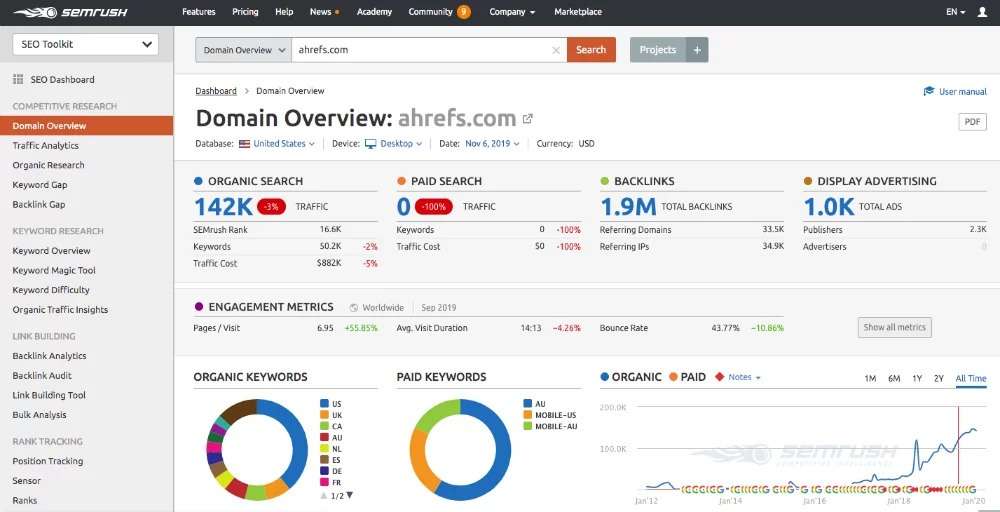
    SEMrush continues to dominate as an all-in-one SEO tool, delivering powerful solutions for backlink analysis, rank tracking, and keyword research. Its advanced tools for competitor analysis and content marketing make it a formidable alternative to Ahrefs. SEMrush’s versatility caters to businesses and individuals seeking comprehensive digital marketing solutions.

    One of SEMrush’s key strengths lies in its pricing and accessibility. Unlike Ahrefs, which has a limited trial period, SEMrush offers a 30-day free trial and a tiered pricing model suitable for businesses of all sizes. It also provides a free account with basic tools, making it ideal for small businesses and individuals.

    SEMrush surpasses Ahrefs by including additional features like content creation and social media management tools. Its competitive pricing and functionality-rich approach solidify its position as a leading SEO tool.

    semrush dashboard

    Key Features and Benefits of SEMrush:

    • Backlink Analysis: Detailed insights into backlink profiles, referring domains, and broken links.
    • Keyword Research Tool: Identifies high-potential keywords based on search volume and competition.
    • Rank Tracker: Tracks your website’s search engine rankings and evaluates keyword performance over time.
    • SEO Audit: Performs technical SEO audits to identify site-wide optimization opportunities.
    • Content Marketing Tools: Supports creating and optimizing content strategies aligned with search intent and user needs.

    SEMrush’s tools make it a favorite among marketers and businesses aiming for scalability, offering unmatched insights for campaigns. Additionally, its user-friendly interface ensures accessibility for beginners and professionals alike, making it a long-term investment for serious SEO practitioners.

    2. Ubersuggest: A Budget-Friendly Ahrefs Alternatives

    ubersuggest

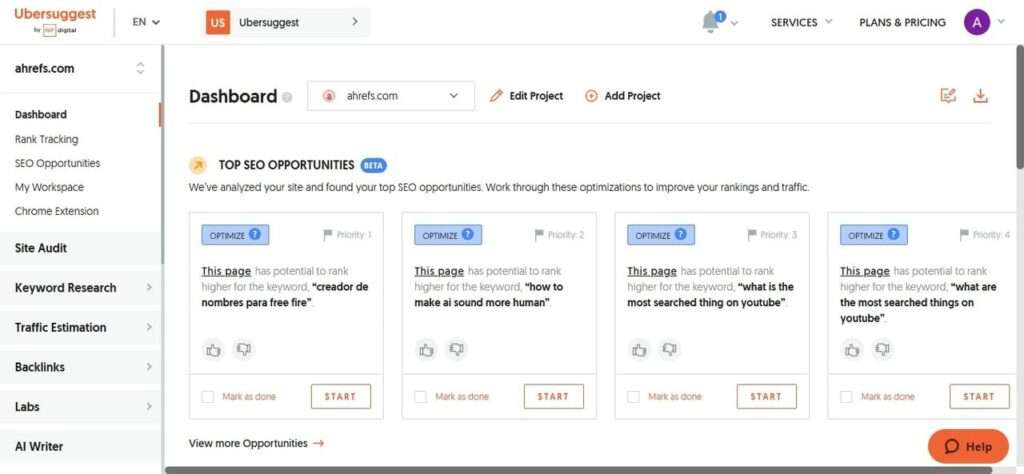
    Ubersuggest is a top choice for SEO professionals seeking a cost-effective alternative to Ahrefs. This tool provides essential features like keyword research, backlink analysis, and competitor research at a fraction of the cost, making it ideal for startups, freelancers, and small businesses.

    One of Ubersuggest’s biggest advantages is its affordability. It offers a free version with adequate features and affordable paid plans, including a lifetime access option that delivers exceptional long-term value. Compared to Ahrefs, Ubersuggest appeals to budget-conscious users who need robust SEO tools without exceeding their resources.

    While Ubersuggest’s simplicity and lower costs are appealing, it does have limitations. Its backlink analysis and advanced tools are not as comprehensive as Ahrefs. However, it remains a valuable alternative for users prioritizing affordability.

    ubersuggest dashboard

    Features That Make Ubersuggest Stand Out:

    • Comprehensive Keyword Research: Analyze search volume, competition, and difficulty effectively.
    • Backlink Analysis Capabilities: Offers data to help develop effective link-building strategies.
    • Generous Free Version: Provides essential features for small-scale SEO needs.
    • Affordable Pricing Plans: Cost-effective, especially compared to Ahrefs and SEMrush.
    • Competitor Analysis Tools: Offers insights into competitor strategies and website performance.

    Ubersuggest’s budget-friendly nature and functionality ensure it’s a preferred choice for small businesses. Moreover, its ease of use makes it an excellent starting point for those new to SEO or managing smaller projects.

    3. Majestic: A Specialist in Link Analysis

    majestic

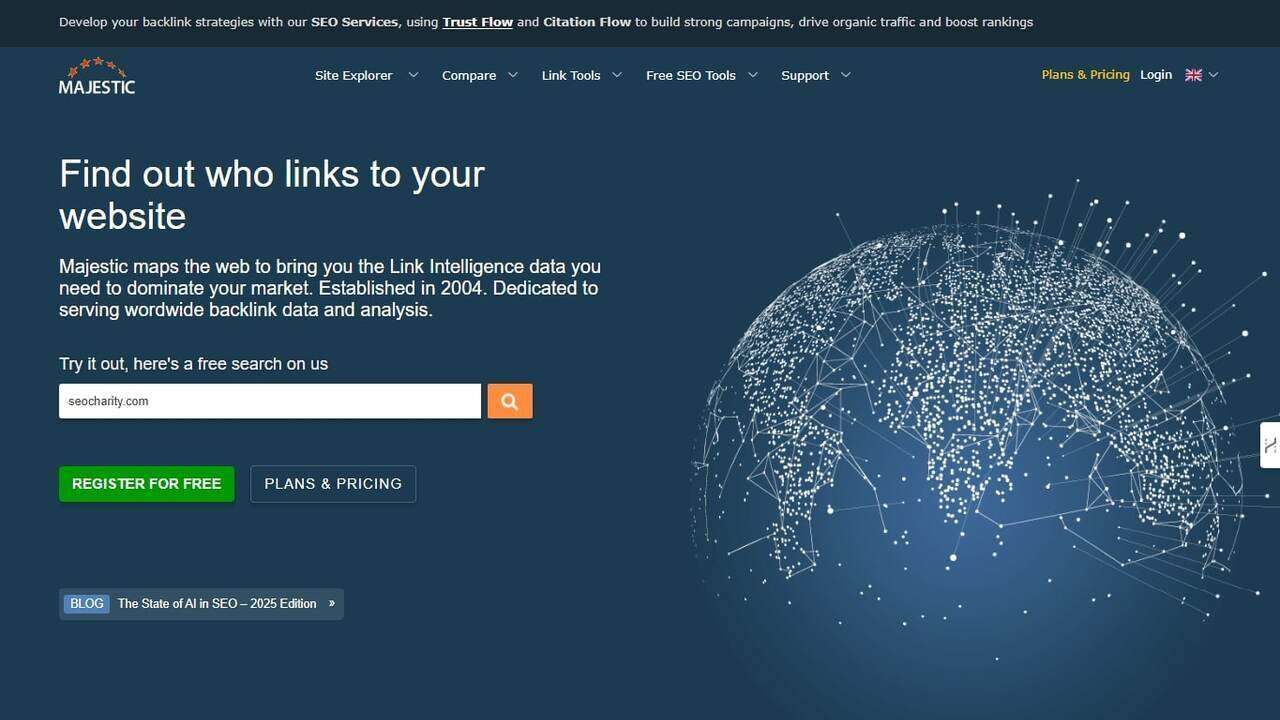
    Majestic is a dedicated SEO tool specializing in link analysis and backlink tracking. Unlike broader platforms, it focuses exclusively on delivering in-depth backlink metrics, making it an excellent choice for SEO professionals prioritizing link-building strategies.

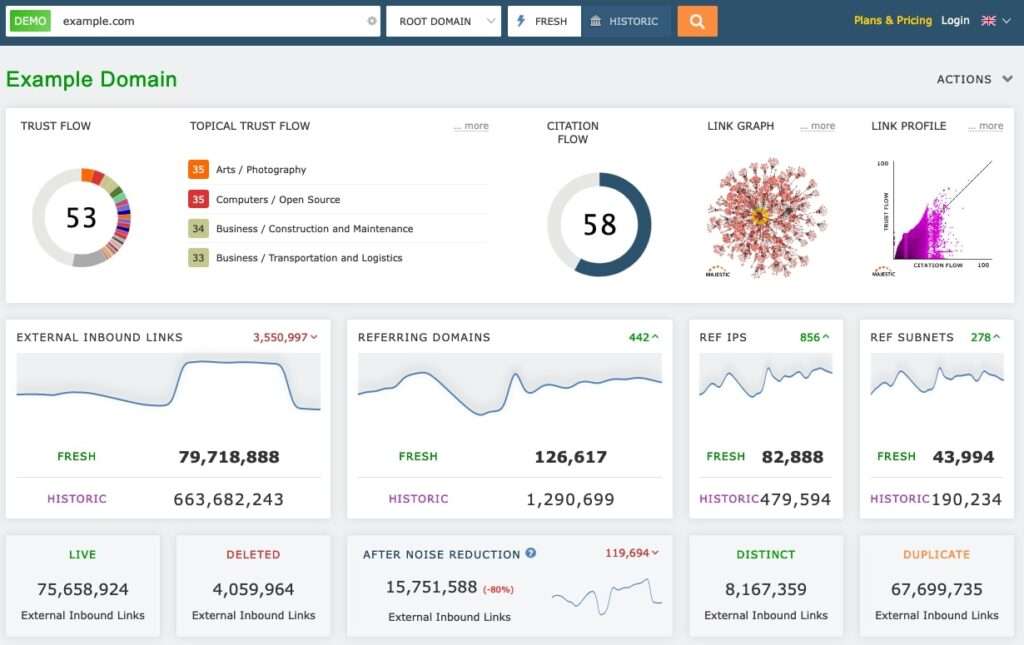
    Majestic’s Trust Flow and Citation Flow metrics are industry benchmarks for evaluating link quality. Its extensive historical data enables users to analyze backlink trends and refine strategies effectively. While Ahrefs offers a more comprehensive suite of features, Majestic’s singular focus on backlinks ensures tailored insights for link-building enthusiasts.

    majestic dashboard

    Core Functionalities of Majestic:

    • Backlink Analysis: Tracks and evaluates backlinks to enhance SEO strategies.
    • Trust Flow and Citation Flow Metrics: Provides link quality and relevance insights.
    • Historical Backlink Data: Comprehensive database for analyzing long-term trends.
    • Referring Domains and Anchor Text Tracking: Helps monitor domain authority and anchor text relevance.
    • Site Explorer: Breaks down backlink profiles into actionable insights.

    Majestic’s expertise makes it indispensable for businesses aiming to master link-building. Its detailed approach to backlink analysis empowers marketers to design highly effective link-building campaigns that drive results over time.

    4. Moz Pro: A Comprehensive SEO Suite

    moz pro

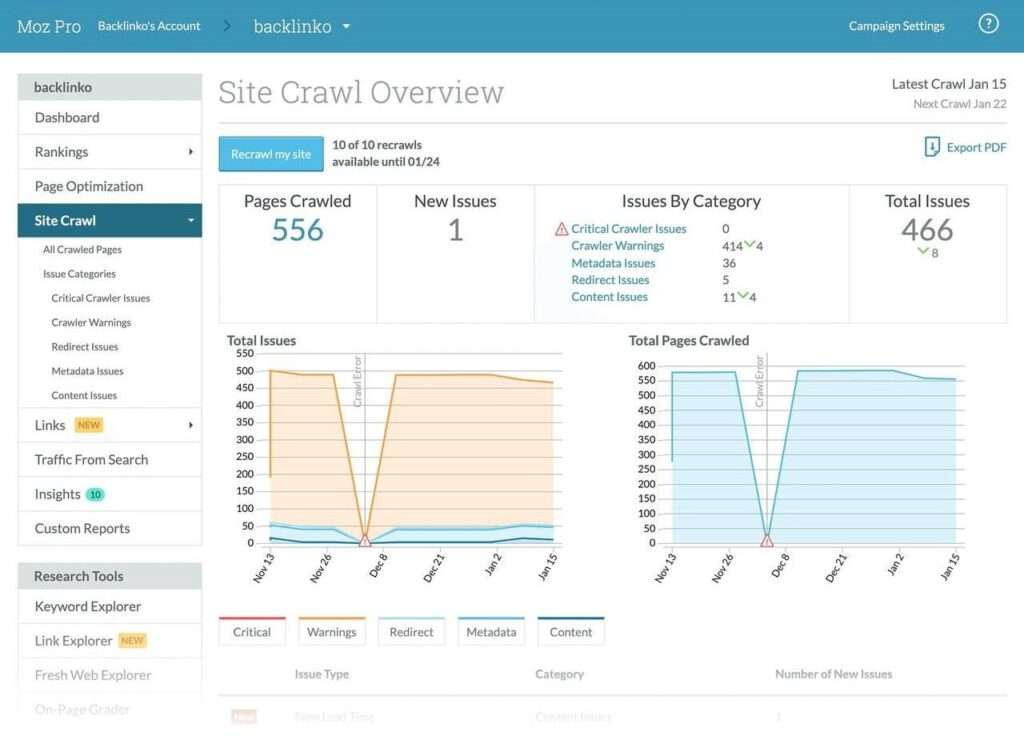
    Moz Pro is an all-in-one SEO tool designed to simplify digital marketing tasks. With features like keyword research, rank tracking, and site audits, Moz Pro is a worthy alternative to Ahrefs. Its user-friendly interface and affordability make it particularly appealing to small and mid-sized businesses.

    Moz Pro offers tools for uncovering marketing gaps, beginner-friendly guidance for technical SEO, and seamless integration with content marketing strategies. Its emphasis on usability and affordability makes it a popular choice for marketers seeking a straightforward yet effective solution.

    moz pro dashboard

    Features That Define Moz Pro:

    • Keyword Research Tool: Identifies impactful keywords based on search volume and competitive difficulty.
    • Rank Tracker: Tracks rankings over time with location-specific insights.
    • Site Audit Functionality: Detects and resolves technical SEO issues for better performance.
    • Backlink Analysis Tool: Evaluates backlink profiles to uncover growth opportunities.
    • SERP Analysis: Provides insights into search engine results, focusing on user intent and competitor strengths.

    Moz Pro bridges the gap between simplicity and technical expertise, making it a versatile choice. Additionally, it offers beginner-friendly documentation and customer support, ensuring that even users with minimal SEO knowledge can benefit.

    5. SE Ranking: A Rising Star in SEO

    se ranking

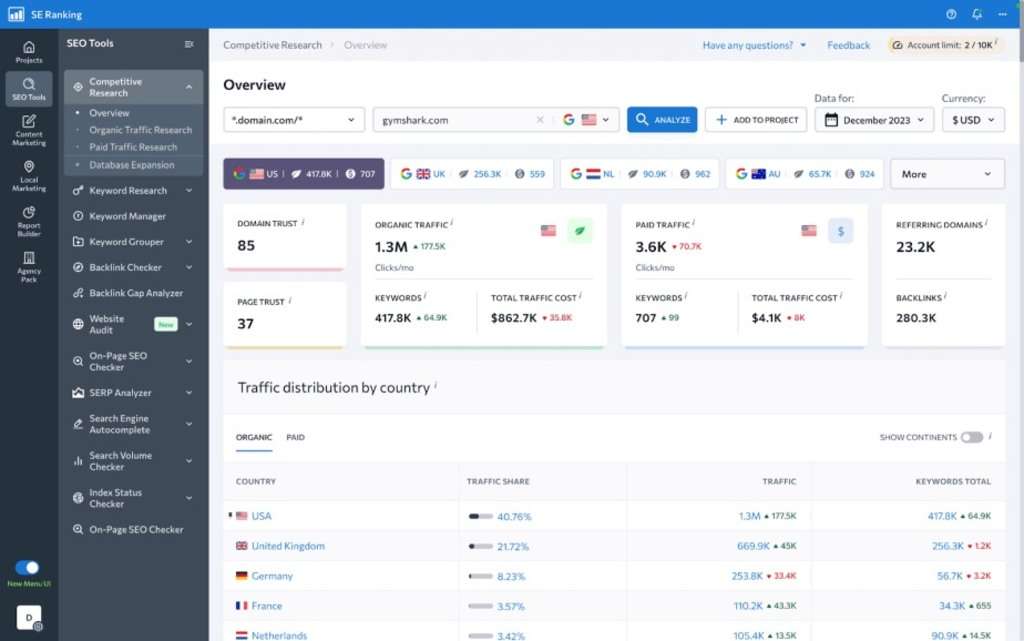
    SE Ranking is quickly becoming a versatile and reliable SEO tool in 2025. Its tools for keyword research, backlink analysis, and rank tracking rival industry giants like Ahrefs and SEMrush while remaining budget-friendly.

    SE Ranking’s pricing structure is particularly attractive, offering flexible plans based on tracking frequency and keyword volume. The platform provides a free trial and affordable subscriptions, ensuring accessibility for freelancers, small businesses, and enterprises. Its customizable features and user-friendly interface further enhance its appeal.

    se ranking dashboard

    Key Functionalities of SE Ranking:

    • Backlink Analysis: Detailed reports on backlink profiles and referring domains.
    • Keyword Research Tool: Analyzes search volume and competition for better ranking strategies.
    • Rank Tracker: Monitors website rankings and competitors’ performance.
    • Site Audit: Identifies technical SEO issues and optimization opportunities.
    • Competitor Analysis: Offers insights into rival strategies for improved market positioning.

    SE Ranking’s rise in popularity is well-deserved, thanks to its focus on accessibility and performance. It caters to businesses of all sizes, offering comprehensive tools without the steep learning curve associated with other platforms.

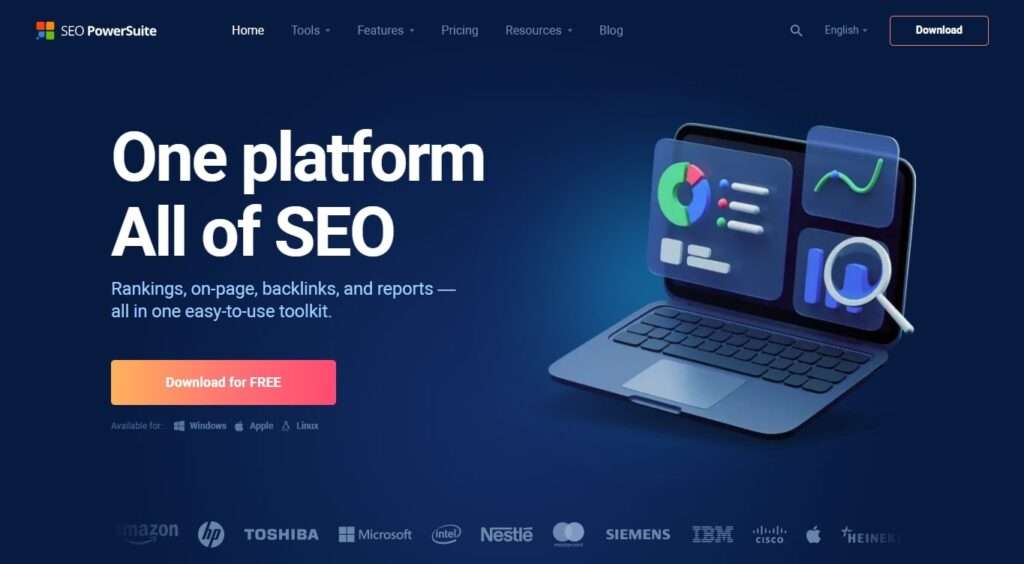
    6. SEO PowerSuite: The Desktop-Based Ahrefs Alternatives

    seo powersuite

    SEO PowerSuite is a powerful desktop-based SEO tool offering affordability and functionality. Unlike cloud-based tools, it provides offline capabilities and comprehensive tools for keyword research, competitor analysis, and SEO strategy development.

    One of its main advantages is its cost-effectiveness. Without recurring subscription fees, it’s a great option for users seeking affordable SEO solutions. However, its desktop-based nature requires local installation and system resources, which may not suit everyone.

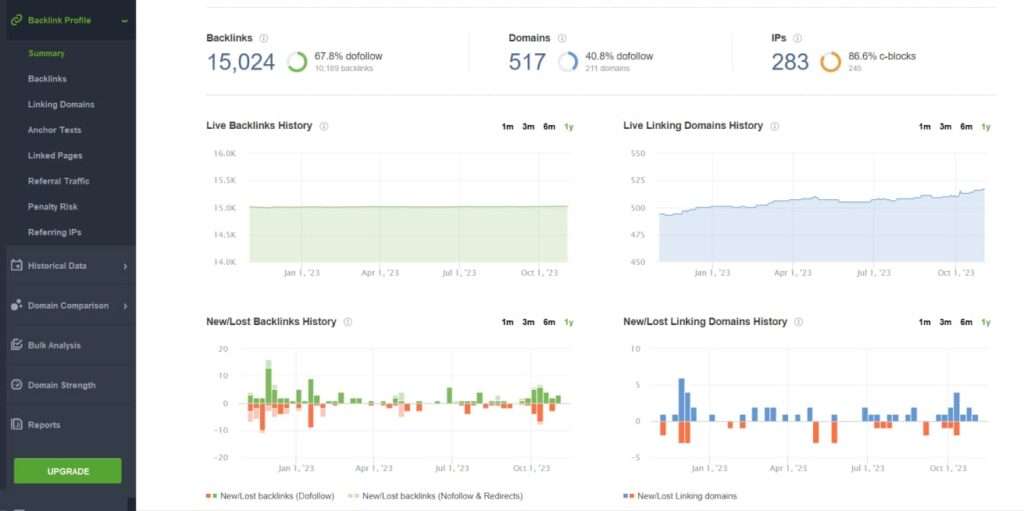
    seo powersuite dashboard

    Unique Features of SEO PowerSuite:

    • All-in-One Platform: Combines rank tracking, backlink analysis, and site auditing.
    • Desktop-Based System: Provides offline functionality and full control over data.
    • Customizable Reporting: Allows tailored reports for unique client or business needs.
    • Integration Options: Works seamlessly with Google Analytics and Search Console.
    • Free Version Availability: Offers essential features without cost.

    For offline SEO management, SEO PowerSuite remains a standout choice. Its robust capabilities provide flexibility for marketers who prefer working without cloud-based restrictions.

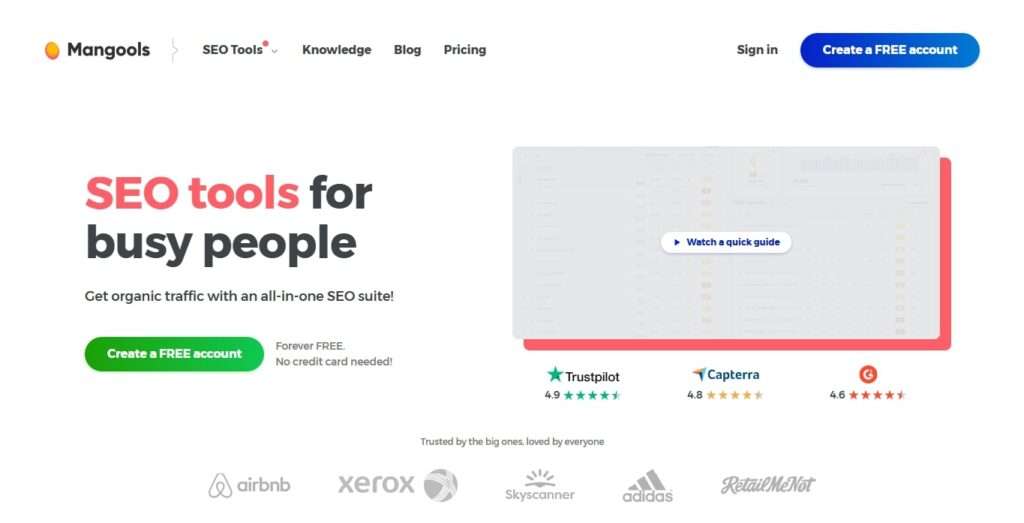
    7. Mangools: An Affordable Ahrefs Alternatives

    mangools

    Mangools is a beginner-friendly SEO suite designed to simplify SEO tasks without overwhelming complexity. It includes tools like KWFinder for keyword research, SERPChecker for competitor analysis, and LinkMiner for backlink tracking. With pricing starting at just $29/month, it’s one of the most affordable Ahrefs alternatives available.

    Mangools’ intuitive interface makes it ideal for beginners, and while it lacks some advanced features of Ahrefs, it compensates with simplicity and cost-effectiveness.

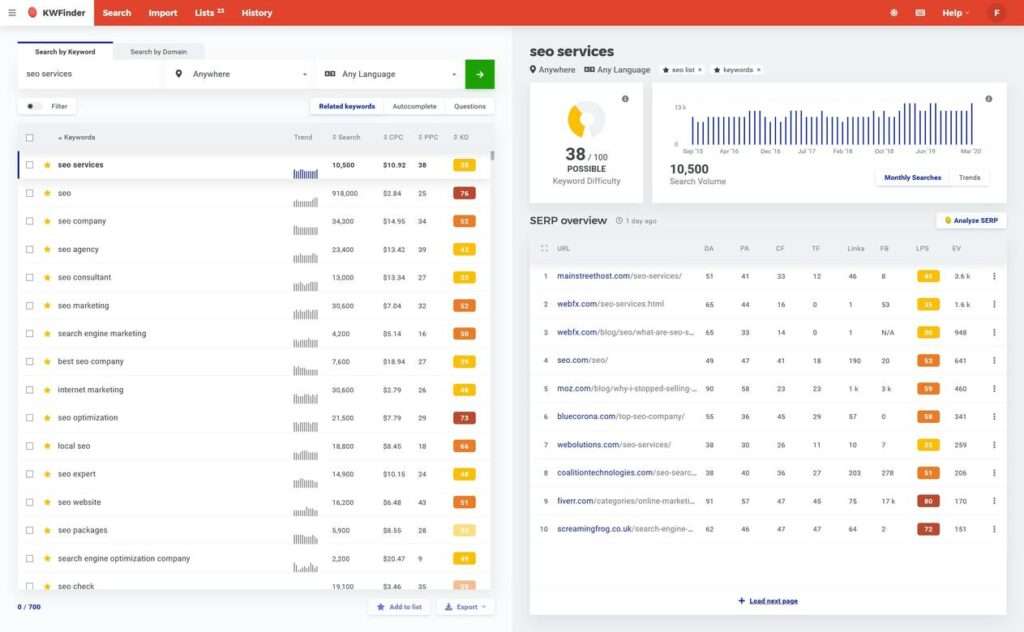
    mangools dashboard

    Features of Mangools:

    • KWFinder: Simplifies long-tail keyword discovery.
    • SERPChecker: Compares SERPs for competitor research.
    • LinkMiner: Tracks backlinks and analyzes link quality.
    • SERPWatcher: Monitors keyword rankings over time.
    • SiteProfiler: Evaluates website authority, backlinks, and traffic metrics.

    Mangools’ balance of simplicity and affordability makes it a popular option for new marketers. Its tools allow users to achieve SEO success without navigating overly complex interfaces, making it a great starting point.

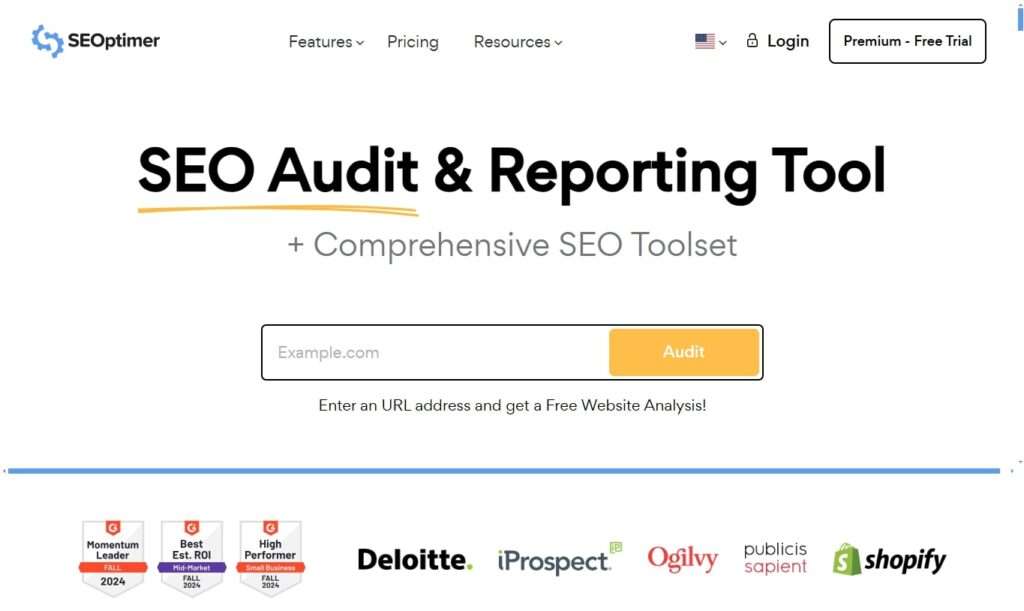
    8. SEOptimer: SEO Audit and Reporting Tool

    seoptimer

    When looking for the best SEO tools, SEOptimer emerges as one of the top Ahrefs alternatives on the market. It’s a robust option for keyword research and competitor analysis, offering a free version with limited yet valuable features. While Ahrefs doesn’t offer a free trial, SEOptimer includes a 14-day free trial, making it a great free and paid Ahrefs alternative for those seeking affordable options.

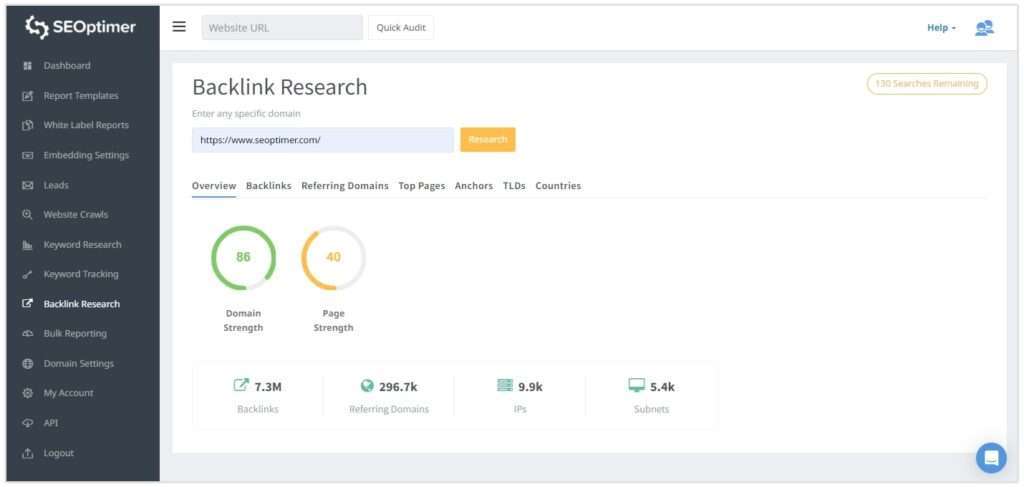
    Unlike Ahrefs, known for its comprehensive suite of tools, SEOptimer focuses on backlink analysis and competitor research tools with ease of use. This tool’s generous free version is still helpful for SEO strategies, even though it lacks some advanced features available in Ahrefs or Semrush. For businesses with smaller budgets, SEOptimer offers affordable Ahrefs alternatives features that are free to use for initial testing.

    seoptimer dashboard

    Key Features of SEOptimer:

    • Generous Free Version: Offers limited but valuable features for small-scale SEO needs.
    • Paid Plans: Affordable tiers compared to Ahrefs, catering to both individuals and businesses.
    • Ease of Use: A straightforward interface that simplifies competitor analysis tools for users of all levels.
    • Backlink Monitoring: Identifies harmful links and tracks changes in your link profile efficiently.
    • Keyword Research Tools: Supports competitor research tools while providing detailed insights for strategic planning.

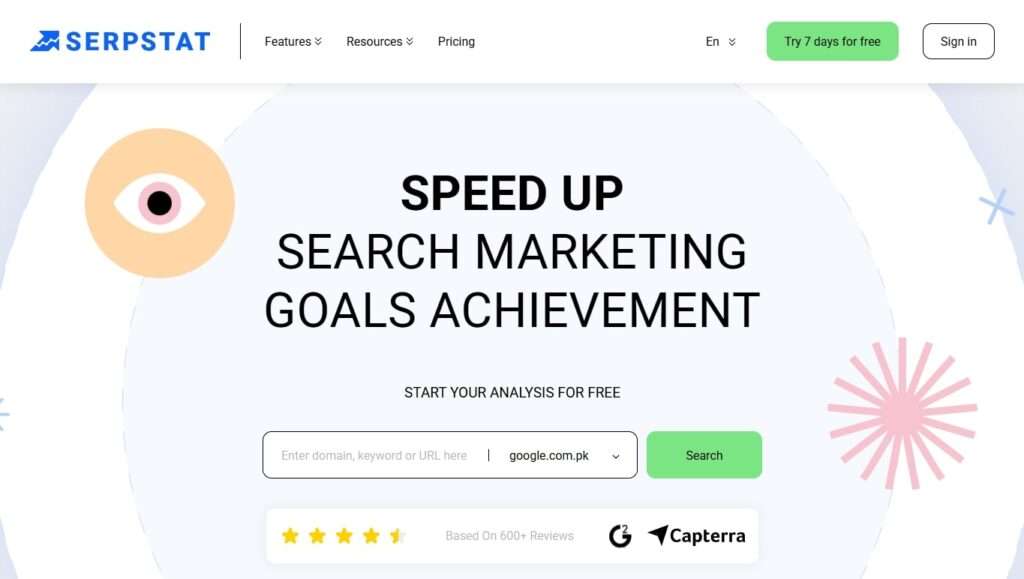
    9. Serpstat: All-in-One SEO Platform

    serpstat

    Serpstat is a versatile and feature-rich SEO software that ranks as one of the best alternatives to Ahrefs for professionals seeking an affordable SEO platform. This all-in-one SEO tool offers robust solutions for keyword research, backlink analysis, site audits, and rank tracking, making it a favorite among digital marketers and content marketing teams. With pricing starting at just $59 per month, it’s an affordable alternative to Ahrefs and SEMrush, ideal for small businesses and freelancers.

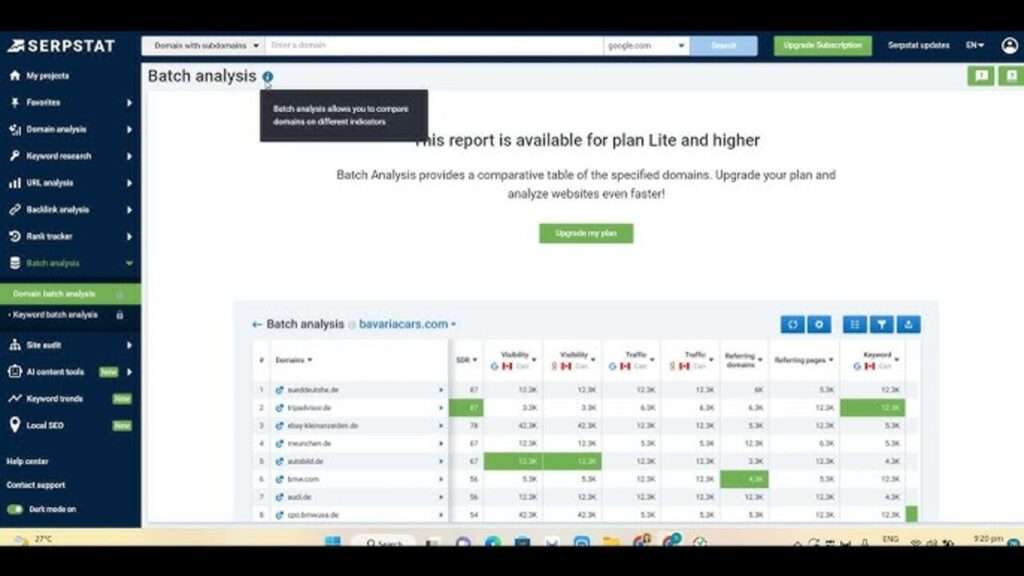
    Serpstat stands out for its AI-powered content creation tools, team collaboration features, and in-depth competitor research tools. Although its search volume data relies on Google Ads, and its free version is limited, Serpstat remains a top SEO tool for those prioritizing value and functionality. In 2025, Serpstat continues to excel as a technical SEO, link-building, and backlink profile analysis solution, offering one of the best Ahrefs alternatives available.

    serpstat dashboard

    Features of Serpstat:

    • Keyword Research and Competitor Analysis: Offers tools for search volume analysis, rank tracking, and content creation opportunities.
    • Backlink Analysis Tool: Provides insights into referring domains, backlink profiles, and broken links for effective link building.
    • Technical SEO and Site Auditing: Identifies site health issues, errors, and optimization opportunities with detailed SEO audits.
    • Rank Tracker and SE Ranking: Tracks keyword performance to refine strategies in real time.
    • Content Marketing Tools: Integrates AI content generation and ChatGPT for efficient content workflows.
    • Free SEO Features: Includes a 7-day free trial for exploring SEO tools like site audits and competitor analysis.

    10. Raven SEO Tools: A Comprehensive SEO Toolkit

    raven seo tools

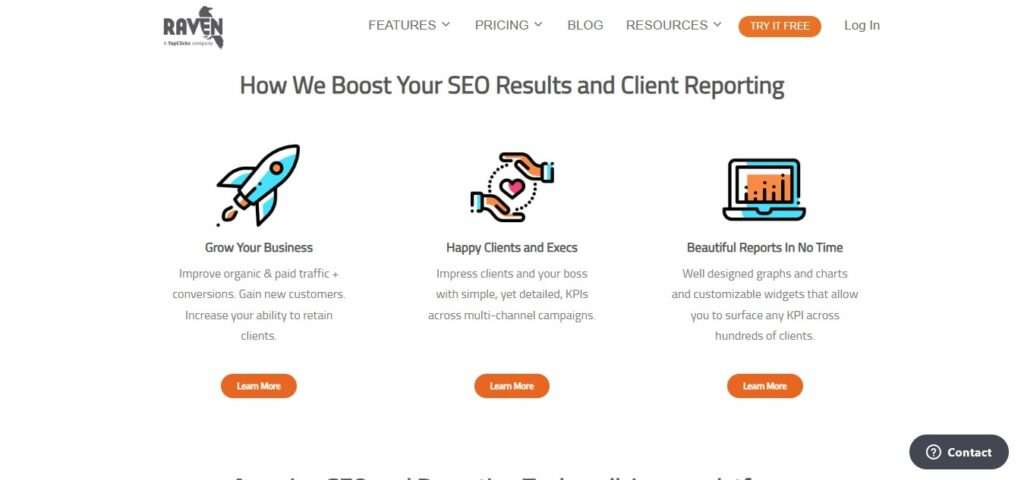
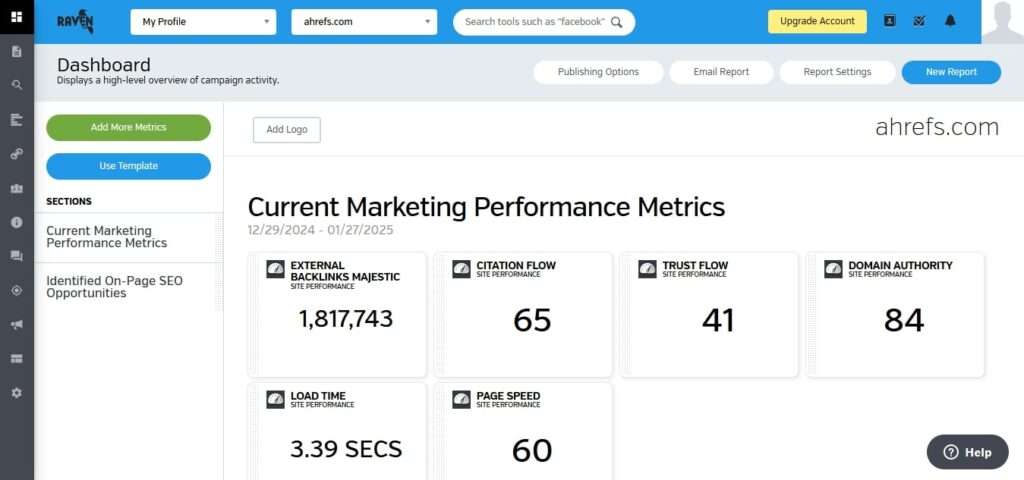
    Raven SEO Tools is a versatile, agency-focused platform perfect for those looking for the best Ahrefs alternatives on the market. It offers robust features for keyword research and competitor analysis, making it one of the best Ahrefs alternatives. With tools for SEO audits, backlink analysis, and social media management, Raven streamlines your SEO and marketing strategies. While it doesn’t offer a free plan, it provides a 7-day free trial, letting users test its capabilities without limitations. Its plans, starting at $49/month, position it as an affordable alternative.

    Despite its slightly outdated user interface, Raven’s integration with Looker Studio and comprehensive features make it another tool worth considering. Though Ahrefs’ generous free version via Webmaster Tools might attract some, Raven stands out for its affordability and unique tools, making it a top choice in any list of the best SEO platforms.

    raven dashboard

    Features of Raven SEO Tools:

    • Keyword Research and Competitor Analysis: Gain insights into keyword rankings and competitor backlinks.
    • Backlink Analysis: Track backlink quality and quantity using Majestic data.
    • Website Health Audits: Evaluate technical issues and website performance.
    • Social Media Campaign Management: Manage campaigns across Facebook, LinkedIn, YouTube, and X.
    • Data Reporting and Visualization: Create interactive reports with Looker Studio integration.
    • Custom Dashboards: Access all key metrics in a centralized dashboard.

    Future Trends in SEO Tools (2025)

    SEO tools in 2025 will integrate advanced AI to provide precise, actionable insights for optimization. An AI voice generator will become increasingly important for optimizing content for voice search by analyzing natural speech patterns and conversational queries. Markedly, real-time data analysis will help track evolving trends, ensuring strategies remain competitive. Tools will emphasize user experience metrics, i.e., Core Web Vitals, to align with algorithm updates. Furthermore, multilingual and regional SEO functionalities will cater to global audiences effectively. Automation will streamline repetitive tasks, e.g., keyword research and reporting, saving time. Additionally, voice and visual search capabilities will be prioritized, considering user behavior shifts. Consequently, these tools will focus on simplifying processes while delivering comprehensive, data-driven solutions to meet ever-changing SEO requirements.

    As these advancements shape the industry, businesses especially small ones can benefit from using the right tools. Check out our guide on Top 10 Best SEO Software for Small Business to explore the best options available.

    Conclusion

    Choosing the right SEO tool depends on your specific needs, budget, and goals. Tools like SEMrush offer comprehensive features, while platforms like Ubersuggest provide budget-friendly options. For link-building specialists, Majestic is unparalleled, while Moz Pro and SE Ranking cater to those seeking versatile and affordable solutions. Whether you’re focusing on technical SEO, keyword research, or backlink analysis, the alternatives in this guide offer powerful options to enhance your SEO strategy in 2025.

    By carefully evaluating these tools, you can find the best fit for your goals and resources. With so many options available, the right choice is just a step away. Which of these alternatives will you explore first? Share your experiences and thoughts below!

    FAQs

    1. What is an SEO tool?
    An SEO tool helps optimize websites for search engines by analyzing keywords, backlinks, and technical performance.

    2. Why are SEO tools important?
    They improve website visibility, increase traffic, and provide insights for effective digital marketing strategies.

    3. Can I use free SEO tools effectively?
    Yes, free tools like Ubersuggest and Google Keyword Planner can handle basic SEO tasks like keyword research.

    4. What are backlinks in SEO?
    Backlinks are links from other websites to your site, crucial for building domain authority and ranking.

    5. What is keyword research?
    Keyword research identifies popular search terms to target in content, boosting visibility and traffic.

    6. Do SEO tools work for all website types?
    Yes, most SEO tools are versatile and suitable for blogs, e-commerce, corporate, or personal websites.

  • TikTok vs YouTube: Which One is Better for Business? (2025)

    TikTok vs YouTube: Which One is Better for Business? (2025)

    tiktok vs youtube

    Are you struggling to decide between TikTok vs YouTube as the best platform for your business? With both platforms dominating the video-sharing platform landscape, businesses face challenges in selecting one that aligns with their goals. Research shows that TikTok content thrives on creativity, while YouTube users often prefer long-form videos for educational and detailed insights.

    This divide highlights the dilemma for businesses aiming to balance short-form content for virality and longer videos for authority building. Choosing the right platform impacts engagement, reach, and monetization opportunities, making the decision critical for long-term success.

    Here’s the good news: you don’t need to figure it out alone. This guide compares TikTok’s algorithm with YouTube content strategies to help you decide which video-sharing platform suits your business. Read on for insights into audience preferences, ad strategies, and tips to maximize your success in 2025.

    How TikTok Stands Out for Business Growth

    TikTok’s expansive user base makes it an excellent platform for businesses targeting younger audiences. Its unique algorithm advantages enable even smaller creators to achieve broad content discoverability, allowing videos to go viral rapidly. Businesses can leverage these features by creating short-form video content that aligns with ongoing viral trends. Moreover, in-feed ads and sponsored challenges offer cost-effective advertising opportunities for reaching millions without overspending.

    TikTok’s engagement strategies, such as hashtag challenges and tutorials, encourage user participation and foster a vibrant community. Comparatively, TikTok emphasizes creativity over high production quality, making it accessible to businesses of all sizes. Thus, TikTok’s influence grows significantly because of its ability to turn brief moments into lasting impressions.

    What Makes YouTube a Powerful Business Platform

    YouTube supports long-form content, enabling businesses to deliver in-depth tutorials, product reviews, interactive presentations, or storytelling. With YouTube Shorts, it also appeals to audiences who prefer short-form content, offering flexibility. Furthermore, its search-based discoverability and integration with Google ensure that optimized video content ranks high in search results, increasing visibility. Revenue generation on YouTube includes ad revenue, memberships, and sponsored deals, which provide robust monetization options for creators.

    Additionally, YouTube helps businesses establish brand authority through educational content, tutorials, and thought leadership videos, which appeal to a diverse demographic. By balancing both short and long formats, YouTube effectively supports businesses in building a solid presence and maintaining audience loyalty.

    TikTok vs YouTube: Comparing Monetization Models

    Monetization Models

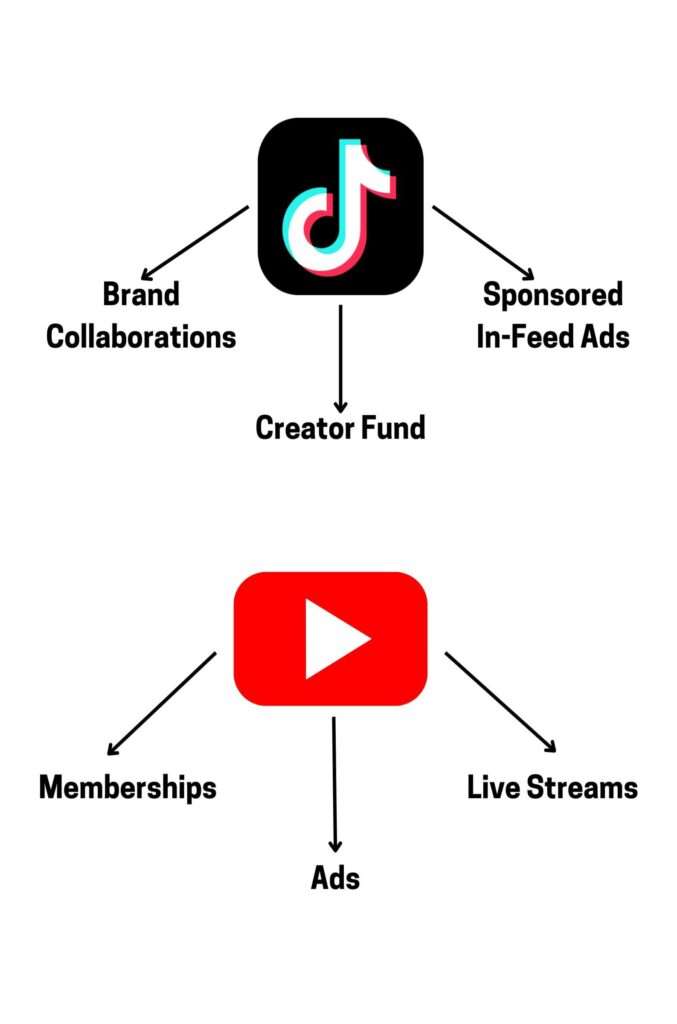
    TikTok vs YouTube offers distinct opportunities for creators to earn revenue and grow their brand. The TikTok creators earn through the Creator Fund, brand collaborations, and sponsored in-feed ads. Meanwhile, YouTube’s ad revenue and the YouTube Partner Program allow creators to monetize through ads, memberships, and live streams. Sponsored educational videos and product reviews are common revenue sources on YouTube, with its longer videos supporting detailed content. 

    While TikTok trends boost visibility quickly, YouTube sustains steady growth through long-form content. Choosing the best platform depends on goals like audience engagement and preferred monetization opportunities.

    Brands evaluating TikTok vs YouTube for revenue should consider audience demographics, campaign reach, and content longevity to make informed decisions.

    Content Format and Length: A Key Differentiator

    When comparing TikTok vs YouTube, content format and length significantly impact audience engagement. TikTok thrives on short-form content, like 10-second TikTok videos, designed for audiences with limited attention spans. Conversely, YouTube excels with long-form content, such as 10-minute YouTube videos, allowing creators to post in-depth tutorials, reviews, and storytelling. Businesses must evaluate which platform aligns with their objectives. For instance:

    • TikTok’s bite-sized content is ideal for quick marketing campaigns.
    • YouTube supports detailed content that builds trust and authority.

    Adapting your strategy to either platform ensures your content connects with the right audience. TikTok vs YouTube ultimately depends on whether concise or comprehensive content better serves your business goals.

    Demographics and Target Audience Analysis

    TikTok vs YouTube presents a clear distinction in audience demographics. TikTok’s younger, trend-driven users typically range between 16-34, making it suitable for brands targeting millennials and Gen Z. This audience is especially drawn to fashion trends, lifestyle content, and viral aesthetics. For example, fashion tutorials resonate strongly on platforms like TikTok, where style inspiration thrives. Meanwhile, YouTube’s diverse user base spans all age groups, providing opportunities to promote varied products and services. Matching the platform with your audience is key to success. For example:

    • TikTok content connects well with users engaging in viral challenges and trends.
    • YouTube content caters to broader audiences, particularly those seeking detailed, educational videos or product reviews.

    Balancing both platforms helps businesses expand reach and align strategies with demographic insights. When evaluating TikTok vs YouTube, consider which audience aligns best with your products or services to drive meaningful engagement.

    Advertising Features and Budget Considerations

    Businesses often compare TikTok and YouTube when deciding the best video-sharing platform for advertisements. TikTok’s algorithm emphasizes bite-sized content, allowing in-feed ads to reach users between the ages of 16 to 34 efficiently. These ads are easier and faster to create and require minimal production costs. TikTok trends ensure businesses can capitalize on viral moments to showcase products or services effectively.

    Tips for maximizing ad budgets on TikTok:

    • Leverage TikTok trends for timely and engaging campaigns.
    • Create bite-sized content that grabs attention within the first 15 seconds.
    • Target users between the ages of your ideal demographic for higher engagement rates.

    Conversely, YouTube offers a variety of monetization opportunities through ad revenue, sponsorships, and the YouTube Partner Program. Ads that appear on videos ranging from 10 seconds to 10-minute YouTube videos provide flexibility in targeting broader demographics. Businesses can also run ads alongside educational videos or long-form videos to engage specific audiences.

    Tips for maximizing ad budgets on YouTube:

    • Utilize royalty-free background music to avoid copyright claims and enhance ad appeal.
    • Focus on ad placement with long-form videos for detailed storytelling.
    • Monitor metrics like watch time and conversions to adjust campaigns accordingly.

    Key Differences Between TikTok and YouTube

    Innovations and Trends to Watch in 2025

    In 2025, both TikTok and YouTube are embracing significant innovations to enhance user engagement and content creation. TikTok is integrating Augmented Reality (AR) features, allowing creators to produce immersive experiences that captivate audiences. Additionally, the platform is focusing on AI-driven content creation, enabling more personalized and engaging videos.

    On the other hand, YouTube is expanding its AI capabilities, introducing tools that assist creators in generating ideas, titles, and even full videos, thereby streamlining the content creation process.

    Moreover, YouTube is enhancing its Shorts feature, incorporating generative AI to offer new creative possibilities for short-form content. These developments indicate a trend towards more interactive and intelligent content creation tools on both platforms.

    TikTok or YouTube: Making the Right Choice for Your Business

    Final Thoughts on Leveraging Both Platforms

    YouTube gives businesses the advantage of depth with long-form videos, while TikTok offers immediacy with short, engaging clips. Using both platforms strategically can help brands reach diverse demographics and maximize impact. Content creators should focus on optimizing for each platform’s unique audience and strengths. For example, TikTok works well for viral, 15-second trends, whereas content on YouTube suits more detailed storytelling. Leveraging monetization opportunities from both platforms ensures a well-rounded strategy. Ultimately, understanding where your audience engages most and aligning goals with platform features can yield significant success.

  • What Is Ecommerce Email Marketing? 10 Tips for 2025

    What Is Ecommerce Email Marketing? 10 Tips for 2025

    Ecommerce Email Marketing

    Are you struggling to drive sales in your ecommerce business using traditional marketing efforts? Research shows that ecommerce email marketing campaigns generate an average ROI of $42 for every dollar spent. Yet, many ecommerce brands fail to harness its potential fully.

    The solution lies in crafting personalized, automated, and targeted emails like welcome emails, abandoned cart emails, and promotional emails. These strategies help grow your email list, improve customer retention, and enhance your overall marketing campaign.

    This article helps you out with what ecommerce email marketing is, and with 10 actionable tips for 2025 to optimize your email content and boost sales.

    What Is Ecommerce Email Marketing?

    Ecommerce email marketing is a targeted strategy that uses email campaigns to engage customers and drive sales for online stores. It involves various types of emails, such as welcome emails, transactional emails, and abandoned cart emails, tailored to specific customer journeys. Personalized email content, combined with marketing automation, ensures timely and relevant communication.

    “Email marketing remains the highest ROI channel for ecommerce businesses, fostering customer relationships and driving revenue effectively.” – Neil Patel

    Using email marketing software and tools, businesses can create compelling email templates, segment email lists, and measure the success of their marketing efforts.

    The Purpose of Email Marketing for Online Stores:

    Email marketing is essential for ecommerce businesses because it helps directly engage with potential and existing customers. Using email as a marketing channel allows ecommerce brands to build personalized connections that enhance customer loyalty. Email campaigns ensure that every email delivers valuable content, such as product updates or exclusive offers on items like diamond rings, fostering trust and repeat purchases. Additionally, email marketing for ecommerce is cost-effective and measurable, making it a reliable way to drive sales. With the right strategy, ecommerce email marketing campaigns can strengthen relationships, improve engagement, and ultimately increase revenue for online stores.

    Types of Emails Used in Ecommerce:

    Ecommerce businesses use various types of emails to effectively communicate with their audience and meet their goals:

    • Welcome emails: Introduce new subscribers to your ecommerce brand and encourage engagement from the start.
    • Transactional emails: Provide important updates, such as order confirmation emails, to ensure customer satisfaction.
    • Abandoned cart emails: Remind customers to complete purchases, significantly reducing cart abandonment rates.
    • Promotional emails: Highlight sales, new arrivals, and exclusive offers to drive conversions.
      Each type serves a unique purpose, ensuring that email content remains relevant and impactful for subscribers.

    The Role of Automation in Scaling Marketing Efforts:

    Email automation enables ecommerce businesses to streamline their marketing efforts and maximize results efficiently. Automated email tools allow businesses to send personalized emails based on customer actions, such as signing up or making a purchase. For example, abandoned cart email sequences automatically remind customers to finalize transactions, boosting sales. Additionally, email automation supports segmentation, ensuring targeted messaging for specific groups within the email list. Businesses can save time and improve email engagement by leveraging features like dynamic content and triggered workflows. Overall, automation helps scale email campaigns while maintaining quality and relevance.

    Why Ecommerce Businesses Should Prioritize Email Campaigns

    Building Lasting Relationships With Subscribers:

    Effective email campaigns foster long-term connections by delivering engaging content tailored to subscribers’ needs and preferences. Businesses can segment their email lists based on demographics, purchase history, or behavior to ensure relevance. Personalized emails, such as a birthday discount or product recommendations, make subscribers feel valued and appreciated. Additionally, consistent communication via email newsletters keeps customers informed about your ecommerce brand’s latest updates. Besides, by maintaining a healthy email list and using email templates thoughtfully, businesses can nurture trust and encourage repeat interactions. This focus on engagement builds a loyal customer base and enhances brand reputation score.

    Driving Revenue Through Targeted Email Strategies:

    Email campaigns can significantly boost revenue by targeting customers at different stages of their buying journey. For instance:

    • Conversion-boosting email series: Use emails to guide subscribers from initial interest to completing a purchase.
    • Reducing cart abandonment: Send timely cart abandonment emails that remind customers to finalize pending orders with incentives.

    Moreover, promotional emails with exclusive deals or limited-time offers can create urgency, encouraging purchases. Ecommerce platforms can integrate email marketing tools to analyze customer data and optimize strategies further. By focusing on these methods, businesses can convert email subscribers into loyal buyers and achieve sustainable growth. Collaborating with the best ecommerce marketing agencies ensures that your email campaigns are strategically designed to drive sales.

    The Role of Automation in Email Marketing Campaigns

    Automation plays a critical role in simplifying and optimizing email marketing efforts. It ensures every email you send reaches the right audience at the perfect time. Moreover, it enhances ecommerce email marketing strategies by enabling targeted email campaigns that are responsive and effective. Automation allows online businesses to save time, grow their email list, and achieve better results through consistent, personalized communication.

    Key Benefits of Email Marketing Automation:

    • Saves time by automating repetitive tasks like scheduling and follow-ups.
    • Improves email segmentation, ensuring personalized content for specific audience groups.
    • Enhances customer engagement through timely and relevant email sequences.
    • Boosts conversion rates by optimizing ecommerce email campaigns.
    • Streamlines operations using advanced ecommerce email marketing software.

    Types of Automated Campaigns (e.g., cart recovery, re-engagement):

    • Abandoned Cart Emails: Encourage customers to complete purchases they left behind.
    • Win-Back Emails: Re-engage inactive subscribers with enticing offers or updates.
    • Birthday Emails: Personalize emails to celebrate customers’ special days.
    • Thank You Emails: Show appreciation after purchases, strengthening customer relationships.
    • Product Recommendations: Suggest items based on purchase history or browsing behavior.

    Choosing the Right Software for Automation:

    Select email software that aligns with your ecommerce email marketing efforts. Look for tools that offer advanced segmentation, responsive email templates, and integration with your ecommerce platform. Moreover, prioritize platforms with robust analytics to track results and improve email strategies. Remember, the right email marketing program will empower you to send an email that resonates with your audience effectively.

    10 Tips for Successful Ecommerce Email Marketing in 2025

    1. Segment Your Audience for Maximum Impact:

    Audience segmentation remains essential for ecommerce email marketing strategies in 2025. Group your subscribers based on behaviors, preferences, and demographics. This targeted approach ensures every email resonates with its recipient, increasing engagement and conversions. For example, send a thank-you email to recent buyers or offer exclusive deals to loyal customers. Precise segmentation leads to more meaningful communication and better results overall.

    2. Leverage Automation to Streamline Your Efforts:

    Automation simplifies complex email campaigns while improving their effectiveness. Utilize automated email campaigns like abandoned cart reminders or re-engagement emails to connect with your audience effortlessly. Tools for ecommerce email marketing automation can help you schedule, personalize, and monitor campaigns with ease. Consequently, automation saves time and ensures timely delivery of messages, boosting engagement.

    3. Use Incentives to Build and Grow Your Email List:

    A strong email list is the backbone of successful ecommerce email marketing. Offer compelling incentives such as discounts, free shipping, or access to exclusive content to encourage sign-ups. Before launching campaigns, use an email verifier to clean your list and ensure all addresses are valid—this helps maintain deliverability and protects your sender reputation. Besides, adding pop-ups or embedded forms on your ecommerce platform can help grow your email list efficiently. Prioritize transparency and communicate the benefits of joining your list to gain trust.

    4. Optimize Emails for Mobile Devices:

    With mobile usage continuing to dominate, responsive email designs are crucial. Ensure your emails load quickly, display properly on smaller screens, and feature mobile-friendly layouts. Additionally, use concise subject lines and clear calls-to-action (CTAs) to grab attention. Prioritizing mobile optimization improves the overall user experience and boosts open and click-through rates.

    5. Integrate SMS for a Multichannel Approach:

    Email and SMS marketing, when used together, create a seamless communication strategy. Send an email with detailed information and follow it with an SMS reminder to drive actions. For instance, use SMS to confirm order statuses or notify customers of flash sales. This integration enhances engagement and ensures your audience doesn’t miss important updates.

    6. Personalize Every Email You Send:

    Personalization remains vital for connecting with customers on a deeper level. Address subscribers by name and tailor content based on their preferences or purchase history. For example, send a birthday email with a special discount to make customers feel valued. Personalized emails create a stronger emotional connection, encouraging loyalty and repeat business.

    7. Test and Optimize Campaign Performance:

    Consistent testing is key to refining email marketing efforts. A/B test subject lines, email layouts, and CTAs to identify what works best. Additionally, analyze metrics like open rates, click-through rates, and conversions to improve performance. Experiment with new formats and adjust your strategies accordingly for optimal results.

    8. Add Visual Appeal with High-Quality Media:

    Incorporate visually engaging elements such as images, videos, or GIFs to capture attention. Use product visuals or behind-the-scenes videos to create a stronger connection with your audience. Ensure these media elements align with your brand and don’t overload the email, which could impact load times. Visually appealing emails boost engagement and improve retention.

    9. Define Clear Objectives for Each Campaign:

    Every email campaign should align with a specific goal. Whether it’s promoting new products, driving traffic, or encouraging sales, clear objectives ensure focus. For example, an email sequence designed to launch a product should include teaser emails, launch announcements, and follow-ups. Defining objectives also helps measure the campaign’s success and refine future strategies.

    10. Leverage Data Analytics for Continuous Improvement:

    Data analytics is a cornerstone of modern email marketing success. Monitor subscriber behaviors, identify trends, and measure campaign performance. Use these insights to optimize your ecommerce email marketing strategies. For instance, if email open rates decline, test new subject lines or sending times. Data-driven decisions help you adapt to changing customer expectations and improve outcomes.

    Common Mistakes to Avoid in Email Marketing

    • Failing to segment your email list, leading to irrelevant messaging.
    • Sending too many emails, which can overwhelm and annoy subscribers.
    • Ignoring mobile optimization, resulting in poorly displayed emails on devices.
    • Using generic subject lines that fail to grab attention.
    • Neglecting to analyze metrics like open rates and click-through rates.
    • Over-automating campaigns, losing the personal touch.
    • Not testing emails before sending, causing errors in delivery.
    • Violating email regulations, leading to trust issues and penalties.

    The Future of Ecommerce Email Marketing

    Email marketing will continue evolving, with a stronger focus on personalization and automation. AI-driven tools will enhance ecommerce email marketing efforts by predicting customer needs and crafting tailored content. Interactive emails, combining videos or embedded surveys, will increase engagement. Furthermore, email and SMS integration will become essential for seamless multichannel strategies. Finally, businesses will prioritize privacy and compliance, ensuring their emails build trust while driving growth.

    Conclusion

    Ecommerce email marketing remains a powerful tool to engage subscribers, drive sales, and grow your online store. By leveraging automation, creating effective email templates, and focusing on personalization, your marketing channel can yield significant results. Start applying these strategies today to transform your email marketing platform into a sales powerhouse. Which of these tips will you implement first to enhance your ecommerce email campaigns?

    FAQs

    1. Which email marketing software is ideal for ecommerce?

    Tools like Mailchimp, Klaviyo, and Omnisend provide robust features for ecommerce email marketing campaigns.

    2. How do abandoned cart emails work?

    They remind customers to complete their purchase, driving sales for your ecommerce store.

    3. What makes a good email template?

    A good template is visually appealing, responsive, and tailored to your audience’s preferences.

    4. How can I grow my email list?

    Use incentives like discounts or free content to collect email addresses from potential subscribers.

    5. Is email marketing better than social media marketing for ecommerce?

    Both are essential, but email marketing often delivers higher ROI and builds direct connections.

  • 10 Best Ecommerce Marketing Agencies in 2025

    Choosing between one of the best Ecommerce Marketing Agencies can make you feel overwhelming with so many options available. The success of your online business depends on effective digital marketing strategies, tailored marketing solutions, and robust Ecommerce SEO. Research shows that businesses investing in email marketing, social media marketing, and paid social campaigns see significant Ecommerce growth. Without a strategic marketing team, your Ecommerce store may struggle to achieve its full potential.

    This article highlights the top ecommerce marketing companies that deliver effective marketing services for brands and online stores. From creating impactful content marketing campaigns to boosting online sales, these agencies excel in crafting digital marketing strategies. If you’re looking to improve your online presence and maximize your marketing budget, this guide offers a comprehensive solution. Read on to discover the best ecommerce agencies transforming ecommerce businesses in 2025.

    Proven Marketing Strategies by Leading Ecommerce Agencies:

    “Ecommerce agencies provide a strategic blend of marketing solutions, ensuring tailored campaigns for sustainable business growth.”John Smith, a Marketing Expert.

    Crafting the Perfect Marketing Plan for Ecommerce Growth:

    A well-structured marketing plan incorporates targeted strategies to boost visibility, attract customers, and improve sales. Agencies focus on integrating ecommerce SEO, social media marketing, and content marketing to address specific goals. Simultaneously, a strong marketing budget ensures flexibility and scalability for growing online businesses. Moreover, agencies implement data-driven decisions and automation tools to optimize marketing efforts across multiple platforms, including paid social and influencer campaigns. By continually analyzing performance metrics, they identify opportunities to refine marketing strategies, maximizing ecommerce sales.

    The Role of Email Marketing in Ecommerce Success:

    Email marketing remains a cornerstone of successful campaigns, particularly for engaging and retaining ecommerce clients. Personalized email marketing campaigns focus on promotions, abandoned cart reminders, and product recommendations. Additionally, these campaigns foster a direct connection with customers, enhancing loyalty and repeat purchases. By integrating email automation and segmentation, ecommerce businesses create tailored experiences, leading to better conversion rates. Marketing agencies often utilize advanced tools and analytics to ensure emails are timely, relevant, and impactful, thereby driving ecommerce growth efficiently.

    How Influencer Marketing Boosts Online Sales for Ecommerce Stores:

    • Influencers promote ecommerce brands authentically to build credibility among diverse customer bases.
    • Agencies collaborate with niche influencers for impactful campaigns targeting specific audiences.
    • Influencer marketing enhances brand awareness, particularly for new ecommerce stores seeking visibility.
    • Campaigns drive measurable online sales through exclusive discount codes or affiliate marketing links.
    • Real-time tracking of influencer campaigns allows marketers to analyze ROI and refine future strategies.

    Characteristics of the Best Ecommerce Marketing Companies:

    Top ecommerce marketing companies stand out due to their innovative strategies and proven track records.

    “Success lies in companies that understand client needs and deliver tailored solutions.”Jane Doe, CEO of MarketingPro.

    These agencies emphasize customer-centric marketing services, from ecommerce web design to digital marketing campaigns. Their expertise includes crafting comprehensive strategies for ecommerce growth while leveraging advanced technologies like AI-driven tools.

    Furthermore, they ensure seamless collaboration with in-house teams, maximizing the effectiveness of marketing channels. Ultimately, their focus on measurable outcomes sets them apart from competitors.

    By leveraging tailored Ecommerce marketing solutions, they deliver strategies that drive results. Ultimately, their focus on measurable outcomes sets them apart from competitors.

    The Impact of Successful Ecommerce Digital Marketing Campaigns:

    Digital marketing campaigns drive significant results by aligning strategies with specific business goals.

    “A well-executed campaign increases online visibility and boosts conversions.”Mark Taylor, a Marketing Consultant.

    Successful campaigns integrate multiple marketing channels, such as email marketing, paid social, and influencer partnerships, to create a cohesive brand presence. Additionally, agencies provide actionable insights from case studies, showcasing the impact of their strategies on ecommerce sales.

    For instance, optimized ecommerce SEO campaigns improve organic traffic, while personalized email sequences ensure customer retention. Ultimately, these efforts help ecommerce businesses achieve sustainable growth.

    10 Best Ecommerce Marketing Agencies

    1. Thrive Internet Marketing Agency

    Thrive Internet Marketing Agency specializes in ecommerce SEO, email marketing campaigns, and marketing automation. Their suite of ecommerce marketing services includes comprehensive ecommerce strategies tailored to boost online visibility and sales. Notably, they provide in-depth affiliate marketing solutions to help brands reach broader audiences. Thrive’s full-service digital marketing approach ensures clients benefit from customized campaigns and measurable results. Furthermore, they work closely with ecommerce clients to craft effective marketing plans that enhance brand recognition and revenue growth.

    2. WebFX

    WebFX is a leading ecommerce marketing agency that offers a full range of digital marketing services. They specialize in ecommerce search engine optimization and email marketing, helping clients achieve top rankings and increased customer engagement. Their marketing experts use advanced marketing tools to deliver data-driven campaigns that drive online sales. WebFX’s focus on a tailored marketing plan ensures businesses benefit from precise strategies that align with their goals. Additionally, their team collaborates closely with clients to deliver successful ecommerce marketing campaigns across various platforms.

    3. OuterBox

    OuterBox is renowned for its ecommerce web design and SEO services, making them a top digital agency. They help ecommerce businesses improve their online presence through innovative design and search engine optimization strategies. OuterBox provides marketing automation solutions that streamline workflows and improve efficiency. The agency also offers a suite of ecommerce marketing services designed to drive online sales and enhance brand performance. Their expertise in creating effective marketing campaigns has made them a go-to option for many ecommerce development companies in india seeking measurable growth.

    4. Tinuiti

    Tinuiti focuses on performance-based marketing strategies tailored to ecommerce clients. Their expertise in digital marketing campaigns includes affiliate marketing, email marketing, and ecommerce SEO. Tinuiti helps brands achieve remarkable ecommerce sales by leveraging data-driven strategies and advanced marketing tools. Furthermore, they specialize in developing effective marketing strategies that align with current market trends, ensuring long-term success. Their team of marketing experts also offers personalized solutions for clients looking to enhance their digital footprint and boost online visibility.

    5. Disruptive Advertising

    Disruptive Advertising stands out for its full-service digital marketing agency approach, emphasizing marketing automation and campaign optimization. They provide a suite of ecommerce marketing services, including PPC campaigns, social media management, and conversion rate optimization. Their team collaborates closely with clients to develop a marketing plan that aligns with business objectives. Additionally, they specialize in helping ecommerce brands create comprehensive marketing campaigns that drive traffic and maximize ROI. Their expertise ensures clients achieve sustainable growth and improved customer engagement.

    6. Lyfe Marketing

    Lyfe Marketing is a digital marketing agency for ecommerce businesses, offering services like email marketing and SEO. Their team of marketing experts creates tailored ecommerce marketing campaigns that focus on boosting online sales and improving brand visibility. Lyfe Marketing’s effective marketing strategies help businesses stay ahead in competitive markets. Their emphasis on creating a comprehensive ecommerce marketing approach ensures clients benefit from a cohesive and impactful digital presence. Moreover, their team specializes in using innovative techniques to engage audiences and drive results.

    7. Single Grain

    Single Grain is a top ecommerce marketing agency that offers services in SEO, influencer marketing, and PPC campaigns. Their team of experts focuses on creating impactful marketing campaigns that cater to the unique needs of ecommerce brands. They also specialize in affiliate marketing and email marketing, providing a well-rounded approach to digital marketing. Single Grain’s dedication to delivering measurable results has made them a trusted partner for ecommerce companies aiming for sustained growth. Their marketing strategies emphasize both creativity and precision, ensuring long-term success.

    8. Ignite Visibility

    Ignite Visibility is an agency that offers a comprehensive suite of ecommerce marketing services, including ecommerce web design and search engine optimization. They help ecommerce businesses enhance online visibility through effective marketing strategies tailored to their goals. Their digital marketing campaigns focus on improving customer engagement and driving online sales. Moreover, Ignite Visibility specializes in developing a marketing plan that includes marketing automation and innovative solutions. Their focus on delivering results ensures clients achieve measurable success in competitive markets.

    9. SmartSites

    SmartSites provides a range of digital marketing services, including ecommerce SEO, email marketing, and web design. Their team of ecommerce experts develops effective marketing strategies to help businesses achieve their sales targets. SmartSites’ focus on creating comprehensive ecommerce marketing campaigns ensures clients benefit from increased online visibility and customer engagement. Their team also specializes in crafting tailored marketing plans that align with clients’ goals. With a reputation for delivering impactful results, SmartSites remains a trusted choice for ecommerce businesses.

    10. Lounge Lizard

    Lounge Lizard is a full-service digital marketing agency specializing in ecommerce marketing strategies, web design, and SEO. They offer a suite of ecommerce marketing services designed to boost online sales and improve brand performance. Their expertise in developing marketing campaigns that align with current market trends sets them apart. Lounge Lizard’s focus on delivering data-driven solutions ensures clients achieve measurable results. Additionally, their team works closely with ecommerce brands to create customized marketing strategies that drive long-term success.

    Benefits of Partnering with Top Ecommerce Marketing Agencies:

    • Customized strategies: Agencies design marketing solutions tailored to your ecommerce business goals.
    • Enhanced online visibility: Expert campaigns ensure a strong presence across digital marketing channels.
    • Access to advanced tools: Agencies utilize the latest marketing automation tools for efficiency.
    • Improved sales conversions: Data-driven decisions help boost ecommerce sales and ROI.
    • Comprehensive services: Agencies provide a suite of services, including ecommerce web design and content marketing.
    • Expert guidance: Professionals offer insights on effective strategies for sustainable growth.
    • Time efficiency: Agencies handle campaigns, allowing in-house teams to focus on core business operations.
    • Scalability: Marketing plans evolve with your ecommerce business, ensuring consistent growth over time.

    Conclusion

    Choosing the best ecommerce marketing agencies can significantly enhance your online store’s growth and success. The highlighted companies excel in ecommerce SEO, digital marketing services, and tailored marketing campaigns. Their expertise ensures improved online sales and stronger marketing efforts for your brand. Selecting the right agency is crucial for maximizing your marketing budget and achieving long-term results.

    Which ecommerce marketing agency aligns best with your business goals? Share your thoughts in the comments below!

    FAQs

    1. Do agencies offer ecommerce SEO services?

    Yes, ecommerce SEO is a key service offered by most digital marketing agencies to improve search rankings.

    2. How can I evaluate the effectiveness of a marketing campaign?

    Track key performance indicators like traffic growth, conversion rates, and ROI to measure campaign success.

    3. Do marketing agencies help with ecommerce platform optimization?

    Yes, many specialize in optimizing ecommerce websites and platforms for better user experience and sales.

    4. What’s the difference between content marketing and email marketing?

    Content marketing focuses on valuable content creation, while email marketing targets direct customer engagement through emails.

    5. Can ecommerce agencies help with influencer marketing?

    Yes, they often create influencer marketing strategies to boost brand awareness and drive customer engagement.

  • 10 Best Ecommerce Marketing Solutions in 2025

    10 Best Ecommerce Marketing Solutions in 2025

    ecommerce marketing solutions

    Struggling to grow your ecommerce business amidst stiff competition and changing consumer behaviors? Research shows that only businesses adopting innovative ecommerce marketing solutions can maintain visibility in crowded marketplaces. Many ecommerce platforms face challenges like low conversion rates, inadequate SEO efforts, and ineffective social media marketing campaigns.

    The solution lies in combining data-driven strategies, effective marketing services, and optimized search engine practices. This empowers your ecommerce store to achieve scalable growth and enhance customer engagement.

    This article presents the 10 best ecommerce marketing solutions in 2025. It offers actionable insights for implementing robust marketing strategies and boosting online sales.

    What is Ecommerce Marketing?

    Ecommerce marketing refers to the process of promoting an online store and its products to drive traffic, increase conversions, and boost online sales. It involves utilizing diverse marketing channels like search engine optimization (SEO), email marketing, social media marketing, and content marketing.

    Moreover, ecommerce businesses often employ marketplace strategies to reach a broader audience. By focusing on marketing solutions tailored to their ecommerce website, businesses aim to optimize their conversion rates while fostering long-term customer relationships. Tools such as the best email verification service are also commonly used to maintain clean email lists, ensuring higher deliverability and engagement for email marketing campaigns.

    Unlike traditional methods, ecommerce marketing combines data-driven strategies with creative campaigns to achieve measurable results. Businesses also rely heavily on their marketing team to execute these strategies effectively. Evidently, the integration of digital marketing services and tools has transformed how businesses engage with online shoppers. Thus, ecommerce marketing remains an essential component for any online business looking to thrive in the competitive marketplace.

    Why Ecommerce Digital Marketing is Important in 2025?

    Ecommerce digital marketing is crucial in 2025 because it ensures businesses remain competitive in an evolving landscape. Effective use of search engines, email marketing, and social media platforms allows businesses to reach their target audience with precision. Moreover, digital marketing helps ecommerce businesses enhance their online presence and improve their ecommerce store’s conversion rate optimization.

    “If your business is not on the internet, then your business will be out of business,”– Bill Gates

    Chiefly, marketing campaigns that utilize ecommerce SEO and innovative marketing strategies ensure consistent growth. Furthermore, tools like ecommerce platforms and advanced analytics enable data-driven decisions to maximize results. Altogether, digital marketing facilitates seamless interaction between businesses and customers, helping them build trust and loyalty. Consequently, it remains a cornerstone for scaling online businesses, ensuring they adapt to changing consumer behaviors.

    10 Best Ecommerce Marketing Solutions

    1. AI-Driven Personalization:

    AI-driven personalization analyzes customer data to offer tailored recommendations, significantly increasing online visibility and conversions. For instance, ecommerce marketing companies implement AI tools that help businesses enhance user experiences and drive online sales effectively. Correspondingly, this strategy empowers ecommerce agencies to craft marketing plans that match individual preferences.

    Integrating AI within eCommerce digital marketing strategies, including AI calls, ensures the best results by targeting customers with precision. AI also enables businesses to monitor customer behavior, improving multi-channel marketing outcomes. With AI-powered marketing tools, companies specializing in eCommerce achieve their marketing goals seamlessly.

    2. Voice Commerce Optimization:

    Voice commerce optimization transforms ecommerce sites into platforms compatible with voice-enabled searches, boosting overall digital presence. Marketing experts recommend this tactic for driving traffic to your ecommerce store by leveraging voice assistant capabilities. Businesses can also incorporate digital advertising strategies focused on natural language processing to meet this trend’s demands.

    Comparatively, voice commerce simplifies navigation for online shoppers, leading to increased online sales and a better user experience. Moreover, companies specializing in ecommerce  marketing solutions use voice optimization to achieve significant growth by aligning with consumer behaviors.

    3. Augmented Reality (AR) Shopping Experiences:

    AR shopping experiences enrich online visibility by allowing online shoppers to visualize products virtually before purchasing. Digital agencies employ AR marketing platforms to boost traffic to your online store and build consumer confidence. Visual assets also play a key role in immersive ecommerce experiences, and using an AI-powered visual content tool like the one from Depositphotos allows brands to quickly generate high-quality, customized imagery tailored to their audience. Ecommerce clients particularly appreciate AR features for reducing product return rates and enhancing online presence.

    Companies specializing in ecommerce marketing solutions also integrate AR into their digital channels, providing interactive and immersive shopping options. AR not only improves customer engagement but also supports multi-channel marketing efforts to drive online sales effectively.

    4. Gamification in Ecommerce:

    Gamification in ecommerce turns shopping into an engaging activity by integrating rewards, challenges, and interactive features. This innovative tactic is widely adopted by ecommerce marketing agencies to increase sales and boost customer loyalty. Evidently, marketing automation tools ensure seamless gamification, making it easier for businesses to implement interactive strategies.

    For example, full-service ecommerce marketing agencies design gamified experiences tailored to specific ecommerce companies to drive results. Furthermore, gamification builds brand loyalty by providing customers with incentives, while simultaneously achieving marketing goals like improved retention rates.

    5. Influencer Marketing:

    Influencer marketing is a proven strategy for ecommerce brands to enhance their digital marketing efforts effectively. By partnering with influencers, ecommerce agencies can create impactful campaigns to reach online shoppers directly. This tactic ensures targeted marketing by aligning influencer content with the interests of specific consumer segments.

    Notably, influencers help ecommerce companies build authentic connections with audiences, thereby increasing their online presence. Besides, influencer marketing is integral to multi-channel marketing strategies, offering businesses an effective way to boost online sales and visibility simultaneously.

    6. AI-Powered Customer Support:

    AI-powered customer support offers ecommerce businesses scalable solutions for providing efficient and personalized service to shoppers. Chatbots, for instance, streamline communication across digital channels, enhancing overall user experiences and customer satisfaction. Digital marketing services often integrate AI tools to help ecommerce businesses handle inquiries and order management seamlessly. Additionally, this technology reduces response times and ensures round-the-clock support, increasing online sales for ecommerce clients. Companies that specialize in ecommerce digital marketing utilize AI agents for customer retention while simultaneously meeting growing consumer expectations.

    7. Subscription-Based Ecommerce Models:

    Subscription-based models allow ecommerce businesses to generate consistent revenue while fostering long-term customer relationships. Marketing experts emphasize the value of recurring subscriptions to enhance ecommerce companies’ online presence and overall marketing efforts. Businesses can leverage digital marketing agencies for ecommerce to implement data-driven ecommerce marketing strategies around subscription services.

    Particularly, subscription-based models are tailored to drive online sales by providing personalized offerings that align with customer needs. Additionally, marketing platforms designed for ecommerce email marketing campaigns support subscription models, ensuring effective marketing and improved customer loyalty.

    8. Omnichannel Marketing for Unified Customer Experiences:

    Omnichannel marketing aligns ecommerce solutions across multiple platforms to create seamless interactions and better customer engagement. Marketing tactics involve integrating websites, social media, and email marketing campaigns to boost your online store’s traffic. Full-service digital marketing agencies play a significant role in synchronizing these efforts to enhance the effectiveness of marketing goals.

    Businesses specializing in ecommerce leverage marketing automation tools to unify their digital channels for a consistent online presence. Moreover, omnichannel strategies focus on targeted marketing, leading to increased online visibility and improved user retention.

    9. Social Commerce Growth:

    Social commerce uses social media platforms to enhance ecommerce digital marketing strategies and connect with online shoppers. Marketing and SEO professionals help ecommerce clients optimize their content for shoppable posts on platforms like Instagram and TikTok. This approach increases online sales by simplifying purchase journeys, making it easier for customers to shop.

    Furthermore, ecommerce marketing agencies utilize data-driven ecommerce marketing insights to create engaging content for these platforms. Undoubtedly, social commerce is a powerful tactic to enhance multi-channel marketing and build an impactful online presence.

    10. Trust Building User-Generated Content:

    User-generated content (UGC) builds trust and credibility for ecommerce brands by showcasing authentic customer experiences. For example:

    • Encouraging reviews increases online visibility and boosts traffic to your ecommerce site.
    • Sharing customer photos and videos on digital channels improves engagement and retention.
    • Highlighting testimonials helps ecommerce businesses achieve effective marketing and build long-term customer relationships.

    Marketing agencies focused on ecommerce often include UGC ads in digital advertising campaigns to enhance authenticity. Correspondingly, these efforts align with data-driven ecommerce marketing, ultimately driving online sales effectively.

    The landscape of eCommerce marketing is evolving rapidly, driven by technological advancements and shifting consumer behaviors. Businesses aiming to achieve sustainable growth must stay ahead by embracing modern techniques and refining their marketing goals. As competition increases, a well-crafted ecommerce digital marketing strategy becomes crucial to maintain a strong online presence. Keeping up with digital marketing trends ensures that businesses stay competitive and effectively engage their target audience.

    “Ecommerce success lies in adapting to trends while building meaningful connections with your audience.” – Neil Patel

    • Personalized Shopping Experiences: Leveraging marketing automation tools to deliver tailored recommendations based on customer preferences and purchase history.
    • Hyper-Targeted Marketing Campaigns: Using advanced digital advertising techniques to target niche segments and boost ecommerce email marketing effectiveness.
    • Decentralized Social Commerce: Allowing online shoppers to complete purchases directly through social media channels for seamless transactions.
    • Collaborative Marketing Platforms: Partnering with innovative marketing agencies specializing in ecommerce to achieve measurable results.
    • Voice Search Optimization: Adapting SEO services to accommodate voice-based searches and enhance online visibility.

    “Adaptation is key—only the innovative thrive in the rapidly changing ecommerce landscape.” – Jeff Bezos

    Conclusion

    The right ecommerce marketing solution can transform your online business by driving conversions and improving customer engagement. Utilizing proven marketing strategies, such as content marketing and SEO, will deliver measurable results.

    Which of these solutions do you think will revolutionize your ecommerce business in 2025?

    FAQs

    1. What is conversion rate optimization in ecommerce?

    It focuses on improving website elements to turn more visitors into paying customers.

    2. Why is social media marketing crucial for ecommerce businesses?

    It helps build brand awareness, connect with customers, and drive traffic to online stores.

    3. What is the best way to increase marketplace visibility?

    Optimize product listings and use advertising services offered by the marketplace.

    4. How can a digital marketing agency help an ecommerce business?

    They provide specialized services, including SEO, content marketing, and paid advertising, to increase sales.

    5. Why is a data-driven approach essential for ecommerce marketing?

    It helps in making informed decisions and tailoring marketing efforts for higher returns.

    6. What ecommerce platform features should businesses prioritize?

    Features like mobile responsiveness, SEO tools, and seamless integration with marketing channels are crucial.

  • Fanum Tax: Trending Slang Among Gen Alpha!

    Fanum Tax: Trending Slang Among Gen Alpha!

    fanum tax

    What does “fanum tax” even mean, and why is Gen Alpha so obsessed with it? Slang evolves rapidly, and keeping up with the latest phrases can feel overwhelming, especially when new terms emerge almost daily. Slang reflects cultural shifts fueled by the internet, memes, and streamers. Fanum tax, a phrase popularized by Gen Alpha, has taken the digital world by storm, becoming a staple on platforms like TikTok and Twitch.

    But what makes this slang term so significant? Fanum tax isn’t just another fleeting trend, it encapsulates humor, social dynamics, and youth creativity. This article unpacks the term’s origins, cultural relevance, and how it has become a defining element of Gen Alpha’s vocabulary. Dive into this complete guide to learn how Fanum Tax is reshaping language and why it resonates with the youngest, most connected generation yet.

    What Is Fanum Tax?

    The term “Fanum tax” was coined by American streamer Fanum, a member of the YouTube collective AMP. He introduced it during his Twitch streams in late 2022, humorously “taxing” snacks by taking bites from fellow content creators’ food, notably from YouTuber Kai Cenat

    The phrase gained popularity among Gen Alpha through a viral TikTok parody song in 2023, which featured multiple internet culture terms, including “Fanum tax.”

    It humorously refers to the perceived cost or obligation tied to social interactions or shared experiences. The phrase “you’re so Fanum Tax” often implies someone who makes things unnecessarily complicated or expensive.

    Popularized in part by viral memes and the online gaming culture, it reflects how the internet shapes language evolution. Fanum Tax, while whimsical, also connects to broader ideas of accountability and fairness in group dynamics.

    Its presence on platforms like TikTok underscores its relevance to the latest generation of digital natives.

    Popularization Through Streamers and TikTok:

    fanum tax
    @elfanum/instagram

    TikTok and Twitch streamers like Kai Cenat have significantly contributed to the rise of Fanum Tax. These platforms, where Gen Alpha spends considerable time, amplify trends with unparalleled speed. Viral videos featuring humorous takes on “paying the Fanum Tax” have made it a widely recognized slang term. Additionally, creators often include references to gaming culture, memes, and urban life, further embedding it into youth vocabulary. Consequently, Fanum Tax is now an everyday phrase among online communities.

    How Skibidi Toilet and Other Memes Play a Role:

    Skibidi Toilet and similar viral memes have indirectly bolstered Fanum Tax’s popularity by shaping digital humor trends. These absurdist memes, frequently featuring catchy music and relatable content, create a fertile ground for slang to emerge. Likewise, the shared culture of memes among Gen Alpha fosters rapid adoption of new phrases. Eventually, Fanum Tax gained traction as users paired it with meme-like contexts, making it highly relatable. Thus, the interplay between memes and slang accelerates its recognition and usage.

    The Gen Alpha Connection to Fanum Tax

    How Gen Alpha Adopts and Reinvents Slang:

    Gen Alpha consistently creates slang words like “fanum tax,” showcasing their creativity and cultural adaptability. This generation adopts slang terms from platforms such as TikTok and Twitch, incorporating them into daily language. Popular trends, including “skibidi toilet” and phrases like “you’re so fanum tax,” gain momentum swiftly. Additionally, influencers like Kai Cenat contribute to this evolution by popularizing terms through streams and memes. Despite differences in slang across regions, such as Union Square in New York, Gen Alpha maintains a cohesive cultural identity online. Their slang reflects their unique perspective, shaped by their digital-first lifestyle.

    The Role of Viral Trends in Language Creation:

    Viral trends serve as a cornerstone for shaping Gen Alpha’s modern slang, i.e., “fanum tax.” Platforms like TikTok and Twitch, alongside memes and series, fuel slang term popularity. Likewise, relatable content, including musical themes and gaming references, spreads these words across diverse groups.

    Consequently, phrases like “gyatt” and “rizz” achieve broad recognition. Furthermore, streaming culture undeniably enhances the speed at which such slang evolves. Social media algorithms, undoubtedly powerful, ensure these terms reach millions of users, fostering collective understanding and rapid adoption.

    The phrase “standing on business,” popularized by figures in hip-hop and streaming culture, has also gained traction among Gen Alpha, becoming a symbol of confidence and assertiveness in various contexts.

    Links Between Gaming, Twitch, and Modern Slang:

    Gaming and Twitch significantly influence modern slang, especially among Gen Alpha and Gen Z audiences. Terms like “fanum tax” and “rizzler” emerge from these interactive spaces. Additionally, streamers, notably Kai Cenat, popularize terms during live gameplay. Moreover, games foster unique slang usage, making them appealing across American cities, including New York.

    Viral trends, coupled with usernames and online interactions, ensure the slang remains relevant. Concurrently, this generation uses these platforms to create a shared cultural base. Altogether, Twitch and gaming consistently serve as key factors in evolving internet slang trends.

    Cultural Impact of Fanum Tax:

    Its Relevance in New York’s Youth Culture:

    New York’s youth culture thrives on creative expressions and dynamic influences from internet trends and memes.

    “Language evolves based on what’s popular online,” says a Union Square-based college student. 

    Social platforms like TikTok and Twitch amplify these trends, enabling terms to grow rapidly across different groups. Additionally, Union Square has become a hotspot where kids gather to share ideas and adopt new slang.

    Comparatively, Gen Alpha embraces such trends more openly than previous generations. While online communities play a chief role, the city’s vibrant culture adds a unique twist to these terms, making them a perfect reflection of their time.

    How Memes, Food, and Streamers Tie In:

    • Memes create a base for slang by adding humor and relatability to otherwise simple expressions.
    • Streamers like Kai Cenat bring slang into mainstream conversations during viral gaming moments on Twitch.
    • Food references in slang add a soft yet stylish way of connecting everyday life with trends.
    • Viral internet content amplifies new terms, allowing them to vary across regions, including Union Square.
    • Online platforms ensure slang is shared globally, making it a significant factor in cultural growth.

    Shifting Meanings in the Digital Age

    Fanum tax reflects how slang terms evolve with cultural and digital influences. Initially coined online, its usage grew because of memes and viral trends, particularly through TikTok videos and Twitch streams. Contrarily, this slang has taken on deeper meanings as members of different generations, like Gen Z and Gen Alpha, adopt it uniquely.

    Notwithstanding its humorous origin, Fanum Tax demonstrates how American culture embraces adaptability in language. Albeit commonly used for fun, the term also highlights social dynamics, especially in cities like New York, where linguistic shifts happen rapidly and evidently.

  • Top Marketing Strategies: Elevating Healthcare Practices and Improving Patient Care

    Marketing is an integral element that shapes the business landscape. It enhances a company’s credibility and online visibility, and the healthcare industry is no different. Would you like to know the most effective strategies you can harness to improve patient care and elevate practice performance? 

    Let’s dive in.

    9 Effective Healthcare Marketing Strategies

    1. Make a Strong Social Media Presence:

    Social media is like the magnum opus of healthcare marketing. It is an exquisite platform that enables you to engage directly with patients. Having a solid online presence is a necessity in modern times to attract potential clients. To enhance your efforts, you can create a flyer that showcases your healthcare services and share it across platforms to maximize reach.

    Healthcare practices need to be active on Instagram, Twitter, LinkedIn, and Facebook at all times, as it is the best way to learn about patient sentiments. This drives patient engagement and gives the impression that your practice works on tech-savvy clinical practices.

    • Share Success Stories: Showcase real-world applications of your solutions with compelling narratives.
    • Quick Tips and Thought-Provoking Stats: Engage your audience with bite-sized, impactful content.
    • Leverage LinkedIn Ads: Target healthcare administrators and decision-makers with precision.

    2. Leverage Search Engine Optimization for Healthcare Websites:

    Your website is often the first interaction potential clients have with your brand. Make it count by incorporating robust SEO strategies.

    • Use relevant keywords to improve search rankings, such as the best EMR for psychiatry.
    • Optimize site speed and mobile responsiveness to enhance the user experience.
    • Create informative blogs and landing pages packed with keywords tailored to industry-specific challenges.

    Tech Solution Spotlight: Platforms like HubSpot and Moz can streamline SEO efforts and provide insights into keyword strategies and site performance for healthcare providers.

    3. Proficient Google Ads Campaign for Patients:

    Google Ads is a powerful tool that captures the attention of patients who are actively seeking treatment. For instance, a skin care specialist can launch campaigns to showcase how he utilizes modern tools to offer exceptional yet cost-efficient skin care treatment for flawless skin.

    • Develop targeted campaigns around specific needs, such as “streamlining patient journeys.”
    • Use geotargeting to focus on relevant regions that are targeting potential clients.
    • Monitor and refine campaigns for optimal performance.
    • Emphasize the technology you use, like telehealth, AI chatbots, etc., to cater to patients seeking remote consultations and enhance patient convenience. Targeted ad campaigns highlighting telehealth services can effectively reach patients seeking remote consultations, offering them a convenient and accessible healthcare option.

    Tech Solution Spotlight: Google Analytics and SEMRush provide in-depth data to optimize ad spend and enhance campaign results.

    4. Harness Content Marketing to Showcase Your Expertise:

    Position your brand as a thought leader by sharing valuable insights. Deploy content marketing to showcase your expertise. For example, a heart specialist can highlight how clinical genomics reveals genetic factors contributing to heart problems, captivating patients and demonstrating advanced care solutions.

    • Publish white papers and case studies highlighting your solution’s impact.
    • Offer free resources, like eBooks or guides, to attract potential clients and educate patients.
    • Collaborate with industry experts to deliver thoughtful content that adds value to patient care.

    Tech Solution Spotlight: Content management systems like WordPress and marketing automation tools like Marketo simplify content dissemination and tracking.

    5. Use Social Proof So Patients Advocate for You:

    Trust is the currency of healthcare. Let your satisfied patients and clients speak on your behalf. Encourage them to share reviews or video testimonials. Harnessing this social proof, you can advocate for your practice in a way that resonates with your clients. AUAMED – The American University of Antigua College of Medicine – effectively leverages this strategy by showcasing alumni success stories and testimonials from graduates who have matched into competitive residency programs. Highlight Positive Outcomes: Showcase data like reduced complications or faster recovery times. Encourage Testimonials: Actively collect and share reviews from providers and patients. Share Milestones: Celebrate achievements that reflect your commitment to quality care.

    • Highlight Positive Outcomes: Showcase data like reduced complications or faster recovery times.
    • Encourage Testimonials: Actively collect and share reviews from providers and patients.
    • Share Milestones: Celebrate achievements that reflect your commitment to quality care.

    Tech Solution Spotlight: Platforms like Trustpilot and Hootsuite Insights gather and amplify positive feedback.

    6. Utilize Engaging Video Marketing Campaigns:

    Video marketing captivates and educates, making it an ideal medium to demonstrate the value of your solutions. From sharing short videos to using live videos to stream to multiple platforms, video marketing offers a dynamic and engaging way to connect with your audience. The best way to engage patients is to address their concerns, just like EMR solutions, such as the best EMR for urgent care, Athenahealth. It hosts webinars and features video walkthroughs to offer a first-hand look at your solution in action.

    • Patient-Centric Content: Showcase how your technology improves lives through relatable scenarios.
    • Success Stories: Create testimonial videos from satisfied clients or patients.

    Tech Solution Spotlight: Platforms like Vimeo and Canva make video creation and editing accessible and impactful for healthcare marketers.

    7. Personalize Your Outreach with Email Marketing:

    Email marketing remains one of the most effective ways to connect with your audience. It is an effective way to expand patient outreach and elevate patient satisfaction.

    • Segment Your Audience: Tailor emails to specific groups, such as hospitals, clinics, or private practices.
    • Offer Value: Share educational content, exclusive offers, or invitations to events to engage patients.
    • Automate Follow-Ups: Keep your brand top-of-mind with strategic reminders to ensure timely care delivery for optimal patient outcomes.

    Tech Solution Spotlight: Tools like Mailchimp and Constant Contact enhance personalization and automation.

    8. Local SEO to Attract Patients:

    For healthcare providers serving specific regions, local SEO is key to driving foot traffic. It improves online visibility. If a person falls ill in this digital era, he will google the best doctor in his area. Here, a strong online presence improves the practice’s credibility and patient outreach.

    • Optimize Google My Business profiles with accurate and updated information.
    • Use location-based keywords to appear in local searches.
    • Encourage reviews on platforms like Google and Yelp to boost credibility.

    Tech Solution Spotlight: BrightLocal and Yext provide localized SEO solutions for healthcare organizations.

    9. Optimize Post-Sale Engagement:

    The patient-provider relationship doesn’t end after the clinical visit, it’s just the beginning. Retain your patients by making them feel valued by offering post-treatment customer support. Share educational content, automate reminders, ask for feedback via emails, etc. It’s a great tactic to get more patients.

    • Offer Robust Customer Support: Provide continuous assistance to ensure client satisfaction.
    • Educate Your Clients: Host workshops or webinars to help users maximize the value of your solutions.
    • Gather Feedback: Use surveys, dynamic QR codes, and direct communication to identify areas for improvement and innovation.
    • Share Updates: Keep clients informed about new features or improvements to reinforce loyalty.

    Tech Solution Spotlight: Zendesk and Intercom provide excellent tools for managing customer relationships and post-sale interactions, Compare them here.

    Conclusion

    Healthcare marketing is the driving force fueling medical practices’ productivity. It fosters trust and promotes clinical excellence, which helps with patient engagement and retention. By implementing these strategies and leveraging cutting-edge tech solutions, you will enhance your brand reputation, earning untarnished credibility.

    Harness the synergy of social media and content marketing to showcase your practice’s true worth. Address patients’ concerns and offer them the services they demand to let them know they matter to you.

    Let your marketing efforts shine as a testament to the transformative power of technology in healthcare.

  • How to Complete a Topical Map SEO

    How to Complete a Topical Map SEO

    how to complete a topical map seo

    In a crowded digital market, an effective topical map SEO is crucial for standing out. Research shows that well-structured topic clusters improve search rankings. This guide provides actionable steps to build a topical map SEO, boosting your website’s visibility, authority, and performance in search results.

    Learning about topical map SEO lets you organize your content well. You’ll target the right keywords and give users a smooth experience. This guide will give you the tools and methods to improve your website’s online presence.

    Key Takeaways

    • Understand the core concept of a topical map and its significance for SEO
    • Identify and research your primary topic to lay the foundation for a comprehensive topical map
    • Conduct thorough keyword research to uncover relevant topics and subtopics
    • Organize and structure your topical map to ensure a clear hierarchy and information architecture
    • Create high-quality, optimized content that aligns with your topical map strategy

    What is a Topical Map SEO?

    In the world of SEO, a topical map is key for organizing your website’s content. It’s a visual guide showing how different topics and subtopics are connected. By making a detailed topical map, you boost your website’s search engine ranking.

    Defining Topical Maps and Their Importance in SEO

    A topical map is a smart way to plan and organize your content. It starts with your website’s main topic and then maps out related subtopics and keywords. This method makes sure your content meets user needs and search engine standards.

    Benefits of Creating a Comprehensive Topical Map

    • Improved content organization and information architecture
    • Enhanced what is topical map seo and relevance for target keywords
    • Increased internal linking opportunities to boost advantages of topical maps
    • Better content optimization and on-page SEO
    • Reduced content duplication and improved content quality
    • Increased website authority and search engine trust

    Creating a well-organized topical map helps search engines understand and rank your pages better. This can lead to more visibility, quality traffic, and better SEO performance. Furthermore, SEO reporting offers actionable insights, enabling you to refine your strategy and enhance overall performance.

    Identifying and Researching Your Primary Topic

    Finding and studying your main topic is key to a good SEO topical map. You need to dive into your website or blog’s core subject. Understand what your audience is looking for and who your competitors are.

    To start, you must identify your primary topic. Look at your business, products, or services to find the main theme that interests your audience. Think about: What value do I offer? What products or services do I have? What problem do I solve for my customers?

    1. Make a list of possible primary topics that match your business and audience.
    2. Check each topic for search volume, competition, and how well it fits your audience.
    3. Pick the best primary topic to focus on for your topical map.

    Then, you should research your primary topic well. Look into what people are searching for, who your competitors are, and find related sub-topics and keywords. Use keyword tools, analyze competitors, and get insights from the industry to get all the data you need.

    Research Tool Key Insights
    Google Keyword Planner Search volume, competition, and related keywords for your primary topic
    SEMrush or Ahrefs Competitive analysis, including top-ranking websites and content for your primary topic
    Industry forums and communities User queries, pain points, and related sub-topics for your primary topic

    By thoroughly researching your primary topic, you’ll understand what your audience wants, who you’re up against, and the important sub-topics and keywords for your map. This knowledge is crucial for your SEO strategy.

    Conducting Keyword Research for Topical Maps

    Creating a good topical map for SEO starts with keyword research. This step is key to finding the right keywords. It makes sure your content meets your audience’s needs and matches their search intent. Partnering with an SEO agency can help streamline this process by leveraging expert insights and advanced tools to craft a comprehensive topical strategy.

    Tools and Techniques for Effective Keyword Research

    Many tools and methods can help with keyword research. Google Keyword Planner, SEMrush, Ahrefs, and Ubersuggest are some of them. They give insights into keyword popularity, competition, and relevance. Using these tools can open up many keyword research for topical map opportunities and improve your strategy.

    Analyzing Search Intent and User Queries

    It’s not just about finding popular keywords. You also need to analyze search intent and understand how users ask questions. This helps you create content that answers their needs. Tools like Google Trends and Answer the Public are great for analyzing search intent for topical map optimization.

    By combining strong keyword research for topical map, tools for keyword research, and understanding search intent, you can make a detailed topical map. This map will connect with your audience and help your SEO efforts.

    Organizing and Structuring Your Topical Map

    Making a good topical map for your website needs a clear hierarchy and info architecture. This plan makes your content easy to find for search engines and users. It also makes your site more visible and user-friendly. Partnering with professional web development services can help streamline this process, ensuring your site is optimized for both functionality and SEO.

    Establishing a Clear Hierarchy and Information Architecture

    Start by picking your main topic and its subtopics. Put these in a logical order, making it easy to follow. Your site’s navigation and content should show this order clearly. This helps visitors find what they need quickly.

    1. Determine your main topic or focus area
    2. Identify and group related subtopics under the primary topic
    3. Arrange the subtopics in a logical, hierarchical order
    4. Ensure the information architecture aligns with user search intent and behavior
    5. Optimize your website’s navigation to mirror the topical map structure

    Creating a clear topical map hierarchy and architecture makes your site easy to use. It also helps organize topical map and structure topical map for better search engine rankings.

    Topical Map Hierarchy

    “A well-structured topical map is the foundation for effective content organization and search engine optimization.” – SEO Expert

    Best Practices for Topical Map Hierarchy Benefits of a Structured Topical Map
    • Identify primary and secondary topics
    • Group related subtopics logically
    • Arrange topics in a clear hierarchy
    • Optimize website navigation to reflect the structure
    • Improved user experience and navigation
    • Enhanced search engine visibility and rankings
    • Streamlined content creation and organization
    • Increased authority and topical relevance

    Creating Comprehensive Topic Clusters

    In SEO, topic clusters are very powerful. They are like a web of content that makes your site strong and trusted. By creating topic clusters, you can build topic clusters for SEO and make a comprehensive topical map that your audience loves.

    Search engines like sites that cover a topic fully. By organizing your content into topic clusters, you show you know your stuff. You meet your audience’s needs and get more seen in search results.

    To make comprehensive topic clusters, pick a main topic and do deep keyword research. Then, build a network of related subtopics. This makes sure your site covers all parts of a topic well. It also makes visiting your site easy and fun.

    1. Begin with your main topic and do deep keyword research to find subtopics and questions your audience wants answers to.
    2. Put these subtopics in order, making a clear map that helps users and search engines find their way.
    3. Make great, engaging content for each subtopic. Make sure it’s valuable and meets your audience’s needs.
    4. Link your content together, creating a strong comprehensive topical map that improves the user experience.
    5. Keep an eye on your topic clusters and update them as search trends and user preferences change. This keeps you seen as a trusted expert in your field.

    Mastering comprehensive topic clusters can really boost your SEO. It brings more organic traffic, makes your brand a leader, and helps you succeed online in the long run.

    Benefits of Comprehensive Topic Clusters Challenges to Overcome
    • Improved search engine visibility and ranking
    • Enhanced user experience and engagement
    • Demonstration of topical authority and expertise
    • Increased organic traffic and lead generation
    • Thorough keyword research and analysis
    • Effective content planning and creation
    • Maintaining a cohesive information architecture
    • Ongoing optimization and refinement

    “Comprehensive topic clusters are the key to unlocking the full potential of your SEO strategy. By providing a holistic, in-depth exploration of your subject matter, you can establish your brand as a trusted authority and captivate your audience.”

    Developing High-Quality Content for Your Topical Map

    Making great content is key to a good topical map SEO plan. You need to make your content good for both search engines and your readers. This way, more people will find and enjoy your site.

    Optimizing Content for Search Engines and Users

    Knowing what your audience wants is important. Do some keyword research to find out what they’re looking for. Then, use those words in your content.

    Make sure your content is easy to read. Use clear headings and short paragraphs. This helps both search engines and people understand your content better.

    Don’t forget about the technical stuff. Things like meta tags and image optimization help your content get found. Use free tools like Attrock’s Meta Tag Analyzer to optimize meta tags and improve your website’s search rankings significantly. They also make your site easier to use by enhancing loading times and providing clearer, more relevant information to search engines and users alike.

    Incorporating Multimedia and Visual Elements

    Adding pictures, videos, and interactive stuff makes your content more fun. It also helps people remember what they read. This makes your content more engaging.

    By creating high-quality content for your topical map, optimizing it for search engines and users, and adding multimedia to your topical map, you’ll make a great resource. It will attract your audience and boost your SEO.

    multimedia and visual elements

    Completing a Topical Map SEO

    Making a detailed topical map is key to getting your website noticed by search engines. To finish your topical map SEO, we’ll look at the last steps. These will help you complete your map and make it work its best.

    Start by checking your topical map to make sure it has all the important topics and subtopics. The aim is to build a complete and connected content network that gives value to your audience. Look over the map’s structure, organization, and flow. See if there are any missing parts or areas that need more work.

    1. Check if your topical map’s structure is solid and all topics are well-connected.
    2. Find chances to make new content or grow existing pieces to cover any gaps.
    3. Refine the topic clusters, making sure they fit together well and are relevant to your main focus.

    Then, make your topical map better for search engines by adding the right keywords and phrases in your content. This makes search engines see your website’s context and relevance, boosting its visibility and rankings.

    Lastly, look at your topical map as a whole to make sure it fits with your content strategy and marketing goals. Adjust anything needed to make sure your topical map is helping you get more traffic, engagement, and conversions.

    By doing these steps, you’ll have a fully optimized topical map. It will be a strong base for your SEO efforts. It will help you rank better, get more relevant visitors, and make your website a trusted source in your field.

    Interlinking and Internal Linking Strategies

    Creating a good topical map for SEO is not just about making great content. It’s also about setting up strong interlinking and internal linking strategies. These help improve the user experience and boost your website’s search engine ranking.

    Enhancing User Experience and SEO with Proper Linking

    By linking your topical content well, you make it easy for users to find more information. This makes their experience better and tells search engines your content is valuable. This can help your site rank higher in search results.

    When you plan your internal linking, aim for links that make sense and fit the user’s needs. Don’t overdo it with too many links that don’t add value. Choose the best connections between your content to make navigation easy and informative for your visitors.

    FAQ

    1. How do I identify and research my primary topic?

    Start by analyzing your business and products to find your main topic. Research your audience and the competitive landscape. This will help you understand your primary topic and its importance.

    2. What tools and techniques should I use for keyword research in Topical Map SEO?

    For keyword research, use tools like Google Keyword Planner, Semrush, and Ahrefs. They help find relevant keywords and understand search intent. Also, consider user surveys, social media listening, and competitor analysis.

    3. How do I organize and structure my Topical Map?

    Organize your Topical Map by grouping related topics and subtopics. Arrange them in a logical structure. Make sure it aligns with your audience’s search behavior for a smooth user experience.

    4. What is the importance of creating comprehensive Topic Clusters?

    Topic Clusters are vital for Topical Map SEO. They show your website’s authority and expertise to search engines. This improves your rankings and offers a valuable experience for your audience.

    5. How do I develop high-quality content for my Topical Map?

    Create content that is informative, engaging, and meets your audience’s needs. Use relevant keywords, multimedia, and a user-friendly layout. This optimizes your content for search engines and users.

    6. How can I use Interlinking and Internal Linking Strategies to enhance my Topical Map SEO?

    Strategic interlinking and internal linking improve your Topical Map SEO. They help users navigate your site and show search engines your content’s relevance and authority.