
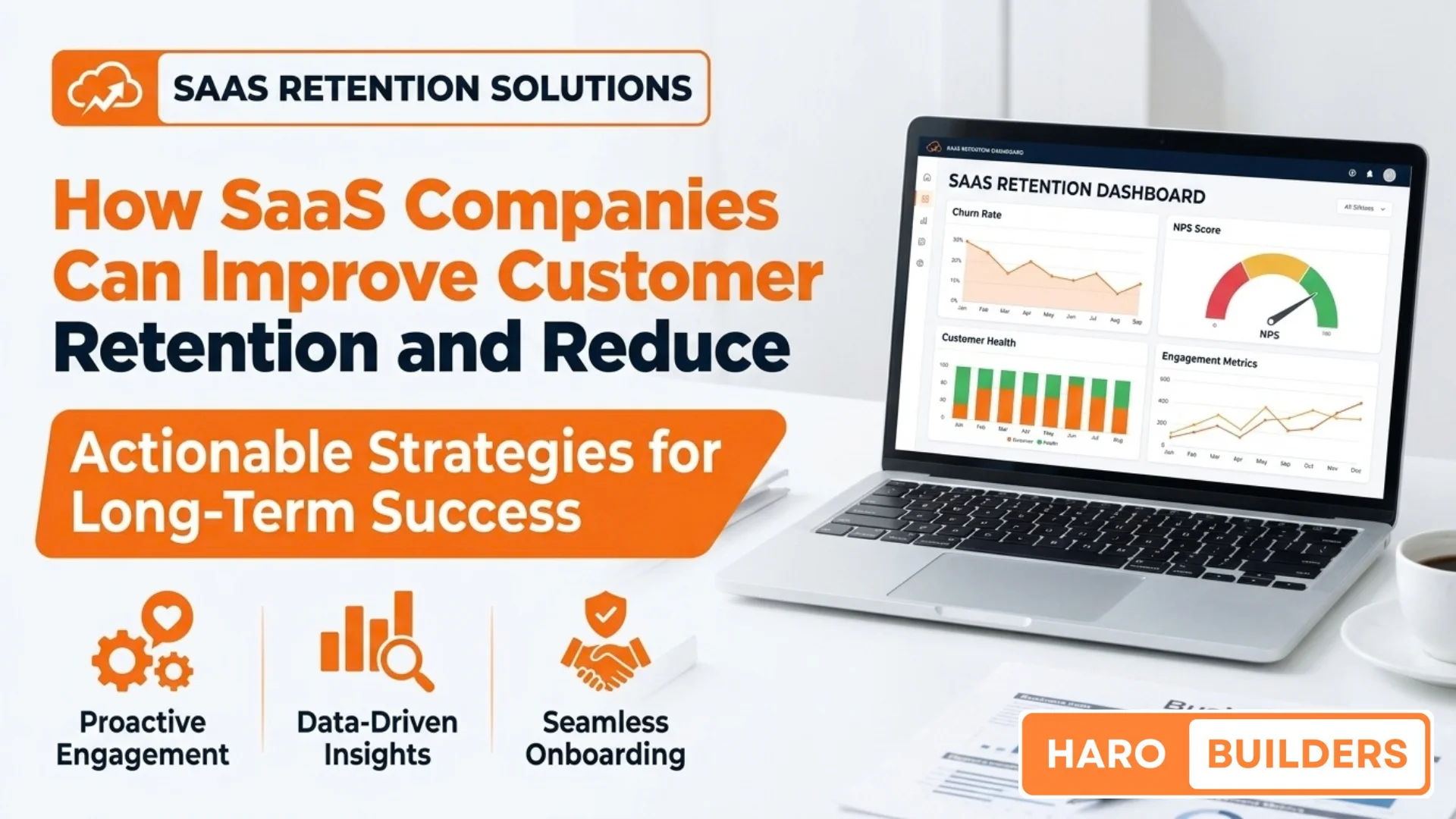
For SaaS companies, acquiring new customers is only one part of building a sustainable business. Keeping those customers over the long term is equally important. A company can generate thousands of new signups, but if a significant percentage of users cancel their subscriptions shortly afterward, consistent growth becomes difficult. Customer retention and churn are therefore two of the most important considerations for SaaS businesses. Retention measures a company’s ability to keep customers, while churn represents the customers or recurring revenue lost during a specific period.
Reducing churn is not simply about convincing customers to stay. It requires SaaS businesses to understand why customers leave, deliver value consistently, and create an experience that makes the product useful throughout the customer lifecycle.
Understand Why Customers Churn
The first step toward reducing churn is understanding what causes it.
Customers cancel subscriptions for many different reasons. Some may not understand how to use the product, while others may feel that the software does not provide enough value for its price. Technical problems, poor customer service, missing features, changing business requirements, and budget constraints can also influence cancellation decisions.
Instead of assuming why customers leave, SaaS companies should collect direct feedback.
Exit surveys can ask customers what influenced their decision to cancel. Customer interviews can provide more detailed information, while support tickets and product usage data can reveal recurring problems.
For example, if customers frequently cancel after using only one or two features, the company may need to improve onboarding or help users discover additional functionality.
Understanding the underlying reasons for churn makes it possible to address the problem systematically rather than relying on assumptions.
Create a Strong Customer Onboarding Experience
The first few days or weeks of a customer’s experience can have a significant impact on their perception of a SaaS product.
A complicated onboarding process can leave new users confused before they have experienced the product’s value. A strong onboarding experience should help customers reach an initial meaningful outcome as quickly as possible.
SaaS businesses can use welcome emails, guided product tours, setup checklists, tutorials, documentation, and personalized onboarding sessions to help customers get started.
The onboarding process should focus on outcomes rather than simply explaining every feature.
For example, rather than showing a new customer every function within a project management platform, the onboarding experience could guide them through creating their first project, inviting their team, assigning tasks, and completing a workflow.
Once customers experience a useful result, they have a clearer reason to continue using the product.
Help Customers Discover More Product Value
Customers may subscribe to a SaaS platform because of one particular feature but eventually discover that other features can solve additional problems.
If users only understand a small portion of the product, they may eventually question whether the subscription is worth maintaining.
SaaS companies can encourage broader product adoption through contextual recommendations, educational emails, tutorials, webinars, and in-app guidance.
For example, a customer using software primarily for reporting could eventually benefit from automation, integrations, collaboration tools, or advanced analytics.
The objective should not be to overwhelm customers with feature announcements. Instead, companies should introduce relevant functionality based on the customer’s needs and usage patterns.
When customers consistently discover new ways to benefit from a product, the perceived value of the subscription can increase.
Using Content to Strengthen Customer Relationships
SaaS companies can support customer retention by continuing to educate and engage users after they subscribe. Product tutorials, feature demonstrations, customer success stories, webinars, and helpful video content can show customers how to get more value from the software while keeping the brand connected to their needs.
Video can be particularly useful for explaining complex features in an accessible format, and strategies such as Buy YouTube views can be incorporated into a broader video marketing approach to increase the initial visibility of educational content. When SaaS businesses consistently provide useful information alongside a reliable product experience and responsive support, they can create stronger customer relationships and address potential sources of churn.
Monitor Customer Engagement
Product usage data can provide important signals about customer health.
A customer who regularly logs in, uses important features, adds team members, and completes key workflows may be demonstrating strong engagement. In contrast, a sudden decline in activity could indicate that the customer is encountering problems or no longer sees sufficient value.
SaaS businesses can establish customer health indicators based on factors such as login frequency, feature adoption, support interactions, account activity, and subscription history.
These indicators can help customer success teams identify accounts that may require attention.
Importantly, low engagement does not automatically mean a customer will churn. It is a signal that should encourage further investigation. A customer may simply use the software less frequently because their business needs are seasonal.
Combining behavioral data with direct communication provides a more complete picture.
Provide Responsive and Useful Customer Support
Customer support can directly influence how customers perceive a SaaS company.
Even a well-designed product can create questions or technical problems. When customers cannot get help quickly, frustration can increase and their willingness to continue paying for the service may decline.
SaaS companies should provide clear support channels and make it easy for customers to find answers.
A knowledge base can handle common questions, while email, chat, or dedicated support teams can address more complex problems. Documentation should also be regularly updated as the product changes.
Support teams should look beyond simply closing tickets. Recurring questions may indicate usability problems that should be addressed at the product level.
In this way, customer support can become a source of product insights rather than simply a reactive service function.
Act on Customer Feedback
Customer feedback can reveal opportunities that internal teams may overlook.
Surveys, interviews, reviews, support conversations, feature requests, and user communities can all provide valuable information about the customer experience.
However, collecting feedback without acting on it can have the opposite effect. Customers may become frustrated if they repeatedly explain a problem without seeing meaningful improvements.
SaaS companies should organize feedback into categories and identify recurring themes. Product teams can then determine which improvements align with the largest customer needs and business priorities.
Companies should also communicate meaningful updates to customers. When users see that their feedback contributes to product improvements, they may develop greater confidence in the relationship.
Develop Proactive Churn Prevention
Many SaaS companies only interact with customers after a problem becomes obvious. A proactive approach can identify potential issues earlier.
For example, if a previously active customer stops using a key feature, the customer success team could send a helpful resource or contact the customer to understand what changed.
Similarly, customers approaching renewal could receive relevant information about new features, usage results, training opportunities, or available support.
The goal is not to pressure customers into renewing. It is to make sure they understand the value they are receiving and have access to assistance when necessary.
Proactive customer success can be particularly valuable for high-value accounts where losing a single customer can have a significant financial impact.
Make Pricing and Plans Easy to Understand
Pricing can also influence retention.
Customers may become dissatisfied when they discover unexpected limitations, confusing billing structures, or features locked behind plans they did not initially understand.
SaaS companies should make pricing information transparent and ensure that customers understand what each plan includes.
As customers grow, their requirements may change. Offering logical upgrade paths can make it easier for customers to move into plans that match their needs.
At the same time, businesses should avoid forcing customers into expensive plans simply because they need one additional feature. Flexible pricing can sometimes support stronger long-term relationships.
Build a Customer Success Strategy
Customer support and customer success are related but serve different purposes.
Support generally helps customers resolve specific problems. Customer success focuses more broadly on helping customers achieve their desired outcomes with the product.
A customer success strategy can include onboarding, training, account reviews, product education, usage monitoring, and renewal planning.
For larger SaaS customers, dedicated customer success managers can help organizations integrate the software into their broader workflows.
For smaller customers, automated onboarding and educational resources can provide some of the same benefits at scale.
The right approach depends on the size of the customer base, product complexity, and subscription value.
Track Retention Metrics
Businesses cannot effectively improve retention without measuring it.
SaaS companies can monitor several metrics to understand customer behavior, including customer churn rate, revenue churn, retention rate, customer lifetime value, activation rate, expansion revenue, and renewal rates.
These metrics can be segmented by customer type, acquisition channel, subscription plan, industry, or cohort.
For example, a company may discover that customers acquired through one channel have significantly higher retention than customers acquired through another. This insight could influence future marketing investments.
Similarly, if one pricing tier consistently experiences higher churn, the company can investigate whether customers are receiving enough value from that plan.
The purpose of these metrics is not simply to create reports. They should help teams identify patterns and make better operational decisions.
Turn Retention Into a Company-Wide Priority
Customer retention should not belong exclusively to the customer success department.
Product teams influence retention through usability and functionality. Marketing affects customer expectations before signup. Sales teams influence whether customers are properly matched with the product. Support affects the experience after purchase.
When these teams work together, businesses can create a more consistent customer journey.
For example, sales teams can share common customer objections with product managers, while support teams can identify recurring problems and communicate them to engineering teams.
This creates a feedback loop where customer experiences continuously influence product and business decisions.
Building Retention Through a Consistent Customer Experience
SaaS companies can improve customer retention by making the entire customer experience reliable, useful, and easy to navigate. Clear onboarding, responsive support, regular product improvements, and personalized communication can help customers recognize ongoing value rather than viewing the software as simply another subscription.
Consumer brands such as Saranoni demonstrate how consistency in product quality and customer experience can contribute to stronger relationships with customers. SaaS businesses can apply the same broader principle by understanding customer expectations, addressing recurring frustrations, and continuously improving the experience throughout the customer lifecycle. When customers consistently receive the value they expect, businesses can create stronger relationships while reducing the factors that contribute to churn.
Conclusion
Customer retention is one of the foundations of sustainable SaaS growth. While acquiring new customers will always be important, businesses also need to ensure that existing customers continue receiving meaningful value from their subscriptions.
Reducing churn begins with understanding why customers leave. From there, SaaS companies can improve onboarding, encourage product adoption, monitor engagement, provide responsive support, act on feedback, and develop proactive customer success strategies.
Clear pricing, useful educational resources, and data-driven retention programs can further strengthen customer relationships.
Ultimately, successful retention is not based on a single tactic. It comes from consistently delivering value and building systems that help customers succeed with the product. When SaaS companies make customer outcomes a central part of their strategy, retention becomes more than a metric—it becomes an important component of long-term business growth.

💬 Comments 0
No comments yet. Be the first to share your thoughts! 💬
✍️ Leave a Comment